ads

Friday, December 11, 2015

Eradicating Gender Based Violence: HOFNA Cameroon Uses Songs, Drama, Debate to Build Safe Schools, Communities

Chongwain Christelle: Director of HOFNA


The event which took place at the Bamenda Congress Hall on December 10, 2015 was described by parents, teachers and students as a milestone marked the “16 Days of Activism against Gender Based Violence,” organized by a Bamenda based nongovernmental organization, Hope For the Needy Association HOFNA Cameroon. Welcoming participants, HOFNA Cameroon Director Chongwain Christelle said that HOFNA is committed more than ever to work together with youths to end gender based violence in and around schools, and communities. The evidence of this practice she added is that the male gender sometimes discriminates over females because of their chauvinistic beliefs. She called on everyone to join the crusade to elude this belief so much so that the education of the girl child is fostered. Holding on the theme “Together, let us build safe schools and communities for All, especially Girls to thrive”, the Bamenda event kick started the official launching of a project code named “Creative Arts for Girls’ Empowerment.”
Some of the key activities that attracted a lot of applauses included the debate on the topic, School before Marriage or Marriage before school. Desmond, a physically impaired Senior Prefect of GBHS Bamenda and his friend stole the show in their arguments. To Musa Shey Nfor, these students have proven that disability is not a handicap.  
 The drama, “For Girls Abused” which paints the picture of the bitter experience young girls undergo in schools and communities ignited tears and sorrows from the audience. The main character Beri, a young girl from Nkambe, incarnates struggles girls of poor homes go through to have access to education as she is forced by her father at gun point to get marry her teacher, Mr. Tantoh, a man twice her age married to two wives. 
Earlier during a panel discussion Madame Mbah Ada called on the girls to denounce any form of violence because without them society will not be able to break the silence. 
Experience teachers, jurists and parents also talked on School-Related Gender-Based Violence (SRGBV), child early and forced marriages and other Sexual and Reproductive Health and Rights (SRHR) which affect girls in schools and around communities. Panelists observed that the practices and beliefs affect the learning levels and completion rates and raises barriers to gender equality in education in communities. At the end of the event, participants were urged to be ambassadors in their schools and communities. It should be noted that HOFNA Cameroon partnered with the US Embassy in Cameroon, OHI, CREED, wfac, YouareIn etc to carryout the project which is expected to change lives positively for the girl child in schools and around communities.


When News Breaks Out, We Break In. (The 2014 Bloggies Finalist)

CDKN Launches New e-book ‘Mainstreaming Climate Compatible Development’

COP21 in Paris, the Climate and Development Knowledge Network (CDKN) launches a new digital book “Mainstreaming climate compatible development”which presents insights from five years of partnership work to design and deliver climate compatible development.
Simon Maxwell, CDKN’s Executive Chair, says the book “demonstrates that climate compatible development offers great potential for strategic innovation by governments, civil society and the private sector”. There are many possibilities to achieve ‘win-win benefits’ for climate mitigation, adaptation and human development. However, he adds, “no-one should pretend that achieving climate compatible development will be friction free.”
Drawing on CDKN’s programme in more than 70 countries, “Mainstreaming climate compatible development” shares practical approaches to seven key challenges:
First, eliminating ambiguity in the concept of climate compatible development, and exploring possible trade-offs in the implementation of climate-related policies that will deliver the Sustainable Development Goals and targets.
Second, making the case and winning the argument, in countries where leaders face many competing demands on political capital and resources.
Third, managing climate compatible development planning in ways that mainstream climate concerns into development planning and ensure cross-government coherence.
Fourth, finding the resources to cover any additional costs of climate compatible development, drawing on international as well as domestic sources.
Fifth, creating the right culture and instruments for implementation, to ensure that plans are not blown off course.
Sixth, delivering at scale, so that impact is transformational in scale and irreversible.
Seventh, linking the national to the global, so that national interests are well-represented in global negotiations, and global agreements are reflected in national action.
The book is intended for decision-makers, development planners and practitioners - including civil society groups - as well as donors working to address climate change in developing countries. It aims to offer a rich source of learning based on CDKN’s practical experience.
“Mainstreaming climate compatible development” is written by Mairi Dupar, Sam Bickersteth, Connie Espinosa, Ari Huhtala, Ali Tauqeer Sheikh, Carl Wesselink and Maria Jose Pacha, with the support of dozens of CDKN staff from across Latin America, Asia and Africa.
The authors encourage you to comment on the chapters. They intend to produce a revised version in 2016, based on reader feedback. Readers can contact the author team on cdknbook@cdkn.org with comments and suggestions.
Specifically, they invite readers’ views on: Which strategies are increasing resilience, curbing emissions and tackling poverty simultaneously? How are decision-makers grappling with sometimes conflicting climate predictions to make sound investments that will endure over decades of climate impacts? What are the trade-offs involved in making development more ‘climate compatible’ and what are the politics of decision-making? Which approaches are contributing to fairer outcomes for the most climate-vulnerable, and which decisions risk making the poor even poorer? The emerging answers to these questions can contribute to our collective endeavour to develop a secure, resilient world.

Read and comment on the book at: www.cdkn.org/mainstreaming
Claire Mathieson |  Knowledge Networks manager, Africa   | CDKN: Climate and Development Knowledge Network
t: +27 (0) 21 447 0211 f: +27 (0) 447 3198 | e: claire.mathieson@cdkn.org | skype: mathieson.c | www.cdkn.org
Physical address: SouthSouthNorth, 55 Salt River Road, Salt River, Cape Town, 7925
Postal address: PO Box 12842, Mill Street, Gardens, Cape Town 8010, South Africa


When News Breaks Out, We Break In. (The 2014 Bloggies Finalist)

COP 21:DR Congo signs grant agreement with GCF in Paris

PARIS, 10 December 2015 – The Democratic Republic of Congo yesterday signed a readiness grant agreement with the Green Climate Fund, providing USD 300,000 for capacity building in the African State.
The agreement was signed in the presence of H.E. Robert Bopolo Mbongeza, Minister of Environment, Nature Conservation, and Sustainable Development, at the GCF stand during the Paris COP talks.
The funding will help DR Congo prepare to access investment funding from GCF for mitigation and adaptation projects. DR Congo was ranked as the poorest country in the world in 2013, and the newly established Ministry of Environment currently needs to build its institutional capacity, including the technical and operational skills to engage with the Fund.
The agreement will support the strengthening of DR Congo’s National Designated Authority (NDA), consultations with stakeholders across the country, and preparation of a country programme as part of the framework for engagement with the Fund.
The contract was signed by Hans Andre L. Djamba, NDA Authority Coordinator from the Ministry of Environment, Nature Conservation, and Sustainable Development of DR Congo. The delivery partner for the work is Centre de Suivi Ecologique (CSE), which was represented by Déthié Soumaré Ndiaye, Coordinator of the CSE Climate Finance Unit.
The grant agreement follows the signing of a similar agreement with Guyana earlier this week, as the Fund’s readiness programme swings into action. 95 countries have expressed an interest in the programme, and more than 30 such programmes have been agreed to date.
GCF provides early support for readiness and preparatory activities to enhance country ownership and access through its country readiness programme. A minimum of 50 per cent of readiness support is targeted at Least Developed Countries (LDCs), Small Island Developing States (SIDS), and African States. 

When News Breaks Out, We Break In. (The 2014 Bloggies Finalist)

Japanese Company Launches World's First Washable Mobile Phone

Following a research that mobile phones carry a lot of filth and germs, a Japanese company is launching a phone that can be washed.
 Even though it looks all shiny and new, the smartphone is probably one of the filthiest things one can own. Research has shown that the amount of bacteria and germs it carries is disgustingly huge, which is probably why a Japanese company is targeting germaphobes with the world’s first washable phone.
The Snapdragon 410 processor, 5-inch android phone, called Digno Rafre, is all set to be released in Japan by tech company Kyocera Telecom this week. It’s USP is that it’s waterproof and soap resistant, so it can be thoroughly washed under running water. There’s no risk of water entering the device because it’s entirely sealed to keep water and bubbles from getting in. It doesn’t even have a speaker, relying instead on a Smart Sonic receiver that transmits sound through vibrations on the phone’s screen. The built-in 13MP camera is also waterproof.
 
Apart from being washable, the phone is also ideal for kids, for people who are clumsy and keep dropping their phones everywhere, or like to take bathtub selfies. It even comes with a special rubber duck-shaped floating stand. To wash the phone, the company suggests gently rubbing soap foam all over it before thoroughly rinsing it with plain water. And, as an added bonus, there’s no danger of scratching the phone, because its plastic back cover is supposed to be self-healing. According to Oddity Central, Digno Rafre, which comes with 16GB storage, 2GB RAM, and a 2MP front camera is priced at ¥57,420 (about $467), but it isn’t available for purchase outside of Japan. The company has announced no plans of releasing the gadget in foreign markets, but if interest is high enough, who knows?


When News Breaks Out, We Break In. (The 2014 Bloggies Finalist)

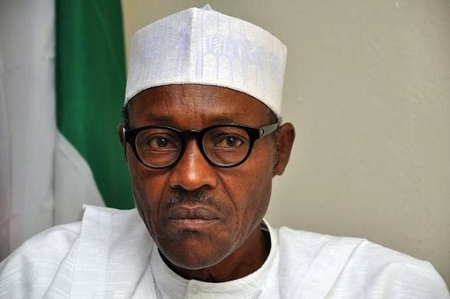
Jonathan Abused the Public Trust - Buhari

 President Muhammadu Buhari has given his opinion on the arms deal scandal that has sent shocking waves among Nigerians in recent times.
 
President Muhammadu Buhari last night accused former President Goodluck Jonathan of breaching public trust in the procurement of arms through the Office of the National Security Adviser for the prosecution of the war against Boko Haram.
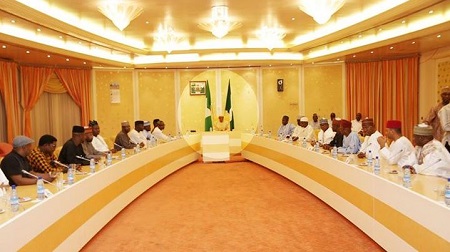
ThisDay reports that Buhari made the disclosure when he hosted members of the House of Representatives to dinner yesterday at the old banquet hall of the Presidential Villa in Abuja. The president stated that it was unfortunate that billions of naira and hundreds of dollars were expended on military equipment which could not be verified.
He said: “I decided to host this dinner to thank you so far. We still have a long way to go. There are a lot of rubicons to be crossed, but let’s be very clear about our objectives.
“We have already set our priorities right during our campaigns to secure the country then efficiently manage it.
“Securing the country is obviously dealing decisively with Boko haram. When we came in, the military leadership had to be removed and reconstituted, a new set put in with a clear target to reorganise, retrain, re-equip and make sure that Boko haram is uprooted and neutralised.
“We had some good intentions while the joint task force comprising the Lake Chad Basin Commission countries of Cameroun, Chad, Niger, Nigeria and Benin, because of good neighbourliness, decided to join us.

“There was an agreement to dedicate a number of troops to be cited in different places in the Lake Chad Basin area so that by the end of the rainy season, an aggressive attack will be unleashed on Boko haram.
“But we are realistic to know that Nigeria is the battleground. So we expended the meagre resources we have to ensure that the morale of the military is raised by getting officers to be on the ground with the men.
“But unfortunately for us as a people, we discovered that the billions of naira and hundreds of millions of dollars that were supposed to be expended by the previous government to acquire good equipment and ammunition for the military, there was an abuse of trust at various levels that cost Nigeria a lot of lives and goodwill.
“On this we cannot keep quiet and it is coming out gradually. It is very unfortunate.
 The president’s remarks came on the heels of an order by the Federal High Court in Abuja remanding the Chairman of Daar Communications Plc, owner of African Independent Television (AIT) and Raypower radio station, Chief Raymond Dokpesi, in the custody of the Economic and Financial Crimes Commission (EFCC) pending the determination of his bail application today.

When News Breaks Out, We Break In. (The 2014 Bloggies Finalist)

Putin Threatens to Go Nuclear on ISIS

President Putin has warned of a Nuclear war as Russia steps up its barrage on Syrian rebels with its first submarine-launched cruise missile strikes combined with bombing raids from the air.
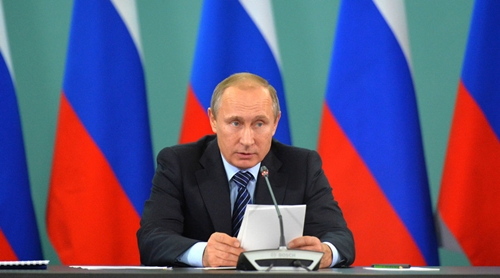
Russian president, Vladimir Putin

 Russian president, Vladimir Putin has warned that a new underwater missile system deployed by Russian submarines in the Caspian Sea, in the war against ISIS in Syria could be equipped with nuclear warheads.
 He added that although using nuclear weapons was a possibility, he hoped that they would 'never be needed' in the fight against terrorism. 
 Speaking on Russian state television today, President Putin claimed his military had struck '300 targets of different kinds' in the past three days and helped Syrian special forces recover the black box of a Russian warplane downed by Turkey last month.
 "With regard to strikes from a submarine: we certainly need to analyse everything that is happening on the battlefield, how the weapons work. 
"Both the [Kalibr] missiles and the Kh-101 rockets are generally showing very good results. We now see that these are new, modern and highly effective high-precision weapons that can be equipped either with conventional or special nuclear warheads.
"Naturally, we do not need that in fighting terrorists, and I hope we will never need it. But overall, this speaks to our significant progress in terms of improving weaponry and equipment being supplied to the Russian army and navy."
 The country's Defence Minister, Sergei Shoigu confirmed the strikes had been launched from the submarines, progressing on from firing from warships in the Caspian Sea.
 "We used Calibre cruise missiles from the Rostov-on-Don submarine from the Mediterranean Sea," Shoigu told President Vladimir Putin during an encounter broadcast on state television. 
It is believed the cruise missiles, launched from submarines, can travel as far as 1,500 miles at low altitude to attack enemy strongholds.
 Shoigu added that Russian strikes launched yesterday had been aimed at 'two terrorist strongholds' around Raqqa, the de facto Syrian capital of the Islamic State jihadist group.
"As a result of the successful launches by the aviation and submarine fleet, all targets were destroyed,' Shoigu said, adding that oil infrastructure, ammunition depots and a mine-making factory had been hit in the strikes.
The Calibre cruise missile once again showed its effectiveness over long distances."
 
Source: Mailonline


When News Breaks Out, We Break In. (The 2014 Bloggies Finalist)

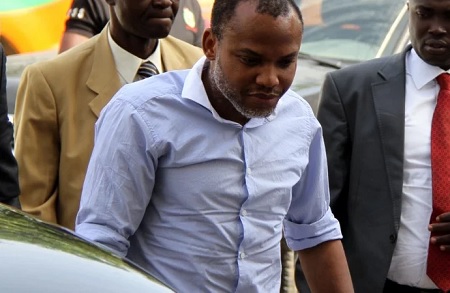
Nnamdi Kanu Received Huge Sums of Money to Purchase Weapons for the Actualization of Biafra - DSS

 The DSS told a Federal High Court sitting in Abuja, yesterday that Mr. Nnamdi Kanu, had already received huge sums of money to purchase weapons for the actualization of the Biafra.
The Federal Government, yesterday, told a Federal High Court sitting in Abuja,  why it was not in a hurry to release the detained  leader of Indigenous People of Biafra, IPOB, Mr. Nnamdi Kanu, claiming that its investigations revealed that Kanu, who it identified as the brain behind recent clamour for the creation of ‘Biafra Republic’, had already received huge sums of money to purchase weapons.
Government in a counter-affidavit before the court, said that prior to his arrest, Kanu, had already made enquiries about prices of all the weapons he intends to buy.
 In the counter-affidavit by a senior officer with the Department of State Services, DSS,  Mr. Ayo Ibitoye, it insisted that it would be in the interest of justice, peace and order, to allow the IPOB leader to remain in custody of the security agency.
It will be recalled Kanu who is also the Director of Radio Biafra and Television, was on October 17, arrested in Lagos by security operatives, shortly after he arrived Nigeria from his base in the United Kingdom.
He was later arraigned before a Chief Magistrate Court in Abuja  over allegation that he engaged in  criminal conspiracy, managed and belonged to an unlawful society.
But on October 19,  pleaded not  guilty to the charge and was granted bail in the tune of N2million.
The court further directed the defendant to produce a civil servant of Grade Level 16, to stand as his surety.
However, the accused person alleged that the Nigerian government refused to release  him from detention despite the fact that he had met the bail conditions.
FG had while the matter was pending before the Magistrate court, secured an order from the high court to further detain Kanu for 90 days.
It was sequel to the  order that government lawyer,  Mr Moses Idakwo, asked Magistrate Usman to  step down from the trial on the ground that his court lacks the power and jurisdiction to prosecute terrorism charges.
Following an application by Kanu before the high court, seeking to enforcing his fundamental right to freedom, government filed a counter-affidavit, explaining why he will not been released, despite the clear orders of the court.
Source: tori.ng

When News Breaks Out, We Break In. (The 2014 Bloggies Finalist)

Thursday, December 10, 2015

THE SENATE FLOUTS THE CONSTITUTION

 By Hon. Ayah Paul

It is now a notorious fact that the Camerounese senate refuses every year to defend their budget before the national assembly on the pretext that they are the upper chamber of the House. Unbelievable misconduct by persons said to be HONOURABLE!
Cameroun is truly at precarious cross-roads today! Just a timid whirlwind and it could be plunged into the abyss of fatal chaos. Delicately sustained only by a flimsy legal string; and having traversed sporadic inroads through to wanton comportment of riddance, it is as if the present generations have arrogated to themselves the right to be final…
Cameroun, without doubt, has never been the bedrock of the rule of law. But things have dangerously degenerated into the point where even the judiciary appears to be on the verge of declaring themselves irrelevant! That is of course only a logical queue-up, subsequent to the shameless breaking of the law by the very law-makers: the senate trampling underfoot with hollow majesty the country’s constitution – the fundamental law of the land…
But who can bring their minds to this outrageous conduct of the so-high? As if they have reversed their much-talked-about “the truth and the good example (coming) from the top”! Dumping the constitution in the waste basket in manner most irresponsible!
Could someone simplify it for the comprehension of our “honourable senators” that justice begets peace; and that justice is being amenable to the law, or compulsion to be amenable to the law? Could some learned person inform the senators that, by the constitution in force, the national assembly has exclusive jurisdiction to enact the finance law? May I pray some jurist to teach our senators that their immunity shall be lifted some day for them to face trial for embezzlement: spending public funds without proper appropriation by the national assembly?
Let it be known that the constitution took cognizance that the senate does not enjoy the full mandate of the people since some senators are appointed. That is why the passing of the appropriation Bill is within the exclusive jurisdiction of the national assembly. It is an exception to the general rule that parliament legislates (the two chambers). Such exclusiveness is attired in the rule couched in borrowed legal jargon that “generalibus specialibus non derogant”.
One can state with some reasonable degree of confidence that it is in superfluity that, after the national assembly has enacted the finance law, the enactment is still sent to the senate for reading. This is inconsistent with the constitution which is unambiguous that the senate does not have concurrent jurisdiction in the enactment of the finance law.
It goes without saying then that, by failing to defend their appropriation before the national assembly, the senate has no approved budget as required by the constitution, and, therefore, spending what has not been enacted by the national assembly as per the constitution amounts to the felony of misappropriation... Let the wheel of fortune continue to turn!
It shall stop turning some day, perhaps not so far off!

When News Breaks Out, We Break In. (The 2014 Bloggies Finalist)

What is Biafra and Why are Some Nigerians Calling for Independence?

 Source: NewsWeek UK
NewsWeek UK has taken a closer look at one the most controversial topic in Nigeria which has generated agitations across the south-eastern region, giving a candid insight into the causes, government reaction and the way forward for Nigeria to tackle the problem.
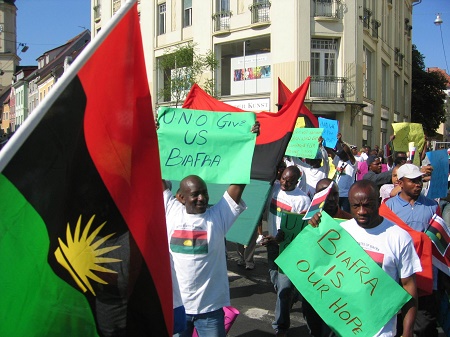
Pro-Biafra protesters
 
More than 45 years ago, Nigeria was nearly divided by a bloody civil war that led to the deaths of over a million people. Now, a revival in secessionist sentiment in southeastern Nigeria, among supporters of the historical state of Biafra, threatens to undermine President Muhammadu Buhari's vision of a united Nigeria and spill over into regional violence.
 Thousands of protesters have taken to the streets of southern Nigeria in recent weeks following the arrest of a prominent pro-Biafran activist, who has been accused by Nigerian authorities of hate speech and treason. As well as demanding their colleague's release, some protesters are calling for the establishment of an independent Biafra once again.
 The protests have resulted in several deaths and Nigerian authorities have warned that anyone sowing discontent or inciting public disorder will be dealt with firmly. As tensions continue to flare, Newsweek looks at the demands of the protesters and the response of the Nigerian government.
 
What is Biafra?
 In 1967, Nigerian military officer Odumegwu Ojukwu declared the republic of Biafra, an area mainly populated by the Igbo ethnic group, as independent in southeastern Nigeria. The Nigerian military consequently entered into civil war with the Biafrans, encircling the region and blockading supplies from reaching the population. As a result, more than one million people died, many due to starvation.

What has led to the recent protests?
 Nigeria's Department of State Services arrested Nnamdi Kanu, a prominent Biafran spokesperson and activist, on October 19, according to the International Crisis Group (ICG). Kanu lives in London but often travels to Nigeria and was reportedly apprehended in Lagos. He is the leader of the Indigenous People of Biafra (IPOB), a secessionist group supporting the revival of the Biafran state and independence from Nigeria. Kanu is also the director of Radio Biafra, it broadcasts pro-Biafran material from London but the Nigerian government seek to ban it. Since his arrest, pro-Biafran protesters have conducted marches in southeastern Nigeria, demanding Kanu's release. On December 2, eight protesters and two policemen were killed in clashes during a protest at the Niger Bridge in Onitsha, Anambra state, according to the ICG.
 Nic Cheeseman, associate professor in African politics at the African Studies Centre at the University of Oxford, says Kanu's arrest has acted as a "short-term trigger" to the resurgence in pro-Biafran sentiment. Cheeseman adds that the protests are a result of similar factors that led to the original Biafran uprising, in particular, a sense of political disenfranchisement among the Igbo people. "Some of the wounds of the civil war have not healed," says Cheeseman.
 
What do pro-Biafran protesters want?
 As well as the release of Kanu and other Biafran activists, pro-Biafrans want the Nigerian government to put a date on an independence referendum, according to Nnabuike Nnadede, editor of pro-Biafran media outlet Voice of Biafra. "We want them to release all the Biafran activists first. Then...we want them to debate about the time for a referendum," says Nnadede, who is based in London and is part of a disparate pro-Biafran group.
 Nnadede says that the Igbo people of the region that was previously Biafra still suffer from a lack of resources and investment by the central government. He claims there is a dearth of hospitals and that women are forced to give birth in the streets. "The suffering is too much, and that is why we've decided to say, 'Look, we cannot continue to be in Nigeria. We have suffered enough, we want the opportunity to vote to have an independence referendum,'" says Nnadede. He claims that the movement is entirely peaceful, however, and says that if the Igbo people voted against the secession of Biafra, he and his colleagues would accept the result and be "proud Nigerian citizens."
 Other activists, including Kanu, are not known to be as peaceful. At a meeting of the World Igbo Congress in Los Angeles in September, Kanu presented his audience with a call for arms. "We need guns and bullets from you people in America," he said, according to the BBC, adding that the occurrence of a blood moon in September was a sign of the liberation of Biafra. During pro-Biafran marches in support of Kanu, protesters have also been seen to carry flags with threatening messages such as "Biafra or death."
 
How has the Nigerian government responded?
 Nigeria's security forces have told protesters they will be uncompromising in dealing with acts of rebellion. Major-General Hassan Umaru, a Nigerian Army officer, said that the army "would like to send an unequivocal warning to all those threatening and agitating for the dismemberment of the country, committing treasonable felony and arson as well as wanton destruction of lives and property." Umaru warned that soldiers would fulfil their obligation to "ensure the enforcement of law and order… to avoid a breakdown in peace and stability," making it clear that this could include the use of armed force. Governors of Nigeria's northern states have also said it is "really sad that any Nigerian can contemplate violence" in light of the Boko Haram insurgency in northeast Nigeria. "We thought that the existence of Boko Haram should have been enough to make all Nigerians fuse into one and fight a common enemy," the governors said.
 Cheeseman says that the Nigerian government tends to deal with such protests in "fairly heavy handed ways" and fears that an escalation in tensions between both sides could lead to further bloodshed. "There genuinely is a possibility that, if both sides mishandle it and both sides exacerbate and ratchet up rather than ratcheting down, the situation could get significantly worse," says Cheeseman.
 
What does the future hold for pro-Biafrans?
 According to Manji Cheto, sub-Saharan Africa political risk analyst at global consultancy Teneo Intelligence, the protests are at risk of escalating into full-blown militancy in southern Nigeria if the government continues to not listen to the grievances of the Igbo people. Cheto says that Igbos remain isolated from powerful positions in government, "2015 looks like 1960s Nigeria from the Biafran perspective. If you're looking at the political map and political dominance, nothing's changed."
 Nnadede, however, maintains that the protests will remain peaceful, and that the pro-Biafran movement is simply requesting a degree of self-determination that its supporters believe is currently being denied to the Igbo people. "Our movement has remained peaceful. Over 99 percent of our people are peaceful," says Nnadede. "We want a Biafra where we will choose our own leaders, not somebody from Sokoto or Kano imposing people on us."


When News Breaks Out, We Break In. (The 2014 Bloggies Finalist)

Cameroon Journalists Prosecuted for Acting Professionally, French NGO Says

Press release

Reporters Without Borders (RSF) is appalled by the continuing judicial persecution of two newspaper journalists and a former journalist who have been accused since October 2014 of failing to report a matter affecting state security. They have now found out that the proceedings before a military court are confirmed.
Félix Cyriaque Ebolé Bola of Mutations, Rodrigue Tongue of Le Messager and Baba Wame, a former journalist who is now a teacher, learned this when they were summoned to the office of a military judge, Capt. Bernard Tsuite, in Yaoundé on 4 December.
After waiting several hours, they were notified that, despite a previous ruling minimizing the case against them, there was "sufficient evidence" for the charge of failing to report a security matter that they would have to appear before a military court in Yaoundé.
The reporters were absurdly accused in October 2014 of failing to share with the authorities what they knew about the possible presence of a Central African Republic insurgent at the Cameroonian border.
In fact, they did not write articles based on their information because the police refused to answer the questions put by one of the journalists and they therefore decided the information lacked the necessary verification.
"This judicial farce has gone on for too long," said Cléa Kahn-Sriber, the head of RSF's Africa desk. "In a country where the media are often accused of sloppy reporting, it's the last straw that these journalists are being prosecuted for acting professionally, checking their facts and deciding not to publish an incomplete story.
"As things stand, do these journalists really pose a threat to Cameroon's national security? We call on the authorities to immediately drop the charges against them and to desist from any further harassment."
According to one of the journalists, the judge originally handling their case, Aline Mbia, was relieved of the case after she lifted their judicial surveillance in January and was transferred to a military court in Ebolowa, in the heart of southern Cameroon's equatorial forest.
Journalists in Cameroon are often subjected to arrests designed to intimidate. Ahmed Abba, Radio France Internationale's Hausa-language correspondent in northern Cameroon, is being held incommunicado in Yaoundé since August in a manner qualified as "extra-judicial" by RFI as he has not been charged.
François Fogno Fotso, the editor of the weekly Génération Libre, has been facing charges of disobeying the police and "rebellion" ever since he photographed the heavy-handed arrests of pro-democracy activists in September. His trial has so far been postponed three times.
Cameroon is ranked 133rd out of 180 countries in the 2015 Reporters Without Borders press freedom index.


When News Breaks Out, We Break In. (The 2014 Bloggies Finalist)

How Female Student Killed During Pro-Biafra Protest in Anambra Was Buried

 One of the protesters who died during the protest by pro-Biafra activists in Onitsha, Anambra state on the 2nd of December is currently being laid to eternal rest.
The deceased, Nkiruka Ikeanyionwu
One of the victims of the bloody pro-Biafra protest in Anambra state, Nkiruka Ikeanyionwu has been laid to rest. She was aged 20. There were conflicting reports concerning her death as 8 others were allegedly killed with her.
 
 Her sister who happens to be a popular blogger shared this on the social media with the message below:
 "Today Dec 9th 2015 , is the day i will pay my last respect to my Lovely sister killed during Biafra Protest in Onitsha anambra state Nigeria, is all , is well , and is all that i can say , Not Biafrans , Not The protesters , No Nigerians , No our Armies , No body indeed to Blame , God Knows why. Rip My Lovely sister 2 , Till we meet to part no more"


When News Breaks Out, We Break In. (The 2014 Bloggies Finalist)

Can Nigeria Replicate China's Economic Transformation as Giant of Africa?

Culled from BBC
A correspondent of the British Broadcasting Corporation, BBC has drawn a comparison between the ailing Nigerian economy and the booming Chinese economy with an advocacy for the former to achieve greatness.
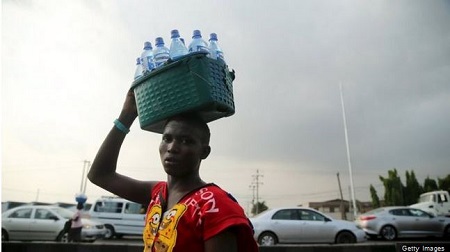
A street hawker in Lagos
China emerged from chaos 35 years ago to become perhaps the largest economy in the world. The BBC's Martin Patience  who has just moved from Beijing to Lagos  asks if Nigeria can do the same.
Swapping Asia's giant for Africa's powerhouse can be a disorientating experience. Leaving Beijing to go and live in Lagos is not a well-worn path. But both Nigeria and China are the most populous countries and biggest economies in their respective continents, making them ripe for comparison.  I feel I've left behind the grey, imposing order of Beijing for the chaos and colour of Lagos, where fun and frustration are doled out in equal measure. Part of the correspondent's condition is that your ears prick up at the slightest mention of a previous posting.  
Imagine my surprise then when, watching last month's inauguration of the new Nigerian cabinet, a remark about the Great Wall of China cropped up during the opening address.
The point, I believe, that the official was trying to make was that the Great Wall was not in itself enough to protect China from invaders,  the government and people need to be incorruptible as well.
I say believe because the audio on the state broadcast briefly cut out. In China, an audio glitch at such an important event would cause heads to roll in shame. In Nigeria, people roll their eyes and shrug it off.
It is just one small example of how the Chinese are known for getting things done, while in Nigeria there is a reputation for cutting corners. Whereas Beijing is a city of smog (the killer downside to the country's breakneck development), Lagos is a city of generators (the sound of a nation failing to realise its economic potential because it can't get its power grid in order).
But when it comes to business, Nigeria and China are alike in one inspiring and infectious way. Both possess an extraordinary entrepreneurial spirit, a can-do-attitude, that if you want to build something you'd better do it yourself.
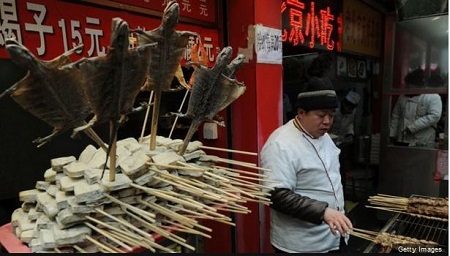
Street hawkers in Lagos and China share a similar entrepreneural spirit

From street hawkers and small shop owners, to CEOs of large companies, people here survive and, occasionally, flourish despite all the obstacles. As for a journalist operating in Nigeria, there is one major difference.
In China, people would shut down at the sight of a foreign journalist, silenced by government repression. In Nigeria, people and politicians don't shut down, they unload.
They talk and talk, and talk some more - they love it. Everyone seems to have an opinion on everything. For a journalist this is both a joy and, as I am beginning to discover, a bit of a nightmare.

In China, people and particularly officials said barely anything, so you would spend hours parsing the meaning. In contrast, in Nigeria you feel you are drowning in information and quotes. Working out what is actually true can be just as time consuming.
When I talk about China to Nigerians, there is an awe and respect that I have heard in many other developing countries about China's remarkable economic achievements in the past three decades.
And, interestingly, while in China the dizzying pace of change has now left many feeling unfulfilled by their material gains, in Nigeria there is a suffocating sense of people wanting meaningful change.
Nigerians want to see infrastructure built, they want better schools and hospitals, and, perhaps, most importantly, they want jobs to better themselves. They want a government that will build and not pilfer.
The Nigerian writer Chinua Achebe once wrote that there was nothing basically wrong with the Nigerian character. The author blamed the country's ills squarely on a failure of leadership.
"The Nigerian problem is the unwillingness or inability of its leaders to rise to the responsibility, to the challenge of the personal example, which are the hallmarks of true leadership," he wrote.
There is now a sense that Nigeria could be at a turning point. Just as 1979 marked the start of China's economic transformation, many Nigerians hope that 2015 will be the beginning of a new era for their country.
They are placing their faith in the former army general they have elected leader, President Muhammadu Buhari. With his no-nonsense style, he has already told his countrymen that they are too "unruly" and need to learn how to queue properly.
In a nation where politicians are notorious for plundering state coffers, Mr Buhari has a reputation for unimpeachable honesty and integrity. People now believe that he will get roads and bridges built (rather than the money being stolen by corrupt officials) which in turn will help get the economy moving.
With almost two million Nigerians entering the job market every year, the country faces a demographic dividend or a demographic disaster. One man is shouldering the expectations of millions.
But can Mr Buhari pull it off? Evidence might suggest otherwise. But then remember China.
Thirty-five years ago the country was emerging from the chaos of the Cultural Revolution. Now, by some estimates, it is the largest economy in the world. With the right leadership, countries can be transformed.
Culled from BBC

When News Breaks Out, We Break In. (The 2014 Bloggies Finalist)

Wednesday, December 9, 2015

Implementation of INDCs: Red Line Africa will not cross in COP 21 Negotiations, according to AMCEN Chair

  PRESS RELEASE

Paris, France 8 December 2015 – The joint Pan African lead institutions brought together African ministers; representatives of their leaders and policymakers to plan the way forward under a new climate change agreement in Paris while upholding Africa’s priorities through regional solidarity on the Intended Nationally Determined Contributions (INDCs) during the 2015 United National Conference on Climate Change in Paris (COP21) Africa Day event today.
The three Pan-African institutions, including the African Union Commission (AUC); the African Development Bank (AfDB); the United Nations Economic Commission for Africa (UNECA) and the NEPAD Planning and Coordinating Agency (NPCA) brought together hundreds of African policy makers and experts attending COP 21 to enlighten them on Africa’s proposed amendments to the draft Paris Agreement (especially Articles on the INDCs) now making its way through the negotiation process.
The Egyptian Minister of Environment, Dr. Khaled Fahmy who currently chairs the African Ministerial Conference on Environment (AMCEN) told the meeting that the provision of means of implementation for the INDCs is a thick red line that Africa will not cross in Paris just because “we want an agreement at all cost.
He said that the other red lines concerned the necessity to have an agreement with a real balance between adaptation and mitigation; while the other is on the legally binding aspect of the expected agreement.
“We are not in Paris to re-write the Convention but to ensure its judicious implementation”, he said, charging that “all African countries having drawn up their different INDCs in accordance with the Peru outcome, the time now is for implementation; and for all to abide by it.
All parties to the COP21 including African countries are expected to express their INDCs—public declarations of post-2020 climate actions they intend to take under a new international agreement to help global mitigation ambitions, as well as adaptation goals within the context of their national priorities, circumstances and capabilities. With INDC submissions to date, global warming is expected to be maintained at 2.7 degrees Celsius, which is above the global ambition of 2 degrees Celsius increase. So far, out of the fifty-four African nations, fifty-three have submitted INDCs.
The day began with an opening session chaired by the Ethiopian Minister of Environment, Forest and Climate Change. The AU Commissioner for Rural Economy and Agriculture, Mrs. Tumusiime Rhoda Peace in her opening statement, stressed that the Africa Day is not about lamenting the risks and challenges posed by climate change, but instead to serve as an opportunity for the continent to showcase to the rest of the world solutions underway to mitigate these challenges, specifically through the development of INDCs.
“The Paris Climate COP is the pinnacle of the global climate change negotiations that has historic milestone from the Africa COP in Durban COP17”. It proofs the level of commitment by the global community in addressing the adverse impacts of climate change and reduction of the greenhouse gases”, she said.  
Mr. Carlos Lopes, Executive Secretary of the UNECA, said that it is important, therefore, that Africa's Parties submission on INDCs lead to the conclusion of a new agreement under the Convention that is in full conformity with its principles and provisions, in particular those of equity and common but differentiated responsibilities and respective capabilities.
“In addition, Annex I Parties need to make “equitable and appropriate” mitigation contributions towards achieving the objective of the Convention taking into account their cumulative historical responsibility and use of atmospheric space and resources and that cumulative emissions in Africa remain extremely low”, Mr. Lopes concluded.
The contributions forthcoming from developed country Parties relating to mitigation, adaptation, finance, technology and capacity are in a balanced manner in the context of a global and comprehensive agreement for the period beyond 2020.
AfDB representative, Anthony Okon Nyong, speaking on behalf of Mr. Akinwumi Adesina, AfDB President noted that “the vision of the African Heads of State and Government to embrace green growth and low carbon development for Africa’s transformation outlined today are meant to propel us into a future which promotes sustainable development for generations to come.”
“Africa has come with solutions on renewable energy; adaptation and loss and damage”, he said.
There were two technical presentations on INDCs by the African Group of Negotiators on Climate Change and the UNECA. A Ministerial dialogue followed on INDCs showcasing Africa’s readiness in addressing climate change, including its ability to deliver on its own potential with international cooperation in addition to the contribution of INDCs to the overall development of the continent. The ministerial dialogue was chaired by H.E Ambassador Ramtane Lamamra, Foreign Minister of Algeria; and vote of thanks was given by H.E Dr. Elham Ibrahim, Commissioner for Infrastructure & Energy, AUC while Ms. Olushola of the AUC served as a Master of Ceremony.
Over 500 participants attended Africa Day, which saw the participation of high level delegates from the governments of Algeria; Cameron, Egypt, Ethiopia, Malawi, Namibia, Niger, Nigeria, South Africa and Uganda, in addition to the African Group of Negotiators on Climate Change, African Union Commission, African Ministerial Conference on Environment, Pan-African Parliament, African Development Bank, East African Community, European Investment Bank, Green Climate Fund, International Labor Organization, NEPAD Planning and Coordinating Agency, Pan African Climate Justice Alliance, United Nations Development Program, and United Nations Economic Commission for Africa.
Throughout the day, leaders discussed the region’s priorities with respect to climate change, while considering the status of INDCs development in Africa and their challenges and opportunities moving forward in implementation.

For more information contact:
Ms. Olushola Olayide, Ag. Head of Division, Environment, Climate Change, Water and Land Management; and AUC focal person to the UNFCCC; African Union Commission; E-mail: OlusholaO@africa-union.org
Media contact and interview request:
Molalet Tsedeke, Africa Union Commission (AUC); molalett@africa-union.org
Penelope Pontet de Fouquieres, Africa Development Bank (AfDB), p.pontetdefouquieres@afdb.org; +33615264061
Jacqueline Chenje, UN Economic Commission for Africa (UNECA); JChenje@uneca.org
Teko Nhlapho; NEPAD Planning and Coordinating Agency (NPCA); tekoh@nepad.org


When News Breaks Out, We Break In. (The 2014 Bloggies Finalist)

Breaking News: Fair Deal Demanded at the Paris Climate Talks

 Kaah Aaron in Paris

Paris- France -- Civil society delegates at the UN climate talks declare that the latest draft of the text failed to live up to promises made by world leaders last Monday. The current draft of the text does not provide the blueprint for a planet where all life can thrive. WHAT: Speak Out by Civil Society in response to text that does not deliver on their demands for a fair deal WHY: The civil society demands that the negotiators commit to creating a binding agreement that is fair for all countries on the planet. This involves that all countries show ambition by drastically reducing pollution rates, that wealthy countries contribute their fair share into the green climate fund, and that developing countries have what they require to adapt to how they are affected by climate crisis.


When News Breaks Out, We Break In. (The 2014 Bloggies Finalist)

Fair Deal Demanded at the Paris Climate Talks

 Kaah Aaron in Paris

Paris- France -- Civil society delegates at the UN climate talks declare that the latest draft of the text failed to live up to promises made by world leaders last Monday. The current draft of the text does not provide the blueprint for a planet where all life can thrive. WHAT: Speak Out by Civil Society in response to text that does not deliver on their demands for a fair deal WHY: The civil society demands that the negotiators commit to creating a binding agreement that is fair for all countries on the planet. This involves that all countries show ambition by drastically reducing pollution rates, that wealthy countries contribute their fair share into the green climate fund, and that developing countries have what they require to adapt to how they are affected by climate crisis.


When News Breaks Out, We Break In. (The 2014 Bloggies Finalist)