ads

Friday, April 28, 2017

Lesson from Nigeria: Dangote to Create 3,000 jobs with Truck Assembly Plant


Dangote


Aliko Dangote, Nigerian entrepreneur, aims to create 3,000 jobs with the establishment of a truck assembly plant in Ikeja, Lagos. According to The Nation, the plant is the result of a partnership between the Dangote group and Sinotruck, a Chinese heavy-duty truck company. The Nation quotes a statement by the firm stating that “the decision to go into the truck assembly plant project was informed by the need to conserve forex in view of the current economic recession. The deal, worth $100 million, expected to have an assembly plant that will produce 10,000 trucks per year, was signed in May 2014, in China. According to the deal agreement, the plant is 60 per cent owned by Dangote Group, trading under Dangote Industries Limited, leaving Sinotruck with the remaining 40 per cent equity stake,”.
Anthony Chiejina, chief corporate communication officer of Dangote Group, is also quoted to have confirmed that the project had taken off and that when fully operational, the nation would be spared the forex expense of importing the heavy-duty vehicles. He explained there would be room for the expansion of the project in years to come, saying: “As it meets the national truck demand, it will explore exportation to neighbouring countries to generate foreign exchange for the nation.”
Consequently, Dangote Agro Sacks Limited, which occupied the Oba-AkranOgba premises of the former Nigerian Textile Mills, until recently, has been relocated closer to the group’s major operational hubs, particularly the cement plants in Obajana, Kogi State and Ibeshe, Ogun State.


When News Breaks Out, We Break In. (The 2014 Bloggies Finalist)

Thursday, April 27, 2017

Members of the Commission on the Promotion of Bilingualism and Multiculturalism Installed


Prime Minister Philemon Yang has installed the 15 members of the Musonge Commission. Before commissioning the members today at the Yaounde Congress Hall, Prime Minister Yang Philemon called on them to be duty conscious and reminded them of the roles and responsibilities. Appointed on 15 March, 2017 following its creation on January 23, 2017 by the Head of State, they are expected to play a primordial role in informing government on pertinent issues.
The creation of this commission was one of the remedial measures to the sit-in strike action by Common Law Lawyers and Anglophone Teachers’ Trade Unions asking for a better consideration of the bilingual nature of the country, reasons why President Biya signed a decree to lay down the Establishment, Organization and Functioning of the National Commission for the Promotion of Bilingualism and Multiculturalism. In announcing his decision to create the Commission, President Biya on December 13, 2016 while addressing Cameroonians said it was important for sons and daughters of Cameroon to learn to work together, paying little attention to divisive issues given the intricacies involved.
Prospects are high at that with members of the Musonge Commission drawn from diverse backgrounds their experiences, knowledge and ideas will go a long way to consolidate diversified opinions.


When News Breaks Out, We Break In. (The 2014 Bloggies Finalist)

Do You Really Want to Succeed? These are 6 Important Mindsets You Need to Achieve Success

Have you been searching desperately within yourself on what to do to achieve tremendous success in your life? These are things you need to know today.


Life doesn’t just happen to you unless you let it, and your life will continually feel out of your control because you have chosen to relinquish control. In the end, your life is ultimately your creation and your mindset is the most important tool you need to shape it. Jumia Travel and Jumia Mobile Week share 6 important mindsets you need to succeed.
 
1. Self-Discovery is a Process
 
Life and living is a journey, therefore understand the process and be patient with it. Don’t be impatient and hurry through the different stages of your life. In the end you will have missed a lot of what you shouldn’t miss and have too many regrets. Be open to explore the unknown and be strong enough to deal with, embrace and learn from surprises and bumps along the way.
 
2. You are Responsible for Your Life
 
You need to learn to take responsibility for your life. You truly begin to live when you decide your life is your own and you alone are responsible for the quality of it, with no apologies, no excuses and no one to blame.
 
3. Not Everything Goes as Planned
 
Unfortunately, though most people know this, they often times forget. You need to understand that life isn’t perfect and things will not always turn out like you planned or imagined. This is why you need to learn to create safety nets and have back-up plans or measures in place to deal with these setbacks. Don’t let things take you unawares.
 
4. There is a Way Through, Under or Above Every Obstacle
 
Thomas Edison tried 1000 ways to create a light bulb. This man was resilient in a way that was almost ridiculous and at the 1001th try, he got it. Be like that. Learn persistence and resilience, understand that there is always a way out and don’t give up until you find it. What matters is not the obstacle but how you see it, react to it and if you keep your composure through it.
 
5. Done is Better than Perfect
 
It is important you understand that continuous improvement is better than perfection. Perfectionism is unhealthy primarily because it’s an unhealthy combination of high standards and brutal self-criticism. Truth is, the real world doesn’t reward perfectionists; the real world rewards people who get things done.
 
6. You Can Do It
 
Believe in yourself. Believe that you have what it takes to succeed, if you don’t, aside a miracle, there is little that can help you succeed. Even if by some amazing stroke of luck you do succeed, it won’t last because you don’t have what it takes to maintain it. Learn to believe in yourself.

When News Breaks Out, We Break In. (The 2014 Bloggies Finalist)

2017 Public Peace Prize: How The Eye Newspaper Got to the Final Stage

The Eye Newspaper was nominated for its promotion of democratic tolerance in communities of Donga Mantung in the North West Region of Cameroon. After the 2013 municipal and legislative elections, homes, marriages and families were shattered. Politics was transformed into an instrument of destruction and uncertain peace, fighting erupted during campaigns, court cases were opened, and thousands of citizens were not on speaking terms with others of different political opinions. This intolerance slowed down development and affected business as well as community activities.
The Eye Newspaper set up an awards program to encourage political and democratic tolerance, and to rebuild mutual co-existence. Families that displayed the principles of democracy were rewarded and distinguished for their efforts to promote political tolerance.
The jury joins its congratulations and encouragement to the support received from the public for the important work accomplished by the The Eye Newspaper, 2017 Public Peace Prize finalist in the category Peace and Non-violence Initiatives through Education and Medias.


When News Breaks Out, We Break In. (The 2014 Bloggies Finalist)

Brain Age Could Help Predict Risk of Early Death- Researchers

Researchers at the Imperial College London are predicting a person's brain age to determine if they are at risk of early death.
The team of neuroscientists at Imperial College London combined magnetic resonance imaging, or MRI, with a machine learning algorithm to train computers to give a predicted brain age for people based on their volume of brain tissue.
"We've come up with a way of predicting someone's brain age based on an MRI scan of their brain," Dr. James Cole, a research associate in the Department of Medicine at Imperial College London, said in a press release. "Our approach used the discrepancy between their chronological age and what we call their brain-predicted age as a marker of age-related atrophy in the brain. If your brain is predicted to be older than your real age than that reflects something negative may be happening."
The work was part of a worldwide effort by scientists to find reliable biomarkers that can be used to measure age.
The technique measures brain volume and uses machine learning to estimate the overall loss of white and grey matter, which is a key component in the aging process in the brain.
Cole and his team then tested the technique on publicly available datasets of MRI scans of more than 2,000 healthy people's brains, resulting in maps that could accurately predict a person's age.
Researchers tested the technique on a population of 669 older adults over age 70 or older in Scotland who were part of the Lothian Birth Cohort 1936.
The study found that the greater the difference between a person's brain age and their actual age, the higher their risk of poor mental and physical health and early death. Participants whose brain age was older than their chronological age performed worse on standard physical tests of healthy aging including lung capacity, walking speed and grip strength.
Participants with older brains were statistically more likely to die before age 80, and had an average discrepancy between brain age and chronological age of eight years for males and two years for females.
"In the long run it would be great if we could do this accurately enough so that we could do it at an individual level," Cole said. "Someone could go to their doctor, have a brain scan and the doctor could say 'your brain is 10 years older than it should be,' and potentially advise them to change their diet or lifestyle or to start a course of treatment. However, at the moment, it's not sufficiently accurate to be used at that sort of individual level."
Source: UPI


When News Breaks Out, We Break In. (The 2014 Bloggies Finalist)

Elections Cameroon: Enow Abraham Catapulted to the Position of President


Enow Abraham Egbe

Enow Abrahams Egbe is the new President of Elections Cameroon (Elecam), a body charged with the organization and management of the elections. Enow Abrahams Egbe, who is former Governor, was appointed by President Paul Biya last Tuesday.
The civil administrator replaces Dr. Samuel Fonkam Azu'u, who has been at the helm of ELECAM for nearly eight years ever since the electoral body was created in 2008, to replace the National Elections Observatory (NEO). Mme Amougou née Abena Ekobena Appoline Marie was also appointed Vice President and she replaces Justin Ebanga Ewodo. Elecam members it should be noted are appointed for a four-year renewable term. While some members were flushed out by the Presidential decree, some new names into the Board included amongst others, Mr. Mbu Peter who apparently replaces Fonkam Azu’u from the North West Region. Tongues are still waging as to whether it is the brouhaha between Dr. Fonkam Azu’u and Abdoulaye Babale that has ignited the mighty storm at ELECAM or not. However, Dr. Fonkam Azu’u quits Elecam shoulders high.


When News Breaks Out, We Break In. (The 2014 Bloggies Finalist)

Donald Trump Back Paddles on Mexico Border Wall Campaign Promise

 US President Donald Trump has temporarily suspended his plans to erect an expensive border between Mexico and the U.S as a fulfillment of his election campaign promise.

 
President Donald Trump
 
President Donald Trump is pulling back from his threat to hold Obamacare hostage in order to get a down payment on his US-Mexico border wall.
 Late Monday, Trump told roughly 20 conservative reporters that he was going to revisit the question of funding his border wall in September, according to a report by ABC News.
 He did this to avoid a government shutdown, which will occur on Saturday if Congress fails to pass a $1 trillion spending bill. Although Trump had previously indicated that he would hold certain aspects of Obamacare hostage if he couldn’t receive border wall funding, congressional Democrats were adamant that they would not support funding his border wall, while many of Trump’s fellow Republicans were reluctant to allow the government to shut down over the measure.
 Although the border wall is believed to cost more than $20 billion, Trump was hoping to receive $1.4 billion as a down payment in order to get construction started.
 Considering that this would fall on the 100th day of Trump’s presidency, it is likely that he would not want this particular milestone to coincide with such a disastrous event.
 “It’s good for the country that President Trump is taking the wall off the table in these negotiations. Now the bipartisan and bicameral negotiators can continue working on the outstanding issues,” said Senate Minority Leader Chuck Schumer.

When News Breaks Out, We Break In. (The 2014 Bloggies Finalist)

Gianni Infantino, FIFA President to Introduce Video Refereeing at 2018 World Cup

 It has been revealed that video refereeing is set to be introduced at the 2018 World Cup after a trial last December in Japan.
FIFA president Gianni Infantino
 
Gianni Infantino, the president of FIFA has revealed on Wednesday that video assistant referees will be used at next year’s World Cup in Russia for the first time.
 According to Agence France Presse, Infantino revealed this at a congress of the South American Football Confederation in Santiago, Chile.
 He said: “We will use video refereeing at the 2018 World Cup because we’ve had nothing but positive feedback so far.”
 Video assistance was introduced to support referees with “game-changing” decisions for the first time in a FIFA competition at the Club World Cup in Japan in December.


When News Breaks Out, We Break In. (The 2014 Bloggies Finalist)

What You Need to Know about the 37-year-old Ugandan Woman Who Has Given Birth to 38 Children

A baffling report has left many wondering after a Ugandan woman who has given birth to 38 children revealed how she achieved the feat.

The Ugandan woman has about 38 children
 In what could easily pass off as another work of fiction, a Ugandan woman who is just 37-years has placed herself in the record books after giving birth to 38 children. She is said to have started giving birth at the age of 13
 
 Here is the full report according to Ugandian media site, Daily Monitor:
 Lost along the way, a boda boda rider offers to lead me to her home since they know her by her unique name.
Nalongo Muzaala Bana (the twin mother that produces quadruples) is what Mariam Nabatanzi Babirye goes by where she resides in Kabimbiri village, Mukono District. An overcrowded neighborhood with children running all over welcomes me to Nabatanzi’s home. 
 At 37, Nabatanzi has 38 children whom she has delivered from home except the last born who is four months old. She was delivered by caesarean section. Among her children are six sets of twins, four sets of triplets, three sets of quadruples and single births. Ten of these are girls and the rest are boys. The oldest is 23 years old while the youngest four months.
 Eager to tell her story, she takes a minute before getting into it, tilting her head lost in thoughts. She was married off at 12 years of age after surviving death; allegedly at her stepmother’s hands who apparently pounded glass and mixed it in the food she gave Nabatanzi and her four siblings. Fortunately, she was away unlike her siblings who ate the food and died on the spot.
 
Married off
Nabatanzi breaks down when she recalls what she went through upon getting married. In 1993, she was married off to a 40-year-old man.
 “I did not know I was being married off. People came home and brought things for my father. When time came for them to leave, I thought I was escorting my aunt but when I got there, she gave me away to the man.”
 Being only a young girl, she found marriage a difficult task in the new family. “My husband was polygamous with many children from his past relationships who I had to take care of because their mothers were scattered all over. He was also violent and would beat me at any opportunity he got even when I suggested an idea that he didn’t like,” she recounts.

Starting a family 
Her father-in-law gave them a piece of land to start their family, a family for which she planned to have six children. In 1994, when she was 13, Nabatanzi gave birth to twins. Two years later, she gave birth to triplets and a year and seven months after that added a set of quadruplets. This, she says was nothing strange to her because she had seen it before in her lineage. “My father gave birth to 45 children with different women and these all came in quintuplets, quadruples, twins and triplets,” she says. 
 Indeed, Dr Charles Kiggundu, a gynecologist at Mulago Hospital and President of gynaecologists and obstetricians, says it is very possible for Nabatanzi to have taken after her father. “Her case is genetic predisposition to hyper-ovulate (releasing multiple eggs in one cycle), which significantly increases the chance of having multiples; it is always genetic,” he explains.
 By her sixth delivery, Nabatanzi had had 18 children and wanted to stop, so, she went to see a doctor at Namaliili Hospital. 
 
The problem 
 The doctor told Nabatanzi that she could not be stopped then because she had a high ovary count which would eventually kill her if she stopped.“Having these unfertilised eggs accumulate poses not only a threat to destroy the reproductive system but can also make the woman lose their lives,” Dr Ahmed Kikomeko from Kawempe General Hospital explains. 
  "I was advised to keep producing since putting this on hold would mean death. I tried using the Inter Uterine Device (IUD) but I got sick and vomited a lot, to the point of near death. I went into a coma for a month,” she explains. 
 At the age of 23 with now 25 children, she went back to hospital to try and stop. “I was checked in at Mulago Hospital and advised to continue producing since the ovary count was still high.”

No way to stop?
Kiggundu explains that women’s ovaries are at times suppressed and stopped from ovulating. “The suppressed eggs later pile up and are released at once and here, the higher the chances of fertilizing many eggs, the higher the chances of all of them dying, Nabatanzi was lucky,” he says. “She must have been super ovulating, releasing many eggs in a cycle.” He adds that Nabatanzi could have been helped if she had really wanted to stop producing, but some people are not well informed.
 At the birth of her four-month-old child who was delivered by C-section in December last year, she says; “I asked the doctor to stop me from more births and he said he had ‘cut my uterus from inside’. This was my only Cesarean delivery because I was still weak from the sickness I suffered when I tried to use an IUD.” 
 Kiggundu says this was most likely tubal ligation. “With tubal ligation, the tubes are blocked, a permanent method of contraception in women, but they would continue having their menses,” explains the gynecologist.
 
Hurdles in marriage
Nabatanzi’s 25 years in marriage have been characterised by humiliation and torture. “I have been tortured countless times by my husband; he beats to the pulp when I try to reason with him over any issue, especially when he gets home drank. He does not provide for basic needs and welfare of the family; the children hardly know who he is since he is an absent father who gives his children names over the phone and not physically,” she says.
 Charles Musisi, 23, her eldest son says their father disappeared and they have grown up only with their mother’s love. 
 “I can comfortably tell you that our siblings do not know what father looks like. I last saw him when I was 13 years old and only briefly in the night because he rushed off again,” he says, adding that they do not know the happiness of living with a father and they only rely on their mother as their both mother and father.
Nabatanzi says her husband spends close to a year without coming home and when he does, he just sneaks into the house late in the night and leaves very early in the morning. 
 
“I carry these humiliations because my aunt advised me to always endure in marriage and have my children as the center of focus. She advised me not to produce children from different men.”

The education challenge
Nabatanzi is optimistic about seeing her children through school, something her father could not do for her. Despite being a Primary Two dropout, she has managed to educate her children. 
 One of her first born twins has a certificate in nursing and the other in building although they have not found jobs yet.
 Two of her other children are in Senior Six, three in Senior Five, Four in Primary Seven, and four in Senior One. The rest are between baby class and Primary Six. 
 “I am hopeful that my children will go to school because they all have big ambitions of being doctors, teachers and lawyers; I want them to realise these dreams, something I was not able to do.” 
 Nabatanzi does not have a garden or land to farm, so she has to buy food to feed her children and this is her biggest expense.
 “Everything is solely from my pocket; I buy 10kg of maize flour a day, four kilogrammes of sugar a day and three bars of soap. I need to have Shs100, 000 at the least on a daily basis to have the family catered for. God has been good to me for they have never gone a day without a meal,” she says. Nabatanzi is in the process of gathering money to connect piped water she can sell since water is a big problem in the area, with a jerry can costing Shs800.
 David Kazimba, who fetches her water, says he gets her 15 jerry cans of water a day. “She is a social person I have known for the last eight years. She is a hardworking and caring woman. At times, people mock her because of her many children but she just ignores them,” he says.
 To meet her expenses, Nabatanzi administers local herbs for various illnesses - which she says she has done since she was a young girl- and doing casual work such as plaiting hair, decorating at events, and styling brides. 
 “I do not despise any job as long as it brings in some money. Feeling sorry for myself is something I dropped because I know these children are a gift from God that I have to treasure, so I try my level best to fend for them.”
 
The main worry
Nabatanzi’s five-year-old son who was diagnosed with a heart problem early this year worries her as she has to spend Shs120, 000 a week to buy him medicine. “In January, the doctors at Mulago Hospital advised me to raise Shs35m in nine months to have him taken to India for an operation. Since I do not have this money yet, I buy him medicine to help him cope in the meantime,” she says.
 Nabatanzi finds solace in her children as the family she never had while growing up. “I wish I could get a helping hand to help me with my children’s schooling, which is my major concern. I stopped looking to my husband for anything. I’m only focusing on raising my children and I am determined to do,” she explains.
 
Home care
The older children help with their siblings and the general home administration. “I enjoy taking care of my children myself though. My children are my joy and I pride caring for them. I cook, wash and bathe them with ease. Children grow better under a mother’s love and care,” she says.
 
Health.
Nabatanzi says she delivers her children naturally and she has always felt fine after each delivery until her recent C-section birth after which she started to develop backache after doing some home chores.
 “My daughter who studied nursing used to take care of me during pregnancy. Eventually, I learnt how to do this, so I have not had any difficulties or complications with my pregnancies,” she explains.
 
Expert view
Gynaecologist Dr Charles Kiggundu, refers to Nabantanzi’s ability to conceive so many multiples as “genetic predisposition to hyper ovulate”.
 He explains;“It is an increased likelihood of having children in multiples (twins, triplets, quadruplets...) based on a person’s genetic makeup. It results from specific genetic variations that are often inherited from a parent.
 In some cases, women ovulate more than one time consecutively, but in other cases they release more than one egg at the same time, leaving room for the fertilisation of released eggs. When that happens, each one develops within its own sac in the womb; hyper-ovulation naturally is hereditary.”
 
How common it is
I have not seen many of such cases in Uganda; the highest I have seen are twins and one case of triplets, but scientifically this condition is real.
 
Risks and solutions
The higher the number of eggs fertilised, the higher the risk of losing all children (miscarrying). Going for anti-natal care during pregnancy helps to have the situation monitored closely, doctors can help.
 Although a person’s genetic makeup cannot be changed, some lifestyle and environmental alterations (such as having more frequent disease screenings and maintaining a healthy weight) may help ward off opportunistic health problems.
 
Advice to women
Nabatanzi says a woman is respected by the way she handles her family and having to settle in her marriage containing all that is there since this is her pride.
 “There are no easy marriages; women should be patient because even our great grandmothers did not have a smooth one. They should be patient as there is always a lot to deal with in marriage and it is the patience that heals time, mine is to take care of my children which I am doing happily,” she says.

Advice to men
“Do not forget your responsibility because marriage is a joint responsibility to raise these children. “I cry deeply in my heart wondering whether I produced these children on my own.”
 She further urges men to stop marrying off their children for quick money and gains as this not only affects them but also their children.


When News Breaks Out, We Break In. (The 2014 Bloggies Finalist)

Sunday, January 15, 2017

Want to Bleach Your Skin?: These are 6 Facts You Must Know Right Now Before You Start!

If you have always loved the idea of bleaching and are thinking of bleaching your skin, then you should go through these note before you start.
 
Illustrative photo
 
Gone are the days when skin bleaching/whitening was considered a culture shock. Today, skin whitening is considered a luxury, an expensive addiction and a tool for attracting and winning over desirable members of the opposite s*x. This is despite the fact that there is damning evidence and an abundance of health-related articles espousing the dangers of skin bleaching.
 Skin bleaching or skin lightening is the practice of using special creams or methods on the skin to make it whiter or paler. It is a very common practice world over, although it is more common among blacks who often do it, not necessarily for its health benefits, but for the simple reason of wanting to attract potential mates.
 Regardless of whether you are for or against it, there is no denying the fact that skin bleaching has come to stay. In fact, it is a multi-billion dollar industry with massive potential and an impressive annual growth rate. According to WHO, Nigeria has the largest market for bleaching creams (over 75% of Nigerian women bleach their skins!). Surprisingly, this practice is unrestricted to women alone: men, as well, are now very active participants.
 Many of people bleach for different reasons, whether it's because of uneven skin tone caused acne scarring, age spots, dark circles under the eyes, some other skin condition, or whether it be for attracting potential lovers. Regardless of the reason(s) for bleaching, it is very important that it is done within the boundaries of moderation, and not abused.
 
Below are 6 facts you must know before you embark on that skin-bleaching joruney:
 
#1. Not all skin bleachings are bad:
 
Contrary to popular beliefs that skin bleaching is ONLY done by those who are morally corrupt and of low self-esteem, skin bleaching often has useful medical applications. Doctors often prescribe ( although under strict guidelines) bleaching creams for skin conditions such as melasma, hyperpigmented scars, severe acne, skin spots associated with aging, etc. And really, for sufferers of these skin conditions, skin bleaching proves a useful remedy.
 
#2. Your skin type determines how well your skin bleaches:
 
Not all skins are the same. According to Fitzpatrick Classification of skin colour, there are six different skin types: type I (very fair) to type VI (very dark). What this means is this: your skin type determines how much melanin (the hormone responsible for skin colour) your skin has. This very important bacause melanin concentration is often used as a metric for determining the extent to which SAFE bleaching is practised. For example, people with skin types I to III, with small amounts of melanin, are more easily and properly bleached than people with types V or VI skin. So before you storm that pharmacy shop demanding those strange, fancy creams, do yourself the great favour of knowing your skin type: consult your dermatologist.
 
#3. Bleaching creams containing hydroquinone, steroids or mercury are toxic:
 
Most European countries have banned the use of hydroquinone, or mercury as active ingredients in bleaching creams. This, primarily, is due to the fact that these compounds have been found to be very toxic. Hydroquinone, the commonest bleaching agent, has been found to cause skin cancer while mercury is the deadliest of the 3, as it is known to damage the liver, brain, kidneys, immune system, heart, eyes, etc. Don't kill yourself bleaching. If you must bleach, do it right and healthy. Always check the labels of the creams you are buying, and if you see any of the 3 compounds, drop it! If you must bleach, do it well.
 
#4. Getting exposed to sunlight affects bleaching:
 
It is counterproductive to overexpose yourself to sunlight when bleaching. This is because bleaching creams make your skin very sensitive to sunlight. The creams readily react with sun rays and cause severe skin damage.
 
#5. Use of natural bleaching products lessens the side effects:
 
Of course, you can decide to use conventional bleaching creams and still achieve similar results as the natural products. But at what cost? Conventional bleaching creams are the primary reason why the health community strongly preaches against skin bleaching. So if you must do it, go 100% natural! This is because natural skin bleachers like vitamin A, vitamin C, kojic acid, arbutin, licorice, etc are safer to use than hydroquinone or mercury-laced creams.
 
#6. Skin bleaching causes serious side effects:
 
The problems associated with skin bleaching are very grave. Even more so when creams containing hydroquinone, steroids or mercury are used for very long periods of time. From skin cancer to mercury toxicity, to bleach burns, to skin thinning and allergies, to coke and fanta skin colouration, the list is endless. So just before you bleach, be aware of these potential side effects and the risks involved. This awareness of the risks, perhaps, would restrain you from abusing bleaching products and endangering your life. If you must bleach, do it according your skin's ability and need for it. Bleach responsibly!
 
***
Written by Damian Avar Via Doctors Hub Nigeria


When News Breaks Out, We Break In. (The 2014 Bloggies Finalist)

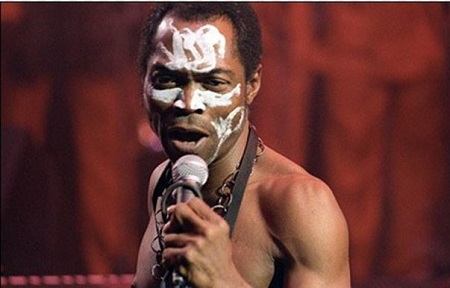
Why Fela Married 27 Women in Just One Day

Many people have, over the years, wondered why the legendary musician, Fela, married up to 27 women in just one night. Odega Shawa, in this piece tries to explain why.
Fela
 I just heard someone comment in a rather cordial conversation that Fela is no hero to African values. He didn’t send Femi to school and he married 27 women in one day. And to this guy, who by the way is a musician of the new school, using the two reasons so stated, Fela is no hero and cannot be pointed out to the young to emulate as a role model.
 To everyone that did not understand the language Fela spoke with his actions, the language of freedom and happiness, let me make it clear. Nigeria has no socio-cultural hero more prominent than Fela Anikulapo Kuti. What Fela addressed, bravely, with his life and family as example, is education and morality. Fela asked his generation two questions: What is education and what is morality? The answers he got were unsatisfactory to him, so like every intelligent person, he went out of the box for answers that satisfied him.
 Let me start with education. Traditional African societies trained children, after careful observation of their inclinations during infancy, in what was referred to as occupation, a skill that is life sustaining and takes a period of tutelage to master. The pupil had his own space to move and grow, and the value of that traditional education is evident in the culture that our ancestors all left behind.
 Modern schools lump everybody in one box and brands them, like slaves, as either good or bad. The bad are the F students. The good are the A students. This classification is artificial of course and does not represent the true life prospects of particular students. Schooling is just a monster agent of social chaos. Reality scorns the results of schooling, since in life most ‘successful’ people were F students in school and most ‘unsuccessful’ people were A students at school. There is just a small margin of equilibrium where the system gets it right, but not because the system is any good itself. Just because things have to balance out in any case. Fela recognised this stupidity of formal schooling for what it is and decided to try the way of his ancestors. He didn’t abandon Femi. He trained Femi to play music. And today, Femi, is one of the most globally renowned musicians out of Africa, without the contribution of the University of Lagos.
 Then Fela married 27 women at once. Of course no married man today has had sex outside his marriage 27 times. And no unmarried man has had sex 27 times with either prostitutes or his girlfriends. Yeah, right. Let him who has no sin cast the first stone. But what was morality, as far as Fela was concerned? Well, for Fela morality was blunt honesty and sympathy, not hypocrisy and cruelty. He didn’t have to marry any of those women (he was already sleeping with them anyway) but he did. He married them to protect them from society’s scorn, a scorn he already understood because he has had to deal with it. For the women, Fela took them from illegitimacy and placed them under his legitimate name. People normally hide behind their churches and their mosques to indulge in secret sexual affairs. But Fela is not normal that way, just the same way he said he was not a gentleman. Fela had his affairs out in the open – and he made it all legal too.
 The problem we have with interpreting Fela’s life as a role model is because he was an alternative thinker – and we are all idiots. At least you are more of that if you still imagine that we cannot teach Fela in Sunday schools.
 There is a limit to the level of clarity with which an alternative thinker would choose to do a certain thing for it to become meaningful to everybody. In a world that now has more idiots than people that are ready to use their own brain people like Fela will always be treated shabbily in church and chapel conversations by people who are not even fit to untie the laces of his shoes. But that is the way of life. The guy I argued with told me that St Paul is in heaven and Fela is in hellfire. St Paul told slaves never to aspire to freedom since they would find it in heaven after they die. Fela told the slave master to go shove his chains up his own you-know-what. I don’t know how saints get chosen but if I am a black man with a sensitivity towards enslavement of blacks by whites, especially in America in the 17th century, I don’t know how St Paul is my hero and Fela is my villain. It is just a force of opinion that the same people who accused our ancestors of worshipping wood carvings will not allow me to accuse them back of worshipping wooden crosses. All of a sudden the wooden crosses meant something more than wood, but the wood carvings of the agaba masquerade, by some reason, cannot mean anything more than wood, it cannot be a metaphor for a hidden cosmology just like the cross. Just so some white christian idiot can vilify my ancestors in peace.
Fela understood the world, like our ancestors did, that we are soul spirits just having another human experience. Today we believe we are human beings that can have spiritual experiences.
 Fela was ready to live the wisdom he imbibed, out in the opinion, something Pastors Chris Oyakhilome and Chris Okotie should do well to learn from.  We are all Christians but we have now allowed our religion to wrap us in a mystery of hypocrisy and double life. Fela didn’t want anything to do with any double life. That is why he married 27 women and if we have any brains left in our heads we should know there is wisdom here to teach our children, and to teach ourselves.
 
God bless you. And bless that brother that argued with me too. Heaven help us all.
 
***
 
Written by Odega Shawa
 
IG: @shawa_kalakutabooks
 
Twitter: @shawa2008


When News Breaks Out, We Break In. (The 2014 Bloggies Finalist)

Adeboye's Story: From Lecture Hall to Global Pulpit

Since his announced retirement, Pastor E.A. Adeboye who left the academic field to become a cleric, has become a more celebrated christian icon all over the world.
Pastor Enoch Adejare Adeboye

Two months before his 75th birthday on March 2, Pastor Enoch Adejare Adeboye stepped aside from his position as the General Overseer of the Redeemed Christian Church of God in Nigeria, causing a seismic shift, not only in RCCG worldwide, but across religious divides nationally.
Born on March 2, 1942, in Ifewara, Osun State, Adeboye, who holds a B.Sc in Mathematics from the University of Nigeria Nsukka, and a PhD in Applied Mathematics from the University of Lagos, worked as a mathematics lecturer at the universities of Lagos and Ilorin before heeding the call into the ministry as a full time preacher.
However, Adeboye’s meteoric rise, from being a mathematics lecturer to a powerful global religious leader, was not as straight forward as a mathematics formula that could be easily decoded by the best PhD brains.
After joining RCCG in 1973, Adeboye worked as the interpreter of the sermons of the church’s founder, the late Rev. Josiah Olufemi Akindayomi, from Yoruba to English.
Eight years later, in 1981, at the age of 39, Papa Akindayomi’s mantle — like the Biblical Elijah to Elisha — fell on Adeboye, who was then appointed the General Overseer of the church, following the former’s death a year earlier.
For three years, he juggled his work as a mathematics lecturer with his position as general overseer.
Eventually, Adeboye, probably in a moment of divine insight into the future, resigned his position as a university teacher to go into full time ministry as a preacher.
It proved to be a decision orchestrated by divine genius. Since then, RCCG, a church that was hitherto largely unknown prior to Adeboye’s ascension, has experienced astronomical growth; giving rise to about 14,000 branches across Nigeria, and branches in 192 countries worldwide.
Thousands attend a single service in the church’s headquarters in Ebute-Meta, Lagos State, while millions attend the monthly programme dubbed ‘Holy ghost service at its camp ground on the Lagos-Ibadan Expressway.
Adeboye had once said that his goal was to plant a church within five minutes trekable distance to every home.
It, therefore, was no surprise when, in 2008, the revered cleric was named one of the 50 most powerful people in the world by internationally acclaimed US magazine, Newsweek.
“Pastor Adeboye has been of tremendous positive influence on me, and on so many other leaders worldwide,” said popular lawyer-activist and an RCCG pastor, Ebun Adegboruwa.
It was a fitting statement about a simple man, but one carrying grace and global influence through the power of divinely inspired words that millions hold on to like life itself.
While a statement from the RCCG later clarified that the revered cleric had only stepped down as head of the Nigerian church and would remain the General Overseer of RCCG Worldwide; millions of RCCG faithful in the country are unsure of what to make of the decision of the great man they have come to love and respect as ‘Daddy G.O.’
Nevertheless, it is without doubt that Adeboye’s national and global influence will not wane.
He is married to 68-year-old Adenike and they are blessed with four children.


When News Breaks Out, We Break In. (The 2014 Bloggies Finalist)