ads

Friday, November 6, 2015

November 6, 1982 to November 6, 2015: Here are Stiff Challenges President Had to Face in 33 Years


Paul Biya: The Political Maradona
Since November 6, 1982 President Biya of Cameroon has stood the taste of time as distinguished statesman. For 33 years, the country has moved, stood stable and at the same time met stiff challenges. The attempted coup plot of 1984, economic crisis, the wing of change, (multiparty politics) civil strike (Ghost town) and now the Boko Haram insurgents in the North part of Cameroon are some of the difficult moments recorded in 33 years.  

The fight against economic gangsters (especially influential members of the CPDM) has also being a great moment of hard decision taking given that a former Prime Minister, former Secretary Generals at the Presidency, Ministers of state, Ministers and Director of state corporations are among the top VIPs arrested and detained.
The man who became Head of State on November 6, 9182 is today one of the longest serving Head of States in the World and the third in the African Continent.  Cameroonians who are 33 years old have never known any other President except Paul Biya. But how did he consolidate power to the point that his critics call him King. To Many of Biya’s critics, having clocked 33 years in power, President Biya is a king but he has ruled nothing when judged from the tempting moments during these years. The lesson from the 33 years of Biyatism has demonstrated one thing vividly, that it does not matter how many times a leader stumbles on obstacles, what matters is that he/she gets up and keep it going smoothly. In other words, the tempting moments of President Biya within 33 years, taught Cameroonians that great people are not those who have never fallen but those who get up after each fall. And, also that trials and tribulations are moments of great reflection because after each tempting moment in President Biya’s 33 years reign comes a brighter idea for improvement. (The New Deal, Greater Ambitions, Great Achievements, Vision 2035) The result is the astronomical improvement in infrastructure, economic, social and political life of Cameroon. Much has been achieved in 33 years, but not without sacrifices by the population and steadfastness by President Paul Biya. Yet much has not been done when compared to the rich resources which call for a more intensified fight against corruption and inertia.
Here below are those difficult moments?

CNU To CPDM
President Biya took over when Cameroon had the unique part system. And the ruling party was the CNU, with President Ahmadou Ahidjo as the party leader and Head of State. Logic would have had it that when President Biya became Head of State he was supposed to take the helm of the party. It was not so because late Ahmadou Ahidjo remained head of the CNU. President Biya was the vice president and on December 11, 1982 the central committee and political bureau of the CNU placed him in charge of party affairs in Ahidjo’s absence. Despite Biya’s loyalty to Ahidjo, a rift occurred in 1983 and Ahidjo went into exile. He accused President Biya of plots against him and even resigned as Head of the CNU. President Paul Biya became CNU President during an extraordinary session held on September 14, 1983. He held that portfolio for two years but another sad incidence forced him to transform the CNU into the Cameroon People’s Democratic Movement, CPDM, in Bamenda in 1985.

Attempted Coup Plot
The rift between President Biya and his predecessor Ahidjo, widened as the latter fled into exile. He constantly accused President Biya of undermining his authority and legacy left behind. When President Biya took the helm of the CNU, he announced Presidential elections for January 14, 1984. He precipitated the elections for they were earlier scheduled for 1985. As the only candidate to this election, President Biya scored a walloping 99.98%. President Ahidjo who had fled into exile was put to trial in absentia for his involvement in a coup plot perpetrated in 1983 by him and two others. The court slammed them death sentences, but President Biya used his presidential clemency and commuted the sentences to life imprisonment. Biya was now in a fix. He decided to disband the Republican guards who were loyal to Ahidjo. He did this on April 5, 1984 and on April 6, 1984 another coup attempt on President Biya was foiled. The northerners were blamed for the coup and the hand of Ahidjo was suspected to have instigated the coup.

Wind Of Change
The wind of change that started in Europe and blew through Africa did not leave Cameroon indifferent. People manifested for multiparty politics. The nation was on a red alert. President Biya granted the wishes of Cameroonians with the liberty laws of 1990. Many political parties cropped up like mushrooms and were duly registered. Presidential elections were organized in 1992 and President Biya met his first ever real challenge. He won the elections with a score of 40 %. Ni John Fru Ndi of the opposition, Social Democratic Front, SDF followed closely with 36%. The opposition candidate contested the results claiming victory. This set the entire nation into a polarized state leading to strikes and marches for the stolen victory. And President Biya had to form a coalition in order to escape an imminent dominance of the opposition in parliament as they won a majority of seats.

Ghost Towns
If anything has ever shaken the very foundation of Cameroon and put President Paul Biya in difficulties it is the ghost towns in the 90s. During the ghost towns declared by the opposition that transformed itself into coalitions, the economy slummed as economic activities were halted. The government machinery could not grind smoothly. Investors were no longer coming and the tax evasion became the order of the day. The nation was paralyzed and the government confused. President Biya had to employ his wits to call for dialogue with the opposition that were the main brains behind the ghost towns. But the opposition was clamouring for sovereign national conference while the government wanted something else. However, the tripartite talks organized by the government diffuse the tension and economic activities resumed. But the opposition SDF boycotted the 1997 elections. In this election, President Paul Biya secured a 92.6% win over the other opposition candidates.

Economic Crises And Devaluation
The economic crises had rocked Africa since 1974. Cameroon did not feel the pinch until 1985 when the economic crises hit Cameroon like a bomb shell. President Paul Biya tasked Cameroonians to embark on agriculture as a means of solving the crises. Cameroonians who were already use to white-collar jobs found agriculture a bitter pill to swallow. Many did not even attempt to swallow the pill. But while President Biya was still looking for ways to take Cameroon out of the economic crises, a natural disaster hit Lake Nyos on August 21, 1986. People and their cattle were killed by the poisonous gas that came from the lake. International humanitarian efforts were mobilized and Cameroon benefited enormously from gifts donated by international organizations. But this cap in hand attitude was not going to help all Cameroonians or last for long.
Another devastating blow was dealt Cameroonians by the devaluation of the CFA currency. Civil servants had to see their salaries slashed. Ends were no longer meeting and tension was gradually boiling in the nation.

Corruption and Inertia
While President Biya was struggling to manage these very difficult moments, his closest collaborators were busy swindling state funds. They took more than their mouths could chew. But not only were the President’s collaborators involved in corruption, they were involved in inertia. The state machinery was bogus and ineffective. People were spending four hours at work and not even four hours of work. Despite President Biya’s policy of rigour and moralization, nothing was moving, as these slogans felt on deaf ears. And the consequent result was that Transparency International ranked Cameroon as the most corrupt country on three runs consecutively. President Biya set to work to reverse the situation. And he had to make hard choices as most of the embezzlers were his closest collaborators. He made the hard choices and threw most of them into prison. This reversed the trend and Cameroon had to honourably lost the trophy of corruption.

The Bakassi palaver
The Bakassi peninsula is today part of Cameron. It has for time in memorial been a headache to Cameroon leaders. Cameroon has lost valiant soldiers at Bakassi and even administrators. President Biya had to employ diplomacy at international level for Bakassi to revert to Cameroon as Nigeria had claimed ownership over that oil rich peninsula of the SW region of Cameroon. Although Cameroon had legitimacy over Bakassi, the area still remained a headache to President Paul Biya as soldiers were killed there regularly. Pirates had made Bakassi their safe haven and had taken hostages there, requiring the joint efforts of Cameroon and France before their release. And it was still from this area that pirates had been operating and raided banks in Limbe and Douala. Thus the Bakassi palaver up to its peaceful settlement had been one of the tempting moments of President Biya within the past 33 years.

Revision of Constitution
The Cameroon constitution was revised in 1996. Before the revision of the constitution, there were heated debates on the necessity of its revision. President Biya created the enabling environment and the constitution was revised given new dispensation in the functioning of the state machinery. There was going to be a constitutional council. There was to be the creation of Regions to replace provinces with decentralization, the creation of the senate and regional councils. But this very constitution placed a two term bar on presidential elections. This therefore meant that President Biya’s mandate acquired in 2004 was the last, because his first seven term mandate was acquired in 1997.
But President Paul Biya said the constitution limited the choice of Cameroonians. He asked for its revision. This met with stiff resistance from the opposition who saw it as a ploy to allow President Paul Biya another opportunity to contest the 2011 presidential elections. Marches were organized by some civil society organizations to denounce the revision of the constitution. The long and short of it is that the bill passed through parliament and the majority CPDM MPs voted for it while the opposition boycotted. Although the bill passed, it was one of those incidences that gave President Paul Biya night mares.

Stolen Wallet, G11 Syndrome and Misinformation
Lieutenant Luc Emane, one of President Biya’s closest collaborators stole his suitcase while they were on mission abroad. This act was so treacherous that President Biya ordered for his immediate arrest and repatriation home to face the music of justice. This came just at a time when the G11 syndrome (G11 are those who want to replace President Biya in 2011) had gained some prominence. Some of President Biya’s collaborators who had embezzled state funds were allegedly said to be using the funds to sponsor a smear campaign on the personality of the president. And that these detractors were trying to undermine the peace reigning in Cameroon through their nefarious plans of seizing by power what they can never achieve through the ballot box. For this reason, many fabricated reports were being circulated by agents of these detractors that President Biya and family have ill-gotten wealth starched in bank accounts abroad.

The February Strikes
In February 2008 there was an uprising that paralyzed four of the ten regions of Cameroon. People went on the streets because of rising food prices. The strike that was purported started by tanker and taxi drivers escalated, resulting to losses in human lives and property. The gravity of the strike could be measured in the down turn in economic activities. Looting became the order of the day. It was actually a challenging moment for President Biya. But as a serene leader, who knows how to absorb the shocks, he called the shots and the strike action ended. What is important today is that a soft cushion has been provided by government to absorb all the negative shocks of the rising food prices. The prices of basic commodities were reduced with an increase in the salaries of civil servants. Also subsidies and custom duties waved on so many imported basic commodities.

Boko Haram Insurgents
The fight against Boko Haram insurgents in the Northern Region of Cameroon has been another challenging task. The military has shown its bravery in the fight as President stood his ground that the insurgents must be crushed. The method of abducting Cameroonians and foreign nationals have been tempting yet Biya has always emerged victorious. 


When News Breaks Out, We Break In. (The 2014 Bloggies Finalist)

What President Biya has Achieved in 33 Years, Positive Vistas of the Man of November 6...A Must Read

By Fai Cassian Ndi
Paul Biya: The political maradona?
Today November 6, 2015  President Paul Biya clocks 33 years as President of the Republic of Cameroon. From North to West, East, South and East, festivities marking the 33 "export" years of President Biya will be skyrocketed with speeches and Motions of Supports and Encouragement from all directions. While those could have the opportunity to make speeches will have express theirs in songs, while those have had the opportunity to empty state will behave like king-kongs in their villages. 
Yet another category feels the 33 years of President Paul Biya as Head of State do not only calls for celebrations, it also a moment for Biya supporters to reflect on the thunderous path he took when on November 6, 1982 he took the famous oath of “I do so Swear”.  Before being sworn in on November 6, 1982, Paul Biya had served as Prime Minister to late President Ahidjo for seven years. The Eye moves beyond the ordinary to examine the positive vistas of President Biya’s 33 years in power.
The preliminary ideologies of President Paul Biya were presented in a roadmap known as the New Deal policy which was imbued in the virtues of rigour and moralization, and communal liberalism. To understand the vision Paul Biya had for Cameroon is to identify the cornerstones of Rigour and Moralization and or Communal Liberalism. With it was a policy that opted for the reintroduction of multiparty politics, a free society and democracy. Unfortunately, the ingredients with which the policies were engraved touched the interest of some conservationists within. The dissenting voices finally exploded like volcano in a coupe plot. And on April 6, 1984, some of his detractors stage an attempt to remove him from power through the barrel of the gun. Regrettably for the coupe plotters, evil could not triumph over the truth. By the time that Cameroonians wanted to refocus their energy and support Biya to set Cameroon towards achieving his New Deal political programme, another disaster hit the country. It wasn’t man made anyway but a natural disaster that took place at Nyos claiming thousands of lives. When the storm was over, Cameroon was caught in the wrap of the economic crisis. The world economic crisis affected almost every sector, even though Paul Biya managed to sustain the economy from collapsing into th doldrums, Cameroon’s five years development plan that had been guiding development process in the country shrunken. The civil service was like in a jungle, while the rich became richer, the poor became poorer. President Biya was then obliged to go in for structural adjustment. Salaries of civil servants were cut-down, and President Biya called on Cameroonians to tighten their sleeves.

The Modernizer
Between 1982 and 1985, Paul Biya’s mindset geared towards economic recovery and setting the pace for democracy. In 1985 he decided to introduce a political platform that could accompany his aspirations for Cameroon. That is how the CPDM in Bamenda to match those aspirations while the CNU died a natural death. As if to say he was seeing tomorrow, President Biya told radio Monte Carlos in France that he would be remembered as the man who brought democracy to Cameroon. In December 1990, the anti democratic laws of 1962 were scraped off by the National Assembly to usher in new laws that give room for democracy, freedom expression, freedom of associations and liberty. Thus, the law harmonizing the freedom of association, speech, political parties and religious groups brought democratic process. To accompany these measures, the issue of regional balance and national integration was not just in principle but was put to practice. Whether multiparty politics was forced into his throat or not is an issue because if he had said no to it, no matter the wind that was blowing it would have passed, bookmakers observed. But Biya accepted and granted Cameroonians even though some of his colleagues moved to the street claiming Cameroonian were not prepared for such a process. The revision of the constitution of 18, January 1996, aided President Biya to refocus his policies. The introduction of the Senate, Constitutional Council and the regions to replace the provinces was another innovative mark of the head of state to accompany democratic process. The Criminal Procedure Code of 2005 added value to guarantee the liberty of Cameroonians. The creation of the national Human Rights Commission could not be emphasized as it was added impetus to the issue of freedom in the country. To concretized it by signing a decree creating an election observatory known as the National Election Observatory –NEO.  Though with limited powers, it set the pace for the creation of the independent election body, Elections Cameroon.

The Achiever
As President Biya clocks 33 today,  his cronies, Cameroonians will be celebrating some of his outstanding achievements. It is a fact that Cameroon has made giant strides under the leadership of President Paul Biya both socially, economically and politically. The greatest achievement that Cameroonians have enjoyed is the peace that has ensued for the past 33 years. Even though there had been little raptures here and there, Cameroon has been politically stable and thus scoring high standard diplomatic goals. With over 260 political parties in the country, Biya has proven himself as the most flexible President in the African continent. He introduced the National Program on Good Governance in the year 2000 and later revised it in 2005 to suit present realities. His open diplomacy has been achieved through peaceful resolution of conflict and the preservation of Cameroon’s boundary integrally.
In the economic sphere, Paul Biya brought in the concept of privatization of public companies in order to encourage foreign investments in the country as well as reduce the rate at which state funds were been squandered. Besides, Cameroon also qualified for the Heavily Indebted Poor Countries Initiative-HIPC. Getting to the completion point of the Heavily Indebted Poor Country Initiative enabled he country gain over FCFA 225 billion FCFA. Socially, the country has also registered a lot of accomplishments ranging from the recruitment of 2500 health workers, the overture of the Ministry of Social Affairs, as well as the building of reference hospitals in the country. The creation of state universities, Buea, Garoua, Bamenda and the separation of the Yaounde University to I & II set the credence of the educational sector. In the education sector, it is clear that every village in the country has at least a government primary school and the slightest is that an agglomeration of villages is given a high school. Technical education for example also registered the creation of Higher Technical Teachers Training College-ENSIET. Even though the national team, the Indomitable Lion recorded very poor performances recently, the beginning years of Biya were extremely glorious as in 1984 Roger Milla, Abega and co made the country proud by winning the African Cup of Nation. Repeatedly Cameroon won the trophy in 1988, 2000, and in 2002.  In the domain of infrastructure development, the Mvele Dam, Lome Mpanga dam, Lagdo, Bamenjim Dam embed in the greater accomplishment program justifies why his supporters have to celebrate. The Kribi deep Sea port project and the Cameroon-Chad pipeline project are also the cornerstones of the 33 years of Biya’s leadership qualities. The development of the mining sector and revamping of the agricultural sector with the reintroduction of the National Agropastoral show is also indicative. The ease and tact in Cameroon use it diplomatic prowess in winning Bakassi back to Cameroon and other villages along the border line almost guaranteed him a Noble Peace Prize. The project vision 2035 is also a good example of his leadership qualities.

Fight against Corruption
When President Biya promised that Cameroon was going to change, many of those whom he called up to help stir the ship of the country thought it was a joking statement. He said corruption and embezzlement of public funds must become a thing of the past. He started by launching “operation antelope” that scraped off ghost government workers from enjoying taxpayers money. Over 15.000 ghost workers were trapped and the pay roll was cleansed. He further strengthened the actions by launching “operation sparrow hawk” which has sent to prison many government officials. Actually, corrupt officials are languishing in jail for siphoning public funds. Amongst the high profile personalities arrested for corrupt practices, one could cite, Former Prime Minister Chief Ephraim Inoni, Marafa Hamidou Yaya, Polycarp Abah Abah, Urbain Olengana Owona, Atangana Mebara,  Haman Adama, Mouchipou Seidou, Catherine Abena, Titus Edoa, all former ministers. Amongst directors and general managers of state corporations are Ondong Ndong Gerald, Forjidam, Edouard Ekoto, Nguini Effa, etc etc….

The political Maradona
President Biya according to bookmakers has been a political Maradona for 33 years. How he dribbles the opposition has been remarkable and fascinating too. In a bid to neutralize the opposition, Biya has not only been using force but the tactics of diversion to divide the opposition parties. He has always been apt to divert public opinion on government shortcomings. And the opposition has always fall prey to his political game plans. When he discovered that Cameroonians were sucked in the idea of the National Conference advocated by the opposition, he proposed the Tripartite. When the Tripartite finally took place in Yaounde on October 11, 1991, what followed was the collapsed of the group of the coordination of political parties and civil society. When some political parties decided to sign and others like the SDF rejected, there was division and the coordination ended in shambles. In the 1992 Presidential when the Northwest refused that he had won, he imposed a state of emergency. To divert public attention, he introduced the “grande debate”  and then used Kontchou Komengni as the parroted public speaker to change the minds of Cameroonians. In 1997, he introduced dialogue and the talks between the CPDM and the SDF that never yielded any fruits but calmed flaring tempers. When the SDF asked for an independent electoral commission, Paul Biya created NEO, an elections observatory in response. He used the same trick for Daikoli to join the government and it was the trick that brought on board NUDP of Bello Bouba Maigari to enter government. A similar trick divided the UPC into fractions thus weakening it. One of the headaches of Biya has been Hon. Adama Modi, who was like an opposition in the CPDM.
He demonstrated with dexterity his ability to solve transborder crisis during the Bakassi Crisis and he is doing the same in the fight against Boko Haram. In the Bakassi Crisis, he won it diplomatically but in his capacity as the Supreme Commander of the Armed Forces, he declared war against the insurgents and our soldiers have proven their bravery many had congratulated him.

Coming up soon: Where President has failed in 33 years


When News Breaks Out, We Break In. (The 2014 Bloggies Finalist)

Stealing is in Every Kenyan's Blood - Robert Mugabe Lashes Out


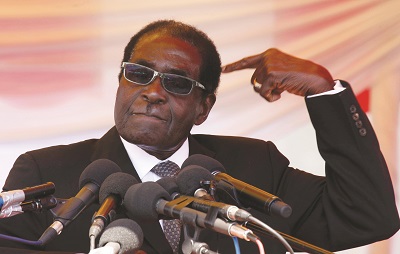
Controversial President of Zimbabwe, Robert Mugabe has unleashed terror on Kenyans in a media event that had a wide coverage.
Robert Mugabe

 
President Robert Mugabe, 91, threw caution to the wind in his views about Kenyans who he described as highly unscrupulous people.
 
According to Mugabe, Kenyans are the most arrogant thieves in the world because they steal with high degree impunity.
 
In his words:
“Those people of East Africa shock me with their wizardry in stealing. Sometimes I tend to believe that stealing is in every Kenyan’s blood. These people go to their schools and read good courses but they qualify as the best thieves.
“You can even think that there is a subject in their universities called Bachelor of Stealing. Whenever they get an opportunity as employees, they never disappoint. They steal enough money to buy their freedom because even the judges who listen to their cases are financially powerless,
” he said with vigor.
“I urge you my people to be on high alert in case you by bad luck, happen to visit that East African nation. They might infect you with that disease and we don’t want it here. Zimbabweans are honest people who love their country and don’t want such stealing tendencies ”
He shouted with courage as he advised his countrymen.

When News Breaks Out, We Break In. (The 2014 Bloggies Finalist)

Ta Nformi Christopher Fomunyoh Book Launch Pull Crowd in Bertoua

 The launching that took place at the Linguistic Centre, Bertoua recorded a massive presence of the administration was well as members of the civil society. The book launch which took place at the Linguistic Centre premises was described by many as the highest crowd puller in the city. Dr. Christopher Fomunyoh also donated books to the Linguistic Centre, Bertoua. The Book titled Dr. Christopher Fomunyoh: The Cameroon of Tomorrow is written in simplified English and as Nelson puts it: can inspire many Cameroonians to tap. At the end of the book launch, TFF donated books to the Linguistic Centre, he called on the population to make good use of the books donated. (Photos)
Autograph

Director of Linguistic Centre

Dr. Christopher Fomunyoh addressing the crowd

VIPs

Population

Dr. Ahmadou Sehou: The man of wrote the preface


Njouny Nelson: Writer of the Cameroon of Tomorrow

Handing books to Director of Linguistic Centre

Talking to the Press


When News Breaks Out, We Break In. (The 2014 Bloggies Finalist)
Fuh Calistus Launches FAINAP, Kick-starts Industrial Revolution in Donga Mantung

 By Fai Cassian Ndi


Dr. Fuh Calistus Gentry, Secretary of Mines, Industries and Technological Development, distinguished founder of the Frontier Agricultural and Industrial Programme- FAINAP called on the people of Donga Mantung Division set aside their political differences inorder to forge for sustainable development. Dr. Fuh Calistus made the clarion call while launching FAINAP activities in Nkambe, on November 4, 2015.
In his launching speech, Dr. Fuh Calistus said that FAINAP in its entirety is a non-governmental organization, non religious, non tribal and an apolitical organization which focuses on the development of Donga Mantung Division in the North West Region of Cameroon. According to Fuh Calistus, the organization seeks to reinforce and empower farmers as well as support them with adequate and relevant facilities. The support, he said will tackle production, transformation and marketing of farm produce.
Harping on the various speculation that have been chosen, Minister Fuh Calitus told the population that FAINAP has the mandate to boost the maize, cassava, cattle, beans and the palm sectors. Furthermore, he added that clusters of production would be created in the five sub Divisions which will be managed by a local committee. He used the ocassion to announce that some 40.000 chitted palm nuts will be bought to set up nurseries in the coming months. Besides, he also called on the fons of Donga Mantung Division to allocate land for the creation of the clusters which will also provide jobs for the youths. Through this method Dr. Fuh Calistus said that Donga Mantung farmers will add value to what they produce as well stimulate the imminent creatioon of an agro industrial zone. “If Government created the Ndu Tea plantation, it is because we have the potentials and if Government created the Dumbu Cattle Ranch, it is also because we have the potentials”. Accordingly, he continued that Donga Mantung will become an industial powerhouse in the country producing, transforming and commercializing several quality produce ranging from palm oil to grid, starch and dairy products.

On his part the Secretary General of FAINAP, Adamu Musa used the opportunity to extend a motion of thanks to H. E President Paul Biya for reappointing Dr. Fuh Calistus in a strategic ministry during the cabinet reschuffle that took place last October 2, 2015. To Adamu Musa, the project has kick-started the Donga Mantung industrial revolution. “We shall also take the advantage of the strategic position of Donga Mantung Division vis-a-vis our giant frontier neigbour, Nigeria”. On how the project will get its funding to carryout this vast vision, Adamu Musa was categorical that the successes of the FAINAP will attract goovernment and many international funding organization to provide assistance for the sustainability of the project. He expressed gratitude to Dr. Fuh Calistus for his innovative ideas who has generously done his part and “ the ball is in our court. The big question now is shall we make or mar”?
Another speaker Ruth Ali Eno thrilled the population with her expertise in project management and the expected results of the project. While Mabu Finian handled the commercial and transformation part given his wide experience in East Africa in working for a similar project.
Another key point at the launching ceremony was the handing of the belated “Lifetime Achievement Award” of The Eye Newspaper to H.E Dr. Fuh Calistus who was absent at the August 31, 2015 award ceremony in Nkambe. In a brief statement the Secretary of the Jury, Nji Ignatius and Samba Kingsley numerated some of the projects initiated by Dr. Fuh Calitus such as the African Model village, Gent Fund, the Scholarship Fund, the Misaje Business Initiative etc. They said it was not by error that he was voted to recieve this prestigious recognition. “This is a spur for you to do more”, Nji Ignatius said.
It should be noted that over 60 traditional rulers attended the launching ceremony in Nkambe.


When News Breaks Out, We Break In. (The 2014 Bloggies Finalist)

Thursday, November 5, 2015

Hon. Awudu Mbaya Heads Delegation of African MPs to African Union


The President of Pan African Parliamentarians’ Network on Climate Change, Hon. Awudu Mbaya Cyprian
is leading a delegation of African Parliamentarians to Addis Ababa. According to a communiqué issued by the general secretariat of PAPNCC today, November 5, 2015, Hon. Awudu Mbaya left the country for Addis Ababa to attend the meeting of the African Union Economic Affairs.
Hon. Awudu is expected to address Members of the African Union Economic Affairs on critical issues ahead of the Paris Conference on Climate Change scheduled to begin next month. PAPNCC communiqué also specifies that Hon. Awudu will also address African MPs, Negotiators and other stakeholders on the role MPs will play and will continue to play on the on-going preparations for the Paris Summit. It should be noted that the Pan-African Parliamentarians’ Network on Climate Change is crusading for One Africa, One Voice, One Position in PARIS in a bid to seal a binding, equitable and fair deal for Africa.


When News Breaks Out, We Break In. (The 2014 Bloggies Finalist)

Standing Ovation for Ta Nformi Cameroon Dr. Christopher Fomunyoh at GBHS Abong Mbang (PhotoNews)

 There was euphoria at Government Bilingual High School Abong Mbang  as Ta NformiCameroon Dr. Christopher Fomunyoh, President of  The Fomunyoh Foundation donated books to improve on the learning and teaching programme in that institution. Before handing the donation to the principles of the school,  Ta Nformi Cameroon told students that education is the most precious gift one can give to humanity today. He told the students that " I see future teachers, professors, medical doctors, engineers, Jurists, judges, lawyers, statesmen and women, etc. To achieve this you must read these books", Christopher Fomunyoh said. On his part the Principal of GBHS Abong Mbang, Mr. Kwang Rostand expressed gratitude the President of the Fomunyoh for the timely gift that will go a long way to change lives. "This is the first time that this school has benefit from such a largess. we salute the efforts of Dr. Christopher Fomunyoh in his humanitarian mission". Before leaving GBHS Abong Mbang, Dr. Christopher Fomunyoh Promised that he will bring more books if the students read them ..."I would like to see this book looking old. That will be ample proves that you have been reading them".(PhotoNews)


When News Breaks Out, We Break In. (The 2014 Bloggies Finalist)

Euphoria at College Prive Jean Paul II as Fomunyoh Foundation Makes Huge Donation of Books (PhotoNews)

 There was euphoria at Government Bilingual High School Abong Mbang and College Prive Jean Paul II as Ta NformiCameroon Dr. Christopher Fomunyoh, President of  The Fomunyoh Foundation donated books to improve on the learning and teaching programme. Before handing the donation to the principles of the two institution Ta Nformi Cameroon told students that education is the most precious gift one can give to humanity today. He told the students that " I see future teachers, professors, medical doctors, engineers, statesmen and women, etc" On his part the Principal of school expressed gratitude the President of the Fomunyoh for the timely gift that will go a long way to change lives...(PhotoNews)


When News Breaks Out, We Break In. (The 2014 Bloggies Finalist)