ads

Friday, December 4, 2015

Nigeria Communication Commision Reduces $5.2bn Fine Slammed on MTN...See New Fine and Deadline for Payment

 After long negotiations and plea, the NCC has finally reduced the staggering $5.2bn imposed on MTN Nigeria for violation of sim card deactivation directive.
 
The Nigerian Communications Commission has reduced the $5.2bn slamed fine on giant telecommunications company MTN Nigeria to $3.4bn for flouting the regulatory body's directive on SIM deactivation.
 The Nigerian Communications Commission handed Africa's biggest mobile phone company the penalty in October after MTN failed to cut off users with unregistered SIM cards from its network.
Nigeria, MTN's biggest market, has been pushing telecoms firms to verify the identity of subscribers amid worries unregistered SIM cards were being used for criminal activity in a country facing the insurgency of Islamic militant group Boko Haram.
The fine, originally $5.2 billion, prompted MTN to hold talks with the NCC over the past five weeks seeking a reduction.
"After further engagements with the Nigerian authorities, the NCC has reduced the imposed fine," MTN said in statement. “After considering the company’s request, it has taken the decision to reduce the fine on the MTN Nigerian business from the original N1,040,000,000,000 to N674 billion which has to be paid by 31 December 2015,” the NCC said.
The company, which makes about 37 per cent of its sales from Nigeria, said it was considering the NCC's decision. "Executive Chairman Phuthuma Nhleko will immediately and urgently re-engage with the Nigerian authorities before responding formally," it said.
Nhleko, who took charge for up to six months after the abrupt resignation last month of Sifiso Dabengwa, led the company for nine years before stepping down in 2011.
Meanwhile, the MTN announced a shake-up of its senior management structure in an effort to strengthen oversight, governance and regulatory compliance across its operations in 22 countries in Africa and the Middle East. “MTN Nigeria’s CEO, Michael Ikpoki and the head of Regulatory and Corporate Affairs, Akinwale Goodluck, have tendered their resignations with immediate effect,” the company said in a statement on Thursday morning.
“They are replaced by Ferdi Moolman as MTN Nigeria CEO and Amina Oyagbola as its head of Regulatory and Corporate Affairs. Mr Moolman was previously COO at MTN Irancell and most recently CFO at MTN Nigeria. A Nigerian national, Ms Oyagbola also retains the position of MTN Nigeria’s Head of Human Resources. She formerly headed regulatory affairs at the Nigerian operating company.”
 Read below the mail MTN management sent to its staff
“The Nigerian Communications Commission (NCC) reduces imposed fine to US$3.4 billion equivalent and further cautionary announcement.Shareholders are advised that, after further engagements with the Nigerian Authorities, the NCC has reduced the imposed fine. MTN has received a formal letter dated 2 December 2015 from the NCC informing the Company that, after considering the Company’s request, it has taken the decision to reduce the fine on the MTN Nigeria business from the original N1,040,000,000,000 (One Trillion, Forty Billion Naira) to N674 Billion which has to be paid by 31 December 2015.The fine relates to the late disconnecting of 5.1 million MTN Nigeria subscribers in August and September 2015. The Company is carefully considering the NCC’s reply, however the Executive Chairman Phuthuma Nhleko will immediately and urgently re-engage with the Nigerian Authorities before responding formally, as it is essential for the Company to follow due process to ensure the best outcome for the Company, its stakeholders and the Nigerian Authorities and accordingly all factors having a bearing on the situation will be thoroughly and carefully considered before the Company arrives at a final decision.Shareholders are therefore advised to continue to exercise caution when dealing in the Company’s securities until a further announcement is made. As we committed to you previously, and in the spirit of our Vital Behaviour of Complete Candour, we will keep you updated as the matter unfolds. As we enter the busy year-end period in our business, I encourage you to continue focusing on our customers and strive to keep our promise to provide the bold, new Digital World to them.
 
Regards,
Phuthuma


When News Breaks Out, We Break In. (The 2014 Bloggies Finalist)

Thursday, December 3, 2015

Cameroon Army Kills 100 Boko Haram Insurgents, Free 900 Hostages

 Boko Haram has encountered a fatal loss in a recent encounter with Cameroonian soldiers who were assisted by a regional task force.
News reports say, the soldiers with backing from a regional anti-Boko Haram task force, have killed at least 100 Boko Haram militants and freed 900 people held hostage.
“In the course of this operation, at least 100 members of Boko Haram were killed. 900 hostages detained by Boko Haram were freed,”
reports quoted army spokesman, Col. Didier Badjeck.
The defence minister Joseph Abeti Assomo the action enabled troops "to release almost 900 hostages, seize large supplies of arms and munitions as well as black-and-white Islamic State flags".


When News Breaks Out, We Break In. (The 2014 Bloggies Finalist)

My Husband is a Prisoner of Conscience - Nnamdi Kanu's Wife Speaks

 tori.ng
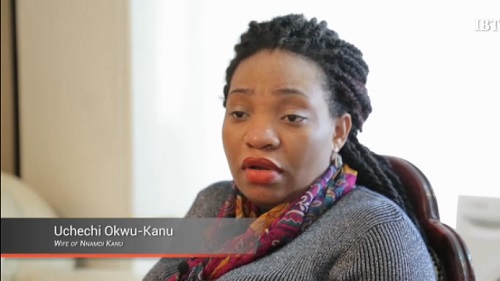
In an exclusive interview with IBTimes UK, the wife of Radio Biafra director, has warned her husband's health is worsening as he is no longer able to take medicine for 'his life-threatening ulcer'.
 The wife of controversial Radio Biafra director, Nnamdi Kanu has expressed concern over the prolonged detention of her husband, who she says 'is a prisoner of conscience'. 
 Uchechi Okwu-Kanu told IBTimes UK she fears for her husband’s well-being and alleged he is being tortured by the Nigerian state security service (DSS).
 She said she had been able to speak with Kanu only once since he was arrested by the DSS as he travelled to Nigeria from London in October. She warned her husband’s health is worsening as he is no longer able to take medicine for 'his life-threatening ulcer'.
 The Radio Biafra director was apprehended on charges of criminal conspiracy, intimidation and belonging to an unlawful society. He pleaded not guilty.
 Mrs. Okwu-Kanu defended her husband’s struggle for independence and argued pro-Biafrans have the right to self-determination. She also urged the Nigerian government to release her husband and engage in dialogue rather than arresting people 'who agitate for freedom'.
 Kanu was due to appear in court on 1 December but his lawyer, Vincent Obetta said the hearing had been postponed as the judge’s father had died and could not attend. Obetta and Kanu’s sister, Princess Chinwe Kanu, also expressed concern over what they described as Kanu’s 'deteriorating health' after seeing him in court on 23rd November.
 IBTimes UK has contacted the DSS for a statement on allegations of torture but has not received a comment at the time of publishing.
 The Nigerian government told IBTimes UK that it does not consider the separatist movement a threat to the current leadership and defined pro-Biafrans as an 'insignificant number of frustrated people who are not a threat to the existence of Nigeria'.
 Army spokesman, Colonel Sani Usman told IBTimes UK: "The message to the Biafrans is clear: The army and police might use the Rules of Engagement on security operations to the fullest depending on the circumstances."
 Amnesty International said in an exclusive report by IBTimes UK there was 'credible evidence that pro-Biafran separatists in Nigeria are targeted by police'. However, the police denied these claims, arguing that pro-Biafrans hold violent rallies that disrupt peace.
Oleehkukyu Ali, a public relations officer for the police in Anambra state, told IBTimes UK the police have nothing against pro-Biafran groups as long as they behave in a peaceful way.
 He said: "Our country provides freedom of association, speech and movement. But groups have to behave peacefully. Police in Anambra are operating a very open policy and leaders of groups should engage with us and let us know what they are doing so we are aware of protests."


When News Breaks Out, We Break In. (The 2014 Bloggies Finalist)

Wednesday, December 2, 2015

Delay in SDF Kumba II Reorganization - Function of Uncombed Internal Rules, Constitution

 By Felix Teche Nyamusa
The postponement of the reorganization of the SDF Kumba II electoral district executive committee members scheduled for November 21, 2015 to an indefinite date is an episode that is becoming recurrent in the party due to the somewhat ambiguous rules/constitution the organization which does not play well for our goal of capturing power in 2018 Cameroon polls!
Fellow militants, sympathizers of SDF  and Cameroonians, lovers of democracy in general, conscious of the destructive dictatorial governance of the amorphous CPDM regime; and that the  SDF alongside the objective opposition must take over power in 2018;  considering that Cameroon has been rendered heavily indebted, poor, insecure, corrupt ... and trailing socio-economically and otherwise even sister Africa banana republics, any delay in strengthening by organizing or smooth-running the country's number one opposition  political party spells continuous doom and misery to Cameroonians particularly the expectant grass roots . 
Unnecessary delays at electing the national organizing secretary during the 2012  national executive committee(NEC) reorganizing exercise; the lingering incapability of putting order in SDF Douala particularly with respect to picking a complete  regional executive committee for the littoral and now the Kumba II electoral district postponement of total reorganization due to feuds on directives are direct and/or indirect consequences of uncombed party structures and working guide lines which necessitates a review of the party constitution to tackle the exigencies of practical realities in the political struggle today !
The SDF regularly holds conventions, NEC meetings and those of the party's lower structures but they are not yet adequate to uproot the deeply entrenched Biya/CPDM evil. Strategic innovations and decisions including embarking on the country’s constitutional last resort (sustained uprising) are today imperative! Cameroonians have to brace-up like Burkina Faso, Nigeria, South Africa, Senegal, the Maghreb countries to have effective succession and progress! The pro CPDM ELECAM that passes for Cameroon's elections body must be replaced; separation of governing powers must be ensured before the 2018 polls. All these ills of the vicious endemic ruling CPDM can be gotten ride of clearly when our party - Cameroon's mother opposition often timely re-plans. There is no room for laxity now from SDF following particularly peak party officials if we must attain the country’s leadership position in 2018!


hen News Breaks Out, We Break In. (The 2014 Bloggies Finalist)

Prof. Nkuo Theresa Akenji Appointed Vice Chancellor of University of Bamenda


Prof. Theresa Akenji
Prof. Nkuo Theresa epouse Akenji is the new Vice Chancellor of the University of Bamenda (UBa). Appointed by the Presidential decree of November 27, 2015, Prof. Nkuo Theresa takes over from Prof. Edukat Tafahwho allegedly was swallowed by the scandal at the Higher Institute of Logistic and Transport, and the gross insubordination to Minister Fame Ndongo as he reportedly rejected recommendations from the minister to absorb students on the waiting list.
Formerly Deputy Vice Chancellor in charge of Internal Control and Evaluation at the University of Buea, Prof. Nkuo is expected to transform UBa into a citadel of standards. Born in Wombong, Boyo Division in the North West Region, Prof Nkuo Theresa according to reports is a product of Our Lady of Lourdes College, Mankon-Bamenda, Saint Mary of Woods College, Indiana, the State University of New York and the School of Tropical Medicine, Louisiana State University – all in the USA – where she received a PhD in Parasitology and Immunology.


When News Breaks Out, We Break In. (The 2014 Bloggies Finalist)
CPJ joins call for Turkey to release Cumhuriyet journalists


The Committee to Protect Journalists has joined an appeal alongside 13 other international advocacy groups, calling on Turkey to release Can Dündar, editor-in-chief of the Turkish pro-opposition daily Cumhuriyet, Erdem Gül, the paper's Ankara bureau chief, and all other journalists currently imprisoned in Turkey for their work.
Dündar and Gül are being held in pretrial detention on charges of espionage and terrorism after their arrest Thursday, according to reports. The charges against them are related to a report published in Cumhuriyet in May alleging that trucks belonging to the Turkish National Intelligence Agency (MİT) had been used to smuggle arms to rebel groups in Syria, according to reports. The government has denied the allegations, according to local reports. If convicted, the journalists could be sentenced to life in prison, reports said.

Details of the appeal were published today after a press conference in Istanbul about the Cumhuriyet journalists' arrests, hosted by Reporters Without Borders and the Turkish Association of Journalists, and attended by the Committee to Protect Journalists.

A copy of the appeal can be viewed here.
When News Breaks Out, We Break In. (The 2014 Bloggies Finalist)
Biafran Protesters Storm Onitsha, Take Over Niger Bridge

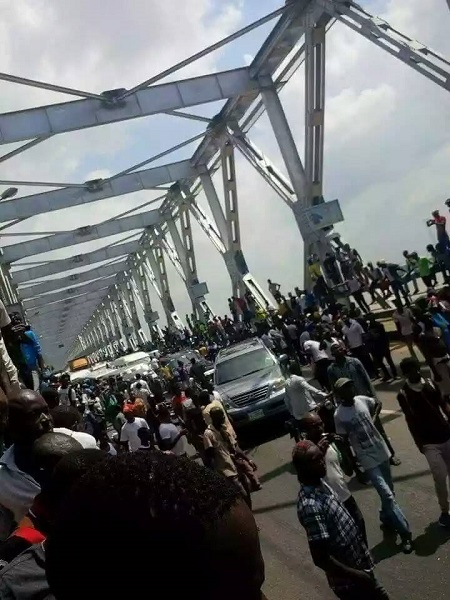
The agitation for the realization of the sovereign State of Biafra continues to gain momentum as protesters take to the streets in Onitsha blocking the Niger bridge.
Biafra protesters on take over Niger Bridge
 
Activities in Onitsha, the biggest commercial city in Anambra State were disrupted this morning as pro-Biafra protesters took to the streets.
The Onitsha Bridge, which links the southeastern part of the country with the western part, was blocked by the protesters denying vehicles access.
Channels TV reports that the protesters had attempted to cross the bridge, prompting soldiers to put up a barricade to stop them.  They began a protest yesterday in Nnewi demanding for the release of Nnamdi Kanu, the director of Radio Biafra and today, December 1, they paralysed activities in the commercial city of Onitsha, Anambra state.
It was gathered that they stormed the Onitsha bridgehead protesting, totally blocking the River Niger bridge.
Vehicles coming from Onitsha and Asaba axis were reportedly on stand still also.


When News Breaks Out, We Break In. (The 2014 Bloggies Finalist)

Tuesday, December 1, 2015

What the Paris Climate Summit is likely to deliver

 Alison Azaria (Community manager, 2degrees)
If more than 80 world leaders gather in Paris, including Obama, Xi Jinping, Modi and Putin, will the Summit get off to a good start?
Do prospects look bright for the Paris Climate Summit?
Prospects look bright for the Paris Climate Summit. The sole fact that this year’s COP (Conference of the Parties) will start with the government leaders meeting instead of finishing with it, as was usual in the past, is promising. If the more than 80 world leaders who will gather in Paris, including Obama, Xi Jinping, Modi and Putin, will get the Summit off to a good start, the work of two Summits can be done in the space of one. The Summit could lead to: a long-term 2050 goal, a five-year cycle of reviewing the pledges, the taking off of carbon pricing, more transparency in financing mechanisms and possibly the inclusion of non-state actors in future steps.
On 30 November, while still recovering from the horrific terrorists attacks on Friday the 13th, Paris will be the host of at least 80 government leaders from all major nations across the world. Together they will kick off the COP21 Climate Summit On 30 November they will together set the scene for the final Paris Agreement, to be concluded on 11 December. Which is the opposite from previous COPs, at which government leaders used to _close_the two weeks of negotiations.
Delegates used to prepare the text, and the government leaders would sign it off. This is what happened in 2009 in Copenhagen: government leaders were only allowed to leave the building after about one extra day (and night) of negotiations. However, it makes perfect sense to start with presidents and prime ministers, for they are the ones that have the ultimate mandate for negotiations. Putting the leaders’ session at the beginning creates the opportunity to make progress that normally would take two COPs.
Preparatory work on the Paris Agreement has already been done in interim meetings, like the one in October in Bonn. However, negotiators there forced the co-chairs of the central negotiation process—who had drastically reduced the amount of text—to restore most elements, still leaving a large number of issues that are ‘still to be decided’. This means that the success of Paris will depend very much on the ambitions displayed by the government leaders.
Optimism
In this context, the lights are at least yellow, and many would say they are green. “Paris will be a watershed event in climate policies,” said Edward Cameron, Policy Director of We Mean Business, during a Press Briefing on 17 November. “The Climate talks have never before been in such a promising position. It’s not enough, but a new economy is about to be established.”
His optimism was shared by others at the briefing, like Steve Howard, Chief Sustainability Officer of the Ikea Group, and Anne Simpson, Investment Director Global Governance of CalPERS, a $300 billion pension fund in the US.
Michael Liebreich, Chairman of Bloomberg New Energy Finance said: “Paris is heading for an ‘imperfect success’. In the last three years, the clean energy transition has gained momentum, mainly because the cost of clean energy has come down. In addition, the preparation for this summit has never been better. US talked to China, India talked to the US. I lost my scepticism about the UNFCCC process.”
The optimism is partly justified by the numbers. As of this writing, 174 of 196 countries have submitted their action plans (INDCs: Intented Nationally Determined Contributions). According to a recent report of the UN Climate office (UNFCCC), 147 pledges met the 1 October deadline. Their aggregated pledges deliver the best result ever. According to Climate Action Tracker and the IEA (International Energy Agency), the current pledges, if they are kept, would lead to a 2.7°C temperature rise, which is quite an improvement compared to the 3.6° that would be the result if all present policies in place were implemented. A few years ago, temperature rise in the 21st century was still predicted to be 4.8 degrees.
Nevertheless, the world still needs to bridge an emissions gap of about 9 billion tonnes of CO2-equivalents by 2025, or 15 Gt CO2 by 2030, to stay on track for not exceeding the 2°C threshold, still a considerable amount compared to total global emissions today (about 50 Gt).
To be sure, government leaders will definitely not bridge these gaps during this year’s Summit. But they could decide on how to get onto the 2° Celsius emissions pathway in the longer term. Progress will be guaranteed if heads of state agree on a long-term goal, for instance for 2050, together with a ’ratchet-up mechanism in a five-year cycle, gradually gearing up the ambitions in INDCs over the next decades. This is something that could not be accomplished by delegated negotiators, only by political leaders.
Financing
The aggregated INDCs and the road ahead to lower emissions are only one part out of three main desired outcomes of Paris. The second one relates to the Green Climate Fund, agreed to in Copenhagen in 2009. The Copenhagen Agreement may be regarded as a failure, it did deliver two results that are still important today: a general agreement not to exceed a 2°C temperature rise, and the establishment of the Green Climate Fund, which requires developed countries to finance mitigation and adaptation measures in underdeveloped countries with $100 billion a year starting in 2020.
Up till beginning of November, only $10 billion has been promised, but Paris is expected to help drive the Green Climate Fund forward. As many developing countries have now submitted their plans, it becomes clearer how money from the Green Climate Fund could be spent. This reduces the uncertainty that up till now was a good reason for richer countries to delay their pledges.
Nevertheless, there is still a long way to go. As Edward Cameron of We Mean Business notes: “This amount of $100 billion is only ‘lubricating money’, because the real investment will be at a level of trillions of dollars.”
Non-state actors
As a third important element, Paris could become a real breakthrough if states and non-state actors, such as cities, business and citizen groups, could come to an agreement on how to proceed on a 2° pathway together. Here too government leaders have a crucial role to play. There are important reasons for them to listen to non-state actors. Business and cities will have a large part to play in bridging the gap. For instance, early November the World Business Council on Sustainable Development reported that its nine low-carbon business partnerships could achieve two-third of the emissions reductions needed to get on the 2° pathway.
Although business and cities do not take part in the negotiation process, the Lima Paris Action Agenda and the NAZCA database of the UNFCCC contain many non-state initiatives, proving that states and non-state actors are becoming increasingly aware of each other’s efforts. Representatives of We Mean Business said they are satisfied with the UNFCCC’s acknowledgement of business initiatives. Cameron: “For the first time, business and negotiators are really act ingtogether.”
Carbon pricing
A giant step towards integrating state and business efforts would be made if world leaders were to take a stance in favour of carbon pricing. And this looks quite likely. Already 62 countries apply carbon pricing mechanisms, covering some 12% of all greenhouse gas emissions in the world. Over half of the INDCs consider the use of such market-based mechanisms.
At present, carbon pricing (one mention) and market-based mechanisms (three mentions) have only a modest role in the draft text for the Paris Agreement. But even if a Paris Agreement would not refer to carbon pricing, it could still take off. For instance, a high-level Carbon Pricing Panel, initiated by the OECD, IMF and World Bank, is pushing hard for more carbon pricing mechanisms. Panel members include leaders such as Angela Merkel (Germany), Michelle Bachelet (Chili), François Hollande (France), Hailemariam Desalegn (Ethiopia), Benigno Aquino III (Philippines), Enrique Peña Nieto (Mexico), Jerry Brown (California), and Eduardo Paes (mayor of Rio de Janeiro).
So there is every reason to assume carbon pricing will return after Paris on a prominent parallel UNFCCC negotiation track. Still, it would be an important official acknowledgement of business efforts if carbon pricing does make it into the Paris agreement. Even better would be a decisive step allowing business to become an integral part of the negotiations one way or the other. For the required acceleration of emission reduction after Paris, it is indispensable that states synchronise with non-state actors.


When News Breaks Out, We Break In. (The 2014 Bloggies Finalist)
COP21: France to Suport Renewal Energy in Africa, Hollande Says

French President Francois Hollande said life itself was at stake as he gave the opening speech of a UN
climate conference on Monday in Paris. Addressing the over 150 heads of states at the Paris Summit, Francios Hollande said "Never have the stakes of an international meeting been so high because it concerns the future of the planet, the future of life. The hope of all of humanity rests on all of your shoulders." The most interesting is that French government also pledged to support Africa with 2 billion euros to foster the use of renewal energy in Africa up till 2020. 
Africa, it should be noted would suffer the effects of climate change more than any other continent due to the high level of poverty.


When News Breaks Out, We Break In. (The 2014 Bloggies Finalist)

Jonathan Was Not Attacked in Bayelsa - Police

 Source: tori.ng
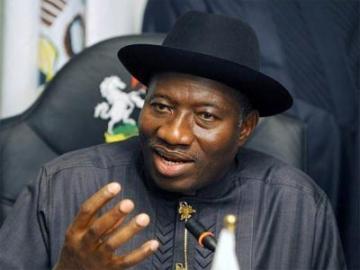
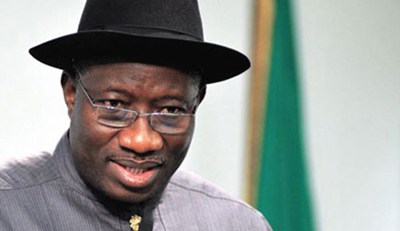
The Bayelsa State Police Command have swiftly played down rumours that a former president of Nigeria, Goodluck Jonathan was attacked by suspected hired assassins.
Goodluck Ebele Jonathan
The Bayelsa State Police Command on Monday debunked reports that former President Goodluck Jonathan was attacked in the state.
Earlier reports had stated that there was an attempt on the life of Jonathan by men suspected to be working for political enemies which instantly went viral on the social media.
The State’s Police Public Relations Officer (PPRO), Mr. Butswat Asinim, who spoke to a correspondent, said persons peddling the rumour were mischievous. Asinim said a group of hungry youths mistook a convoy of the former President for that of one of the governorship candidates in the forthcoming election in the state. Asinim said the youths traditionally followed the convoy, perhaps, for alms, only to discover it belonged to Jonathan.
“There was no attack on the former President. The youths mistook his convoy for a governorship candidate engaging in campaigns.
“But when they discovered on getting to the entrance of his house in Yenagoa that it was that of the President, they ran away. Some of them were arrested. They did not haul stones at the President’s convoy. They did not attack the convoy and no weapon was found on them,”
Asinim clarified.


When News Breaks Out, We Break In. (The 2014 Bloggies Finalist)

Paris COP21: Hon. Awudu Mbaya Speaks Out on Climate Change, Kyoto Protocol and New Challenges

 By Tukuruh Rashid
Hon. Awudu Mbaya
  
The President of Pan African Parliamentarians Network on Climate Change has said that one of the great expectations of the Paris Summit should be geared towards the replacement of the Kyoto Protocol. Hon. Awudu Mbaya made the statement will leaving Cameroon for Paris ahead of the COP21 Summit which kick-started on November 30, 2015. According to the Executive President of PAPNCC the protocol served as a good start and should from now serve as a necessary step to achieving a further international consensus that would prove to be more effective. The protocol he added laid the base for such a future strategy by increasing the global awareness of the issue, stimulating research into the area of global warming, and providing an incentive for the development of science and technology to help curb emissions. He however observed that the greatest challenge to that end is that in 2001 the world’s biggest greenhouse gas emitter, the United States, responsible for 25% of the world’s greenhouse-gas emissions dropped out of the Kyoto agreement. Environmentalists say the reason was that the drastic curb of 7% on its emissions, as targeted by the Kyoto Protocol, would severely harm the country’s economy. By withdrawing its support on mandatory emission restrictions, one of today’s most influential countries is not acting as a good example for the rest of the world.

« One Africa, One Voice and One Position » whiich is the slogan carried by the 38 member countries of the PanAfrican Parliamentarians Network On Climate Change (PAPNCC) seeks to bring to light Africa’s opinion on climate change at the Paris COP21 Summit. 
It should be recalled that in a Press Conference recently Honourable AWUDU MBAYA Cyprian, PAPNCC Executive President reiterated the fact that every individual, home, ethnic group and Nation must join the struggle to mitigate fight climate change. According to Hon. Awudu Mbaya, planting a tree nowadays is the most precious gift one can give to humanity. Planting trees around water catchment areas he added can contribute enormously in saving lives. He called on each and everyone to join given that they (parliamentarians) are politicians and not scientist but have joint the crusade.                      
Climate change has a negative impact on national poverty eradication and sustainable developement, besides has contributed a lot to global warming. Africa is a victim who suffers the effect more as 75% of 350,000 people die annually as a result of climate change related illnesses. Though climate change is an opposition to economic prosperity, the Paris United Nations Frame Work Convention is battling to reach a global agreement, which will replace the failed Kyoto protocol.     
Hon. Awudu revealed to the Press that Africa is going to the summit in one spirit and with resolutions arrived at the Nairobi summit under the theme « Towards a common position on climate justice and equity in the new world agreement on climate change ».
The Nairobi Summit he added called on the developed countries compensate Africa on the damage they have caused them through various means such as ; the Paris Agreement should ensure urgent cuts in green house emission, and that an increase in the global average temperature at all times should stand at 1.5°C above pre - industrial levels. Also, in a bit to support the Green Climate Fund, developed countries should indiscriminately contribute1.5% of their Gross Domestic Products (GDP) as estimated by the World Bank. They should as well contribute the necessary technology and finance to be able to compensate and transform Africa. But the question remains how much money can be dispose that will be able to repair the damage already done?
            However, Hon. Awudu Mbaya concluded that PAPNC amongst other crusaders like the East African Legislative Assembly (EALA), Inter-Parliamentary Committee of the West African Economic and Monetary  Union (IPC-ECOWAS), are the eyes of Africa in Paris looking deep to ensure that the declarations arrived at in Nairobi is not made a death letter.


When News Breaks Out, We Break In. (The 2014 Bloggies Finalist)
What Is the Paris Climate Change Conference?


The 2015 United Nations Climate Change Conference is held November 30 to December 11 in Paris, France. The avowed goal of this conference is to reach a comprehensive, binding agreement on climate change bringing together all the world’s nations. The main commitment period for the Kyoto Protocol expired in 2012, and was extended to 2020. Scientists now believe that the Kyoto commitments are not enough to turn the tide of climate change.
At the 2014 U.N. Climate Summit in New York, a lot of ground work was done in preparation for the 2015 Paris meeting, and there are high hopes for a brand new agreement.
A successful agreement in Paris would have to be aimed at keeping the rise in global average temperatures at or below 2 degrees Celsius above the pre-industrial average. The necessity to reach such an agreement is urgent. As the emissions of greenhouse gases continue to rise, our ability to keep global warming below critical thresholds is diminishing.
A new agreement will have to aggressively support the development of renewable, carbon-neutral energy sources like wind and solar.
According to United Nations climate chief Christiana Figueres, it is precisely this immense technological challenge that should convince reluctant countries to enter a meaningful agreement. Economic benefits will come from the development of renewable energy, including economic growth, technology jobs, and exports, she told the Associated Press.
While waiting after the slow pace of international diplomacy, here are some actions which anyone can take right now:

When News Breaks Out, We Break In. (The 2014 Bloggies Finalist)

Monday, November 30, 2015

How Abacha's N65Billion Loot Was Spent-Former Finance Minister Reveals

 The immediate past Minister of Finance, Dr. Ngozi Okonjo-Iweala has revealed how the massive loot of the late Nigerian Military Head of state, General Sani Abacha was spent.

late Head of State, General Sani Abacha
 
The former Minister of Finance and Co-ordinating Minister for the Economy, Dr Ngozi Okonjo-Iweala told the World Bank that about $500 million (N65bn) recovered from the late Head of State, General Sani Abacha in Switzerland was spent in the 2004 and 2005 budgets on roads, electricity, education, water and health across all six geo-political zones of Nigeria.
 This was contained in the documents the World Bank sent to Socio-Economic Rights and Accountability Project, SERAP, following enquiries made by SERAP on how the money, tagged Abacha loot was spent.
 A statement issued on Sunday, November 29, by SERAP executive director Adetokunbo Mumuni, said the organization has “received several documents from the World Bank totalling over 700 pages on information on the spending of recovered assets stolen by the late General Abacha, with some of the documents suggesting that the Abacha loot was spent on roads, electricity, education, health and water.”
 The organisation said: “SERAP can confirm that last week we received several documents from Ann May of the Access to Information Team of the World Bank following our Access to Information Request to the Bank. We also received a letter dated 24 November 2015 from Mr Rachid Benmessaoud, Director of the World Bank in Africa.”
 “In total, SERAP has received over 700 pages of documents, which we are now closely studying and scrutinising with a view to discovering whether the documents contain details that Nigerians would like to see and whether the information correspond to the facts on the ground. After this analysis, we will respond to the Bank and consider our options, including filing an appeal before the Bank’s Access to Information Appeals Board and taking other appropriate legal actions nationally and internationally to discover what exactly happened to Abacha recovered loot,” the organisation said.
 The organisation said that “In the meantime our preliminary review of some of the documents and the letter from Mr Rachid Benmessaoud have revealed certain facts which raise more questions about what exactly happened to Abacha loot: First, that Mrs Ngozi Okonjo-Iweala as Minister of Finance in a letter dated 9 January 2005 explained to the Bank that around $500m (N65bn) of Abacha loot received from Switzerland was programmed into and spent in the 2004 and 2005 budgets on roads, electricity, education, water and health across all six geo-political zones of Nigeria.”
 “Second, Mrs Iweala explained to the Bank that N18.60bn was spent on roads; N10.83bn spent on health; N7bn spent on education; N6.20bn spent on water; and N21.70bn spent on electricity. She also said that part of the funds were spent on new and ongoing investment projects. Mrs Iweala said that relevant federal ministries have the full details on the spending of repatriated Abacha loot. The Bank noted that there was no funds monitoring and tracking mechanism in place to trace the spending of Abacha loot,” the organisation also disclosed.
“Third, Mr Rachid Benmessaoud confirmed that the World Bank played a monitoring role in a return of assets by Switzerland but that the Bank is not currently involved in the monitoring of spending of Abacha loot that have been returned to Nigeria in recent years. He said that the Bank would be prepared to set up a mechanism to monitor the use of Abacha loot if the Nigerian government request the Bank’s assistance in this respect.”
"SERAP then argued that “given Mrs Okonjo-Iweala’s involvement in the spending of Abacha loot, President Muhammadu Buhari should urgently probe the role of the Ministry of Finance and relevant federal ministries at the time in the spending of Abacha loot particularly given the strong allegations of mismanagement that characterised the use of the funds 
The group said: “Although Mrs Okonjo-Iweala said that Abacha loot was spent in the 2004 and 2005 budgets on roads, electricity, education, water and health across all six geo-political zones of Nigeria, there is no evidence of such projects as millions of Nigerians continue to travel on dead roads, while they continue to lack access to adequate electricity supply, water, health and quality education. Therefore, President Buhari can no longer continue to remain silent on this issue of public interest if Nigerians are to continue to trust him in his fight against corruption.”
It will be recalled that in a letter dated 15 October 2015 and signed by Ann May of the Access to Information Team, the Bank said that “In response to your request under AI3982, we would like to inform you that we are still considering your request and need additional time to provide you with a more comprehensive response.”
The letter reads in part “In most cases, we will be able to respond within twenty (20) working days from receipt of a request for information. However, we may need additional time in special circumstances, for example, if the request is complex or voluminous or if it requires further review by or consultation with internal World Bank units, external parties, the Access to Information Committee, or the World Bank’s Board of Executive Directors.”


When News Breaks Out, We Break In. (The 2014 Bloggies Finalist)

Politicians Are Full of Lies - Former President Jonathan Says

 The immediate past President Goodluck Jonathan has said politicians are full of sugar-coated lies.

 The former President, who was speaking ahead of the December 5 gubernatorial election in Bayelsa State, has warned youths to stay away from sweet-talking politicians or get carried away by their lies.
 Jonathan urged them to assess what those aspiring for elective offices have done in the past.
 The former President stressed that most politicians today are men of many words, who tell many lies to woo voters and deceive the public in order to get to their respective offices, saying that politicians are full of lies
 He stated this on Sunday, November 29 during the presentation of Peoples Democratic Party, PDP, flag to Bayelsa State Governor, Seriake Dickson, at a grand finale of Dickson campaign in Yenagoa, the state capital.
 Present at the ceremony were Jonathan, Chairman of PDP Governors’ Forum and Governor of Ondo State, Dr. Olusegun Mimiko, National Chairman of the PDP, Chief Uche Secondus and Governor Dickson.
 Others are Senator Nimi Barigha-Amange, State Chairman, PDP, Chief Serena Dokubo-Spiff, Deputy Governor, Rear Admiral John Jonah, among others.
 Jonathan, who urged the youth to vote for a person that would develop the state and not by propaganda, said Dickson deserved reelection considering his developmental initiatives in the state.
 He said a vote for Dickson in next Saturday’s poll was a vote for liberation, development, security and peace, stressing that PDP remained the party for the people.
 His words: “So, for Bayelsa young people, do not be carried away by politicians. They are people of many words; they go to so many places, talking to so many people, telling so many lies.
 “So, do not listen to what people say, but assess what people have done over the period. Most of the candidates are well known to you, so it is the choice of Bayelsa young people to vote for development of this state or to vote for the retrogression of this state. It is the choice of Bayelsa young people to vote for education of our youths or to vote for the retrogression of our young people.
 “The choice is ours and I think you will think beyond yourselves. At our age, we are looking down, not looking up, whether you like it or not. So, think about your children and your grandchildren, think about building a state for your children and grandchildren, do not think about what you will swallow in the morning and I believe that the steps so far taken by Dickson have shown me that he wants development of this state, he has encouraged development in this state.


When News Breaks Out, We Break In. (The 2014 Bloggies Finalist)
Sunday, November 29, 2015

Paris COP21: Hon. Awudu Mbaya Presents Africa’s Position to the Press

 By Tukuruh Rashid at the National Assembly

« One Africa, One Voice and One Position » is the slogan carried by the 38 member countries of the Pan
Hon. Awudu Mbaya
African Parliamentarians Network On Climate Change (PAPNCC) aimed at bringing to light Africa’s opinion on climate change at the Paris COP21 Summit scheduled for December 2015.
Honourable AWUDU MBAYA Cyprian, PAPNCC Executive President in a Press Conference at the National Assembly has reiterated the fact that every individual, home, ethnic group and Nation must join the struggle to mitigate fight climate change. According to Hon. Awudu Mbaya, planting a tree nowadays is the most precious gift one can give to humanity. Planting trees around water catchment areas he added can contribute enormously in saving lives. He called on each and everyone to join given that they (parliamentarians) are politicians and not scientist but have joint the crusade.                      
Climate change has a negative impact on national poverty eradication and sustainable developement, besides has contributed a lot to global warming. Africa is a victim who suffers the effect more as 75% of 350,000 people die annually as a result of climate change related illnesses. Though climate change is an opposition to economic prosperity, the Paris United Nations Frame Work Convention is battling to reach a global agreement, which will replace the failed Kyoto protocol.     
Hon. Awudu revealed to the Press that Africa is going to the summit in one spirit and with resolutions arrived at the Nairobi summit under the theme « Towards a common position on climate justice and equity in the new world agreement on climate change ».
The Nairobi Summit he added called on the developed countries compensate Africa on the damage they have caused them through various means such as ; the Paris Agreement should ensure urgent cuts in green house emission, and that an increase in the global average temperature at all times should stand at 1.5°C above pre - industrial levels. Also, in a bit to support the Green Climate Fund, developed countries should indiscriminately contribute1.5% of their Gross Domestic Products (GDP) as estimated by the World Bank. They should as well contribute the necessary technology and finance to be able to compensate and transform Africa. But the question remains how much money can be dispose that will be able to repair the damage already done?
            However, Hon. Awudu Mbaya concluded that PAPNC amongst other crusaders like the East African Legislative Assembly (EALA), Inter-Parliamentary Committee of the West African Economic and Monetary  Union (IPC-ECOWAS), are the eyes of Africa in Paris looking deep to ensure that the declarations arrived at in Nairobi is not made a death letter.


When News Breaks Out, We Break In. (The 2014 Bloggies Finalist)

That Landmark Speech Delivered by "Ta Nformi Cameroon" Dr. Christopher Fomunyoh in Germany


In the past two decades, many African countries transitioned from autocratic or military rule to democratic forms of government, and the continent has witnessed progress in development and governance trends in many areas. Unfortunately, as the continent seemed set to consolidate these gains, growing security threats have emerged that could undermine peace and prosperity, especially if governance structures do not become more effective in meeting citizens’ needs.

Security
Surely Africa has experienced liberation wars, civil wars and other sorts of conflict and violence in the past, but the particularities of insecurity in today’s Africa stem from the changing nature of current security threats and vulnerabilities. Unlike in previous eras, the proliferation of non-state actors is forcing African militaries and security services to engage in asymmetric warfare for which they may not have been prepared. In Sub Saharan Africa, conventional warfare or interstate conflict has been on the decline, whereas intrastate conflicts have been on the rise. Between 2002 and 2005, the number of state based conflicts in Sub Saharan Africa dropped by 60 percent. However, in 2005, more than 50 percent of the world’s intrastate conflicts occurred in Africa, even as that represented a sharp decline in the number of wars since the 1990s.1 Whether in Somalia, South Sudan, North Eastern Nigeria, Darfur, Central African Republic, Northern Mali, or Eastern Congo, insecurity in today’s Africa emerges within national borders, even if in some instances exacerbated by non-state actors moving across what we all know to be very porous national borders. Not too surprisingly, the triggers of insecurity tend to blur the lines, as one frequently finds that behind these acts of violence are a mix of characters with multiple agendas ranging from the mildly political to the criminal and the religious. In most cases, there is a confluence of elements that identify with grievances in all three sectors, hence further complicating the resolution of conflict once it breaks out.    
There is a growing and disturbing convergence and connection among networks of organized crime, drug trafficking, illicit activities, money laundering, kidnapping, and terrorism. For example, failing economic development, high youth unemployment, the lack of industries and job opportunities, limited education, and low access to participation in governance provide the breeding ground (or swamps) in which extremist groups thrive. Collectively, as African countries fight these groups, we must also focus on draining the swamps infested with elements that facilitate recruitment of future extremists and hence exacerbate human insecurity.
In the last decade, deep insecurity has been thrust upon African countries by transnational terrorist groups or jihadists that seek to use hitherto ungoverned spaces in some countries, notably in the Sahel and the Horn, as launch pads for attacks against domestic and international targets. As we saw in last Friday’s attack in Bamako, Mali, or with Boko Haram in North Eastern Nigeria (which now calls itself the Islamic State of West Africa), extremist organizations operating in Africa are eager to build alliances with similar organizations in other parts of the world, notably Al Qaeda and the Islamic State of Iraq and Syria (ISIS). In many ways, the terrorism threat in Sub Saharan Africa that has flared up in recent years is fuelled by the global spread of extremist ideologies that exploit social media and its easily accessible information sharing environment. The Sahel region, as well as the Horn of Africa is paying a price for a jihadism that has trickled over from the Middle East, and is now fuelled exponentially by the proliferation of light weapons across the continent, and the aftershocks of the Libyan crisis and the chaotic demise of the Muammar Gaddafi regime. It is common knowledge that AlQaeda in the Islamic Maghreb (AQMI) was launched initially by elements that fought to overthrow the Algerian government in the early 1990s, but in recent years, have consolidated their activities across the Sahel region, particularly in northern Mali. Similarly, Boko Haram with its origins in North Eastern Nigeria is now having a devastating impact on the neighbouring countries of Niger Republic, Chad and my own country Cameroon. In the same manner, the activities of AlShabaab in Somalia are having a destabilizing effect on the security and economic prospects of Kenya and other countries in East Africa and the Horn.
I would like to briefly discuss a few of the most prominent sources of insecurity in Sub Saharan Africa at the moment.

 Boko Haram in Nigeria:
According to the Global Terrorism Index report, Boko Haram 2 is the deadliest terrorist group in the world (ahead of ISIS, the Taliban and AlShabab), having murdered close to 7000 people in terrorist attacks in Nigeria, Cameroon, Chad, and Niger Republic. In 2014, 23 percent of all terrorism related deaths worldwide occurred in northern Nigeria. Although we do not have complete figures for how many people Boko Haram has killed in 2015, the terrorist group has dramatically increased its cross border attacks into Chad, Cameroon and Niger, with a spate of suicide bombings earlier this year killing at least 53 people in N’Djamena, the Chadian capital.

AlShabaab in Somalia:
Another Sub Saharan African country, Somalia, continues to struggle to combat Islamic terrorism as AlShabaab seeks to undermine various incarnations of the Somali government since 2009. Despite suffering major setbacks in 2014 and being pushed out of all the major cities of the country, AlShabaab killed more people in terrorist attacks this past year than ever before at least 800 people in more than 400 attacks.  AlShabaab has also attempted to strike outside of Somalia, killing people in attacks in Djibouti, Ethiopia, and Kenya.

Northern Mali:
Despite the push back from Malians backed by other African forces and French military that routed out Islamist militant forces (Operation Serval) in 2013, Northern Mali, remains a hotbed for Islamic terrorist activity. As 4 the recent attack on the Hotel Radisson Blu in Bamako last Friday showed, terrorist groups in Mali, notably Ansar Dine and Al Mourabitoun (which has claimed responsibility for the attack)5, have begun to attack “soft targets” such as hotels, cafes, and supermarkets.

Development
In the past two decades, gross national income (GNI) per capita has almost doubled in many countries across Africa. According to the World Bank, the International Monetary Fund and other international financial institutions, many African countries have taken steps to improve the environment for doing business, as a result of which the costs and time required to start a business have declined substantially. Five African countries, Benin, Cote d’Ivoire, DRC, Senegal, and Togo, even rank in the top 10 countries worldwide for enacting reforms that make it easier to do business. Surely, the continent’s abundance of natural resources is driving some economic gains. Africa remains a viable trading partner with a multiplicity of untapped mineral resources. For example, Guinea, with a population of 12 million people, is the world's second largest producer of bauxite and has rich deposits of diamonds and gold. Guinea comes after Australia in bauxite production, but at the same time, maintains the highest bauxite reserves in the world, far ahead of Australia. Ghana and South Africa figure prominently among the top ten gold producing countries in the world. Five African countries Cote d'lvoire, Ghana, Nigeria, Cameroon, and Togo are among the top 10 world producers of cocoa. Five others Ethiopia, Cote d'lvoire, Uganda, Cameroon and Togo are among the top ten world producers of coffee. Gulf of Guinea countries that include Nigeria, Gabon, Congo Brazzaville, Equatorial Guinea and Angola, account for close to 20 percent of oil imports into the United States; and new technology in oil exploration and production is contributing to new oil discoveries in countries such as Mauritania, Chad, Ghana, Cote d'lvoire, Uganda, Kenya, Tanzania, Mozambique, and even Niger. Take a look at the mineral map of the DRC: cobalt, coal, natural gas, nickel, diamonds, gemstones, gold, water resources for hydroelectric purposes, to name a few. Today’s era of globalization has witnessed a boom of new technologies. Financial flows, together with innovation, create markets that foster growth; and one of the biggest growing sectors on the continent is the information and communications technology sector (ICT). Several reports indicate that in 2014, globally, investments in the ICT sector only increased in Africa. Countries such as Kenya,
Ghana, Rwanda, Tanzania, South Africa and Nigeria have made huge investments in ICT infrastructure, working in partnership with international agencies, ICT vendors and researchers. This is no surprise, as Africa is also home to 200 million young people between the ages of 15 and 24, a number that could double by 2045 according to the African Development Bank. This age group is the biggest consumer of technological goods, and as they grow in numbers, so does the demand in this sector. The demographics, if properly managed, are a real asset for Africa. The grievance that many Africans carry, and rightly so, is that these rosy stories of macroeconomic trends and economic potential on the African continent do not translate necessarily into improvements in the wellbeing of ordinary citizens. Too many Africans still live below the poverty line, youth unemployment is extremely high, corruption and economic crimes are high, and investment in the social sectors of health, education, and public welfare are very low. The bottom line is that Africa is not a poor continent. Indeed, it is a rich and wealthy continent both in terms of human capital and natural resources; but it is the poor management of these resources that causes extreme poverty on the continent, and an ever expanding gap between the rich and the poor.
Uneven distribution of economic gains contributes to insecurity as disaffected citizens living in poverty may turn against the government status quo. It is this excessive poverty, not just in economic terms but also in access to political space, freedom, and the civil liberties that most of the world takes for granted, that pushes young Africans to seek greener pastures in other lands, sometimes through the hazards of illegal migration and human trafficking, or that makes young people vulnerable to the recruiter incentives of extremist movements. In this regard, the youth population bulge I described earlier as an asset could become a liability: while having a larger working age population should increase public revenues that can be used to support societal needs, in Africa high levels of unemployment translates into increases in the number of disaffected young people that could be instrumental to movements turned against the state. Speaking at the last conference on migration held in Malta a few weeks ago, the President of Niger Republic Mahamadou Issoufou stated that “over 100,000 illegal migrants from Sub Saharan Africa cross Niger and the Sahara desert every year in search of better livelihoods in Europe.” He listed the causes of such illicit activity as linked to poverty, inequalities, and the deficits of democracy, and then urged Europe and Africa to work together to create conditions for people to feel they could lead decent lives in their home countries.

Governance and Democracy
Political stability that is founded on institution driven effective governance creates an enabling environment for sustainable economic development and eliminating the conditions that serve as breeding grounds for extremism. In authoritarian environments, investors must worry that the rules on commercial transactions and other engagements could always be changed overnight at the whims of one man or of a tiny circle of oligarchs. Invariably, a government with questionable legitimacy is less likely to build the national consensus needed to deliver effective social services to citizens and generate or sustain long term economic growth and development. On the contrary, such a government devotes public resources to sustaining a system of patronage, prebendalism and corruption, without which its stay in power becomes tenuous. The development of strong democratic institutions and good governance practices therefore contributes substantially to growth and development. With the third wave of democratization that began after the collapse of the Berlin Wall and the end of the Cold War, Africa saw the independence of Namibia in 1989/1990, the end of apartheid and release of Nelson Mandela in South Africa in 1991, and the fall of many military and autocratic regimes. In fact, in 1990, Freedom House, which ranks freedoms around the world, rated only four African countries Senegal,
Botswana, Mauritius, and the Gambia as partially free or democratic. Today, Freedom House rates about 11 African countries as totally free and another 19 as partially free, for a total of about 30. Indeed, many African countries have made considerable progress in the past two decades in renewing political leadership, conducting credible and transparent elections, providing space for vibrant political parties and civil society organizations, and creating new institutions that espouse the rule of law, democracy and good governance. For example, the African Union Charter on Democracy, Elections, and Governance (2007), and sub-regional entities such as the Economic Community of West African States (ECOWAS), Inter-Governmental Authority on Development (IGAD) and the Southern African Development Community (SADC) have protocols that promote free trade and allow for free movement of persons and goods, hence promoting more open markets. In today's Africa, unlike two decades ago, civil society is vibrant and seeks to play an advocacy role; human rights organizations exist and regularly denounce the gross violations of human rights by the dozen or so remaining autocratic regimes; and independent media (that includes community based radio stations and print media) provide opportunities for diverse viewpoints and dissenting voices to be heard.
For example, through the first quarter of 2012, Senegal’s democracy was tested by controversy over the candidacy of then incumbent President Wade, viewed by many Senegalese as contrary to the term limits enshrined in the country’s constitution. Thanks in large measure to effective grassroots mobilization by Senegalese civil society, the media, youth movements and political parties, the electoral process was safeguarded and the country experienced a credible transition of power. Similarly, in Burkina Faso in October 2014, when military strongman and long serving Blaise Compaore tried to amend the country’s constitution to extend his 27 years rule, he was chased out of office by a citizen led revolt that was largely peaceful. Not surprisingly, in September this year when remnants of Compaore’s supporters in the presidential guard staged a coup against the transition process, citizens took to the streets and with support from civil society, independent media, and the armed forces of the country, foiled the coup attempt. The Senegal and Burkina Faso examples are significant because they demonstrate that other tenets of democracy are taking root across Africa, and when properly mobilized can serve as a firewall to democratic backsliding.
It is against the backdrop of these significant political changes in Africa that many Africans and friends of the continent lament and condemn the backsliding observed in countries such as Burundi, Congo Brazzaville and Rwanda, where leaders are undermining constitutional rule by manipulating the rule of law to perpetuate themselves in office. By so doing, these leaders shrink or close political space and open the doors to violence and gross violations of human rights as citizens suffocate under their heavy handedness and feel obliged to seek alternativemeans of making their voices heard and their votes count.

Synthesis
In this 21st century, security, development, and governance are deeply intertwined. In today’s very competitive globalizing world, only African countries that are able to tackle all three challenges simultaneously will do well; the nonperformers will invariably face backsliding and rejection. Some countries on the continent are still plagued by issues of corruption, shrinking political space and lack of credible political transitions, and marginalization of its poorest communities. Without effective political leadership and the appropriate delivery of public services to citizens, the prerequisites for development would never be met, and the Millennium Development Goals would remain a distant illusion. To have sustained economic growth, Africa needs inclusive economic institutions and viable political systems capable of creating an enabling environment for private sector investments and exercising proper oversight. In short, today’s debate is not just about having a nation state in name; it is, and should be, more importantly, about how the state is governed. In looking at the way forward, we must recognize that Africa is a fast growing continent in which approximately 40 percent of the population is below 15 years old. In countries such as Mali and Uganda, close to 50 percent of the population is below 15 years old compared to only 20 percent in the USA and approximately 13 percent for Germany. Africa is therefore a youthful continent. There is no doubt in my mind that the youthful population of Africa is an asset to the continent and the world if the continent’s political leaders can create opportunities for these youth to find gainful employment and lead meaningful lives. Africa calls for visionary leadership, and the world has a vested interest in accompanying the continent in this search. Friends of Africa and the continent’s population of approximately one billion people continue to aspire to a better future one in which the three challenges of security, development and good governance are guaranteed. For these aspirations to come to fruition, the continent’s leaders must commit to prioritizing these three areas and conducting themselves as true servants of their people. They must also demonstrate the ability to project Africa on the global stage such that this beautiful continent can make its contribution to the world as part of the global community of our very humanity. Thank you very much for your time and attention.


When News Breaks Out, We Break In. (The 2014 Bloggies Finalist)