ads

Sunday, May 8, 2016

Who Wants to Destroy the Tadu Dairy Cooperative Society?


Tongues are still waging in Kumbo, Bui Division over the unprecedented incident that almost created a stalemate at the Tadu Dairy Cooperative Society-TDCS. Matter came to a head few days ago when some crop farmers took some dairy cows to the Kumbo council cattle paddock on grounds that the cows had destroyed their crops. The logjam nearly took control of the lone processing industry in Bui Division and one of the most vibrant cooperative societies in the North West Region. TDCS which was at the brinks of an explosion, now pulsate in calm and serenity. This follows a restructuring mission from the Ministry of Livestock, Fisheries and Animal Industries to address crisis apparently masterminded by none members of the cooperatives. So immaculate were the issues addressed that as the management of TDCS was trying to decipher the problem, rumours made rounds in the Division that the 100 hectares of land allocated to the cooperative was being transformed into a private estate by its present management.
The rumours which according to what we gathered were politically motivated has created an atmosphere of uncertainty amongst inhabitants of Tadu in Kumbo. Besides, some members of the community went as far as questioning why and how the TDCS acquired land for dairy ranching from SODEPA and not even a single hectare of land was allocated to farmers. Some community members went as far as pointing accusing fingers at Shang Lawrence, the man who founded the Tadu Dairy Cooperative Society that he is processing documents to own the land allocated for TDCS.
When contacted, Shang Lawrence refuted the allegations and said they were baseless. According to Shang Lawrence, TDCS dairy cows were transferred to Kumbo on grounds that they allegedly destroy crops and they all negotiated for the release of the animals. “We had to negotiate given that some of the animals were so badly treated and were showing signs of stress. You dairy animals are so delicate”. He continued that when the animals were released, TDCS also contacted the competent authorities to investigate into the alleged crop destruction. On the issue of trying to transform TDCS land into private estate, he debunked it and added that the Ministry of Livestock, Fisheries and Animal Industries, had allocated only 100 ha of the 2000 ha of land for dairy farming and see no reason why farmers cannot equally apply to the same ministry for land. He disclosed that this controversy is coming when experts from the Ministry of Livestock, Fisheries and Animal Industries had spent days in TDCS carrying out restructuring. And that TDCS was being stratified to meet present day challenges yet there is a widespread camouflage of farmer/grazer conflict. “Of late, we paid FCFA 350.000 to some farmers that our animals destroyed irish potatoes, but they later harvested close to 20 bags on the same plot”. Shang Lawrence also revealed that they are diversified versions on the current incident. “Some members of the communities say our animals were caught on the road while others say they were caught on the farm before being taken to Kumbo council”, he concluded. Notwithstanding the same rumours went wild intoxicating the population that the community had benefited nothing from TDCS. Shang Lawrence while reacting to the influence peddlers reechoed that if there is electricity in the area its thanks to the TDCS and that the cooperative had provided pipe borne water and stand taps as well as opened up farms to market roads. A school of thought holds that the rumours are masterminded by some elite who see nothing good in anything except in the form of bread.
It should be recalled that the Minister of Livestock, Fisheries and Animal Industries Minister, Dr Aboubakar Sarki has inaugurated a milk processing unit in Tadu in 2010. This processing unit is the lone industry in Bui Division.
Created on November 15, 1990, the Tadu Dairy Cooperative Society, TDCS, was born from collaboration between Land O’Lakes Inc. in the USA and cattle breeders of the Banso highlands of Cameroon, to function as a multipurpose cooperative that would provide its members with access to new breeds, improved production practices and modern value adding technologies. This collaboration between TDCS and USAID/Land O’Lakes was also geared towards developing quantity milk production ranging from developing collection channels, processing and marketing programme. Since then TDCS has benefited from capacity-building programmes, especially in the training members of the cooperative in the USA on artificial insemination. Seeing the importance of TDCS the Cameroon government through the HIPC programme also funded the cooperative and the Livestock Ministry also endorsed of the initiative as a poverty alleviation programme reasons why the Minister inaugurated the milk processing factory and promised more support and donated a tractor and accessories to the TDCS. Bui Division statistically is third largest in terms of animal breeding in the North West Region and first in terms of dairy cattle given the presence of TDCS. An estimated 53,523 cattle and 300 dairy have been supplying milk to the factory and several families look to dairy farming as the most reliable source of income.


 (Do Not Miss Part II, coming up soon)

When News Breaks Out, We Break In. (The 2014 Bloggies Finalist)

Lesson from Nigeria: How Dangote will End Fuel Scarcity

 The outspoken minister of Information and culture, says the problem of fuel scarcity will become a thing of the past in the country when Aliko Dangote finally comes on board.


Lai Mohammed

Speaking when he visited Rutam House, headquarters of the Guardian Newspapers in Lagos, the Minister of Information and culture, Lai Mohammed, said the problem of fuel scarcity will become a thing of the past in the country once the petroleum refinery being built by Aliko Dangote, the richest man in Africa, comes on board.
The billionaire mogul's Dangote Group Refinery, which is targeting 650,000 barrels per day, will become operational by 2018.
Lai Mohammed said in addition to preparing existing refineries for optimal usage, government would license new investors to bring in modular refineries that would be sited close to the existing ones for access to crude.
He identified diversion of petroleum products to neighbouring countries as one of the major reasons for the ongoing scarcity of petrol.
The minister said when the current administration ended the “corrupt subsidy regime”, the independent marketers demanded for their outstanding payments before they could resume importation.
Mohammed said after government had paid the marketers over N594 billion subsidy arrears, they reneged on their promise to be importing fuel, leaving the task for the Nigerian National Petroleum Corporation (NNPC) alone.


When News Breaks Out, We Break In. (The 2014 Bloggies Finalist)

Another Cameroonian Footballer Dies on the Pitch During a Match


Patrick Ekeng, a 26-year-old defensive midfielder, died on Friday after collapsing during action for his Romanian Dinamo Bucharest club. Ekeng, who joined the club in January, fell to the ground exactly seven minutes after coming on as a substitute in the league game against Viitorul Constanta.


Patrick Ekeng

26-year-old Cameroon international, Patrick Ekeng has died after collapsing on the pitch playing a first division match on Friday with his Romanian side Dinamo Bucharest.
The midfielder who joined the Romanian club in January, fell to the ground without any contact with another player in the 70th minute of the game against Viitorul, just seven minutes after coming on as a substitute, and was rushed to hospital where staff were unable to resuscitate him.
"Resuscitation attempts were made for an hour and half without success," Dinamo team doctor Liviu Batineanu told journalists.
Fans of the Bucharest club gathered outside the hospital late into the night to express their grief at the player's death.
Club executive director, Ionel Danciulescu expressed his shock after a death which recalled that of another club player Catalin Haldan who died playing a friendly in October 2000.


Cameroonian international Patrick Ekeng lies on the pitch after he collapsed during the football match between Dinamo Bucharest and Viitorul Constanta in Bucharest on May 6, 2016
"I can't believe it. It's a nightmare. For me, for the team and for all Dinamo supporters. It's too much," said Danciulescu. "It's as if we are cursed."

Before arriving in Romania, Ekeng played for several European clubs, spending four seasons with French Ligue 2 side Le Mans from 2009 to 2013.

The player from Yaounde then transferred to Lausanne in Switzerland from 2013-2014 and Spanish side Córdoba from 2014-2015 before joing Dinamo.
"We will love you forever, Patrick Ekeng!" the Bucharest club wrote on Facebook, adding the player had "gone to a better world wearing the white-red shirt to join Catalin Haldan and other players who have written the history" of the club.
Ekeng made his debut for Cameroon in January 2015 and was named in the squad for the 2015 Africa Cup of Nations from which Indomitable Lions' were eliminated in the group stage.
His death also echoed that of his countryman Marc-Vivien Foe, who died of a heart attack in 2003 playing an Confederations Cup match against Colombia at the Gerland Stadium in Lyon, France.


When News Breaks Out, We Break In. (The 2014 Bloggies Finalist)

Thursday, May 5, 2016

Looking Glass: CAMASEJ NW Honours Musa Shey Nfor

Musa Shey Nfor is the President of the Cameroon Cooperative Credit Union League-CamCCUL, and Chairman of the Board of Directors of the Bamenda Police Cooperative Credit Union-BAPCCUL. He is also the President of ANEMCAM as well as President of the Chambers of Agriculture for the North West Region. On World Press Freedom Day, North West Journalists grouped under the umbrella association of CAMASEJ honoured him for his leadership qualities and innovative ideas at the helm of BAPCCUL and CamCCUL.
He is celebrated for transforming CamCCUL and the BAPCCUL into an place where the poor meet to alleviate their financial plight. At the level of BAPCCUL, thanks to his tenets and result-orientations, the microfinance has witnessed transformative and exciting results. It is not for nothing that BAPCCUL was rated as the most reliable, dynamic and fastest growing credit union in Cameroon with more members registered in a single year than the total members registered in BAPCCUL in all its first twenty seven years of existence; more shares/savings mobilized in one year than all the first 32 years put together. More income generated in one year than all the first 30 years put together, and more interest paid to be paid on members savings than the total interest paid to members in the first 34 years. Musa Shey Nfor BAPCCUL was awarded a certificate of recognition following its coming out as the best credit union in members mobilization during the International Credit Union Day in Bafoussam and it also retained its first position as the credit union with the highest rural membership, highest rural operational branches and highest number of branches operating on Sundays. With over 28,882 members and at least 3295 new members registered annually, the figures also indicate that 17,073 males, 9,662 females and 2,146 groups” have decided to be part of the innovative poverty alleviation programme. In 2014 alone members’ shares increased to FCFA 799.7 million as against FCFA 698.7 in 2013 showing a net increase of FCFA 101 million representing 14.5%. He used the opportunity to call on members who have not raised their shares to FCFA 50.000 as required by law to do so.
It is because of this confidence that members’ savings increased to FCFA 10 billion, 514 million up from FCFA 8 billion, 854 million in 2013 registering a net increase of FCFA 1billion, 650 million or 18.62%. While members that deposit balance at the end of the year stood at FCFA 1 billion, 276 million up from FCFA 1billion, 864 million. This he added clearly reflects the high confidence that members have bestowed in BAPCCUL leadership as custodian of their funds.
On loans and Loans defaulting, BAPCCUL disbursed a total of 7272 loans amounting to FCFA 10 billion, 912 million with outstanding up from 7090 loans worth FCFA 9 billion, 632 millions. With the coming into effective of the legal implementation of the Amended OHADA Uniform Acts on security and guaranties has considerable implications/ impact on many loan practices and recoveries given that the loans follow-up, loan recovery task force and in certain extreme cases only resulted to court actions which were very lengthy, time consuming, costly and a permanent source of conflict including sometimes threats of life on those following recoveries. Reasons why by December 31, 2014 indicators on the rate of consumption revealed that women account for only 15.85% of the portfolio and 11% of delinquency while men on the other hand account for about 69.74% of the loan contracted and close to 80% delinquency. Men in rural areas are more willing to repay their loans while those in townships do not.
Musa Shey Nfor is a great lobbyist who would spare no efforts to seek partnership and external relations. The AGRIFIN project that was earlier initiated as a joint venture between World Bank and CamCCUL has continued in empowering farmers with BAPCCUL and other CamCCUL affiliates being an important beneficiaries. BAPCCUL has been a great beneficiary of the PADMIR project especially through its branch offices in the project zone such as Bafia, Makenene, Foumbot and Yaounde. Apart from the construction of offices, BAPCCUL also benefited from other materials such as motor bikes, computers, safes, capacity building and lots of others. The construction of the Makenene branch office was supported by PADMIR.
It should be noted that BAPCCUL has two branch offices in Douala at Bonaberi and Camp Yabassi respectively. Apart from the head office in Bamenda, there are two other branches located at Mile 3 Nkwen and Nkwen Ghana Street. Other branch offices are found in Yaounde at Carrefour Biyem-Assi, Bafia, Nkambe, Kumba, Ndu, Makenene, Mbot, and Foumbot. Three of these branches went operational in 2014. These branches are Mbot, Foumbot and St. Paul Junction Brach office at Mile 3 Nkwen while recently another branch has just gone functional at Bamenda I, Up station.

(See separate story on CamCCUL, UP NEXT)
 When News Breaks Out, We Break In. (The 2014 Bloggies Finalist)

Looking Glass: President Biya Meets Buhari in Nigeria (#PhotoNews)

 President Paul Biya and President Buhari of Nigeria have agreed to intensify the fight against Boko Haram as well as economic ties between the two countries. (PhotoNews of President Biya's official visit to Nigeria)


When News Breaks Out, We Break In. (The 2014 Bloggies Finalist)

Wednesday, May 4, 2016

Lesson from Nigeria: Goodluck Jonathan Gets a Movie Star Treatment in London


Former President Goodluck Jonathan has been a celebrity treatment after hanging out at a restaurant in London and Nigerians troop out en masse to mob him. Hero of Democracy indeed!
 
If the photos shared by Reno Omokri, a former presidential aide to Goodluck Jonathan is anything to go by, the former president is still getting massive love abroad from Nigerian who still hail him as the 'Hero of Democracy.'
 
 
The founder of the Mind of Christ Christian Centre in California, Omokri took to Twitter to share some photos of Goodluck Jonathan hanging out in a London restaurant with his children, and just after he wanted to leave, he was mobbed by Nigerians who took turns to take photographs with him.
 
See more photos below;


When News Breaks Out, We Break In. (The 2014 Bloggies Finalist)

Lesson from Nigeria: President Buhari Addresses Nigerians at International Labour Day

 President Muhammadu Buhari has sent a hearty Workers' Day message to all Nigerian workers all over the country.
President Muhammadu Buhari
 President Muhammadu Buhari on Sunday in Abuja assured Nigerians workers that his government would tackle all socio-economic ills that have troubled the nation.
 Speaking at the 2016 May Day celebration with the theme: “The Working Class and The Quest for Socio-Economic Revival," Buhari said government would evolve solutions to the emerging threats to the well-being of Nigerians and the realisation of sustainable development.
 He was represented by Chris Ngige, the Minister Labour and Employment.
 “For us whose main foreign exchange comes from oil, the global decline in the price of oil has further exacerbated our economic crises.
“The resultant effect of this are noticeable in government’s dwindling resources, reduction in operational capacities of most companies especially in the oil and gas sector, threats of workforce reduction by multinationals, among others.
“These developments no doubt, have socio-economic implication for the economy as well as the working class.
“I make no excuses, for this government of the APC is determined to tackle the socio-economic ills head-long.”
According to the president, development must be sustainable for it to benefit society in general.
He said that the present administration would continue to seek the cooperation of labour, so that together, “we can attain the enviable heights of progress in our beloved country.
“This administration shall effect positive change in the lives of the average Nigerians, to ensure that the downtrodden are elevated.
“Most importantly, we will fight the intense pain of corruption which has enriched the very few to the detriment of the majority of Nigerians who groan under the overwhelming weight of poverty resulting from corruption.
“In this fight against corruption, I need you all to be very willing partners.
“Fighting corruption in the Public Service in particular, requires the workers to play major roles by cooperating with the government.”
The president also assured workers that the issues and request raised were already being considered and would be made public in the near future.
“I request your cooperation and understanding, as partners in progress.
“The need to ensure a conducive atmosphere devoid of incessant industrial action becomes paramount to avoid loss of man hours and accordingly promote high productivity."
 “I further assure you that working together, this administration will protect workers’ rights and shall promote incentives for great productivity and hence, greater posterity,” Mr. Buhari said.
 
NAN

When News Breaks Out, We Break In. (The 2014 Bloggies Finalist)

Tuesday, May 3, 2016

SCNC Takes Southern Cameroons' Struggle to British House of Lords ( Full Speech by Dr. Nfor Ngala Nfor Here)

AN ADDRESS ON SELF-DETERMINATION TODAY:THE CASE OF BRITISH SOUTHERN CAMEROONS, BY NFOR NGALA NFOR, NATIONAL CHAIRMAN, SCNC, AT CONFERENCE ON SELF-DETERMINATION, HOUSE OF LORDS, LONDON, April 26, 2016.

Mr. Chairman of Conference,
Distinguished Parliamentarians for Self- Determination,
Honourable Members of the House of Lords and House of Commons
Ladies and Gentlemen

Introduction
Nfor Ngala Nfor
The SCNC leadership, on behalf of the people of the former UN Trust territory of Southern Cameroons under UK Administration, is grateful to be here once more to cry to the British Government and people and the international community at large for their rights to self-determination and national sovereign existence. To our friends Parliamentarians for Self-Determination who are working for justice and the rule of law for all peoples we heartily congratulate you for selfless service to humanity and pray that you remain steadfast and intensify your efforts for world peace based on justice.

The British Southern Cameroons Question will remain a recurrent issue until UK, as the Administering Authority or the trustee, and the UN, as the trustor, summon the necessary political will and from a legal frame of mind, as defined by the UN Charter, other international instruments and in respect of the will of the people of British Southern Cameroons, adopt a road map for a permanent solution.
On the strength of the incontrovertible facts before us all, it’s self evident that British Southern Cameroons is a victim of botched decolonisation in 1961. Both the UN Charter, as the supreme law of all humanity and the Trusteeship Agreement were disregarded. Through external manipulation and building of political hurdles the right to self-determination was denied the people of British Southern Cameroons. To this effect a plebiscite was imposed with two obnoxious questions denying the people their inherent right to sovereign independence.
Prime Minister J. N Foncha who won the 1959 general elections on the platform of secession from Nigeria wanted that Southern Cameroons should of right attain independence as prescribed by the UN Charter and the Trusteeship Agreement. In addressing the powerful 4th Committee of the UNGA on September 24, 1959, he said “Any attempt to force us gain independence in a way that does not accord with our wishes would tantamount to a breach of the UN Charter and a violation of our fundamental human rights.” It is bewildering that HM Government failed to understand, respect and defend manifest will of the people of British Southern Cameroons as enshrined in the UN Charter.
But we all know that:
The right to national self-determination is an inherent right of any people and dependent territory defined by colonial treaties.
They are no preconditions attached.
This right is not only inherent, it is equally permanent.
This inherent right becomes more active when the people are subjected to foreign domination and alien rule and that when repression is intensified and prolonged it can ignite revolt in the oppressed. This is natural for each people are entitled to their rightful place within the family of the human race in order to make their just contribution for a better world and greater humanity.
As bad as the failure to respect the UN Charter and Trusteeship Agreement was/is, the situation was made worse by non-implementation of UNGA Resolution 1608 of April 21, 1961. This landmark resolution was adopted for the holding of a post plebiscite conference - a tripartite – between the Government of British Southern Cameroons, la Republique du Cameroun, and UK as the Administering Authority to finalise arrangements for the formation of the UN-envisioned FEDERAL UNITED CAMEROON REPUBLIC. The formation of this federal union of two states Equal in Status was to take place under international supervision with UK playing a key rule as the Trustee with the moral and legal duty of reporting to the UN. British Southern Cameroons was not to be abandoned at the mercy of la Republique du Cameroun nor was British Southern Cameroons to be handed to la Republique du Cameroun as a gift for annexation and military occupation.
Botched Decolonisation Facilitated Annexation
La Republique du Cameroun’s hidden plot to annex British Southern Cameroons was hatched when the plebiscite vote went in favour of “independence by joining” la Republique du Cameroun. This was clearly demonstrated before the UN as follows;
At the 4th Committee of the UNGA on April 19, 1961 la Republique du Cameroun, France and all French-speaking Africa, except Mali, staged a walkout when they failed to block the vote for the independence of British Southern Cameroons. UK with 49 other nations, USA, USSR, Nigeria, inclusive, voted overwhelmingly “YES” and 1st October, 1961 was declared Independence Day of British Southern Cameroons.
On April 21, 1961 on the floor of the UNGA, la Republique du Cameroun supported by France and all French-speaking Africa except Mali, voted against UNGA Resolution 1608. This certainly blocked implementation for the Tripartite Conference couldn’t hold without one of the key players, la Republique du Cameroun. By voting against this landmark resolution la Republique du Cameroun did not only reject forming a federal union of two states Equal in Status with British Southern Cameroons, it clearly exhibited its imperial annexationist fangs.
Unfortunately, la Republique du Cameroun’s display of annexationist tendency on the floor of the UN failed to attract appropriate action in defence of British Southern Cameroons right to national self-existence. This is what has led some authorities on the British Southern Cameroons decolonisation to conclude that, this UN Trust territory in which the Westminster Parliamentary system functioned so well (witnessed peaceful transfer of power in February 1959) for a long period in colonial Africa was simply betrayed.
Warnings Unheeded
It needs be recalled that prior to this imperialistic posturing exhibited by la Republique du Cameroun at the UN in 1961, other authorities had warned that British Southern Cameroons and la Republique du Cameroun were completely incompatible, consequently can’t coexist under one national polity. HRH Fon Achirimbi speaking for the Natural Rulers at the Mamfe Plebiscite Conference in 1959, opined that Nigeria is deep “Water” and French Cameroun is “FIRE” and declared, “Sir, I support secession without unification.” i.e. to say they favoured secession and sovereign independence for their nation.
On Oct. 6, 1959 the US Ambassador, H. E Clement J Zabloiski contributing to debate on the political future of British Southern Cameroons, congratulated the people for attaining self-government. Opposed to the idea of unification declared “The results of a hurried choice imposed on the population of the Trust territory would be catastrophic for their political future.”
And in the British House of Commons G.M Thomson (MP) (later Lord) on 1st August 1961, said, “The problem of uniting these two territories would in any event be difficult. There are two territories of completely different cultures with different political systems... there are extremely complex problems in bringing these two countries together within one national state.” He concluded, “I therefore raise the matter because we in the House are concerned with the good name and reputation of the Government in administering this kind of trusteeship territory”.(emphasis, mine).
To justify “independence by joining “ either Nigeria or la Republique du Cameroun, UK as the Administering Authority argued that British Southern Cameroons was small and economically unviable. But interestingly while denying British Southern Cameroons with an area of 43,000 sq km, population of about a million and a variety of mineral and natural resources and wide variety of food and cash crops with the CDC at the head, Kuwait, a British colony, with an area of 17,818 sq km and then population of less than 300,000 inhabitants, a sandy barren territory though blessed with large deposits of oil, was granted independence on June 19, 1961. However on December 14, 1960 UN amplifying the right to self-determination of all peoples as enshrined in the Charter, adopted Resolution 1514 which makes independence the inherent right of all dependent territories: neither size, nor lack of economic or educational preparedness was/is to serve as condition for delaying the people’s right to sovereign independence for their enjoyment and exercise of complete freedom. This landmark resolution for universal application was adopted some three months before the ill-fated UN Plebiscite of 11 February 1961. British Southern Cameroons currently with population of more than five million is more populous than 60 UN Member Nations, 18 AU Member nations, and 30 Commonwealth Member nations. And with an area of 43,000 km2 it is larger than 12 AU Member States and 30 UN Member Nations.
CONSEQUENCES OF ANNEXATION AND MILITARY OCCPATION
From the founding of the League of Nations in 1922 and the UN in 1945, this territory was firmly under international instruments and obligation. It was protected against annexation.
An annexed people live under despicable circumstances worse than a colonised people. A territory under annexation is under a constant reign of terror and with the policy of divide and rule the people are kept weak, decapitated and submissive. The imperial dream is to perpetually keep the people subjugated. While colonised territories are recognised and enjoy some protection under international system, the annexed enjoy no such international visibility.
The consequences of annexation are not far to seek. They are political, economic, cultural, legal/judicial and psychological. The annexed are ruled by an evil mind to decapitate the territory and people – body, mind and soul perpetually for the glory, prestige and splendour of the annexationist state. It is for this reason that the UN declares annexation a crime against humanity and a threat to world peace.
What we have suffered since the 1961 botched decolonisation that facilitated annexation can be summarised as follows:
The Southern Cameroons, a UN Trust Territory under UK Administration lost its international standing and protection. The territory has been balkanised into two provinces and sunk into the territory of la Republique du Cameroun. While every other UN Trust territory and colony on the African continent emerged into sovereign independence with a seat at the UN, British Southern Cameroons is the only trust in recorded history annexed by another former UN Trust territory, namely, Cameroun under French Administration.
Under British Trusteeship Indirect Rule, in which the indigenous political system was respected and the Natural Rulers under the Native Authority system participated in governance, annexation has imposed direct rule in which the venerated Natural Rulers of yesteryear have become subjects of the Francophone proconsuls to be seen and instructed only. One painful consequence of this is direct interference and imposition for self interest and grabbing of choice lands by the proconsuls and their political elites thus depriving the poor large chunks of ancestral lands. This facilitates population dilution. The poor are weak and powerless.  
Incredibly, British Southern Cameroons which attained self-government in 1954 three years before French Cameroun, adopted Westminster Parliamentary democracy, the rule of law, conducted free and fair elections, is today ruled by foreign proconsuls. By Presidential decree of the Yaounde state backed by crack down occupation force, the Buea Parliament and Government and all state institutions were abolished.
One of the immediate consequences of annexation was the loss of preferential treatment which British Southern Cameroons enjoyed with Britain and the Commonwealth. Britain and the Commonwealth nations used to be the main trading partners and consumed the highest portion of our banana, palm produce, tea, among others. Annexation dragged us, like a sacrificial lamb, into the Franc zone and French established trading partners without rights to market our produce but without a choice to accept their expensive goods which many described as inferior.
Intensified repression and persecution in different forms and across the territory is the constitution that rules this former British Trust territory that was a shining example of Westminster style parliamentary democracy in Africa.
To erase the British heritage which we cherish and are proud to preserve and promote cultural assimilation through Francophonisation and despoliation is tacitly sponsored by the Yaounde state. Bilingualism is a deceit. It is euphemism for Francophonisation.
The Anglo Saxon educational system and the Common Law heritage which emphasises the dignity of man are under serious attack and are being eroded. The Napoleonic civil code is being imposed to replace the Common law. To Yaounde Cameroun is one and indivisible.
As it is a crime to wear even a T-shirt with the map and inscription of British Southern Cameroons, so have we as a people lost our identity and inherent right to our natural resources and wealth which are being plundered for the development of la Republique du Cameroun and prestige and grandeur of the powers that be and France their master. Is it not heart breaking to learn that petrol tapped from British Southern Cameroons soil is more expensive in the territory than anywhere else in la Republique du Cameroun territory? Is it not revolting to hear that though SONARA (French acronym) is located in the sea port town of Victoria (changed by Yaounde to Limbe) management is in the hands of Francophone and royalty is paid but to Douala City Council? This is just a tip of the iceberg.
To reduce the well endowed British Southern Cameroons to an economic liability and wrongly paint it as dependent territory, all the sea ports, airports, river ports, economic and financial institutions and infrastructure which Southern Cameroons successive governments established, for example, National Produce Marketing Board, Santa Coffee Estate, Powercam, Cam Bank, were by decree closed down. Bereft of industries to employ the growing manpower, Southern Cameroonians suffer from mass unemployment and with repression this has encouraged mass exodus of the youths. Foreign investors are discouraged from investing in British Southern Cameroons which has no good roads. To move from the north to the south and vice versa, one is bound to traverse two provinces of la Republique du Cameroun territory.
With annexation by la Republique du Cameroun, the people of British Southern Cameroons have been disenfranchised. Though the Yaounde regime has some three hundred political parties on its register there is no democracy: Cameroun is a one-party dictatorship ruled by an ethnic oligarchy. The stark difference and our love of democracy is self-eloquent in the fact that between 1954 and 1960 British Southern Cameroons had two Prime Ministers, democratically elected. But since 1958 la Republique du Cameroun has had only two leaders who rule and reign. As an annexed people the few in President Biya’s government and parliament do not represent the will and supreme interest of the British Southern Cameroons nation and people. They have no voice. Freedom and sovereign independence under UN Charter and international instruments through external self-determination is what the people want. This is to correct the error of 1961.
JUSTIFICATION FOR RESTORATION
The warnings made against “independence by joining” la Republique du Cameroun have come to pass. As demonstrated on the floor of the UN twice in April 1961, la Republique du Cameroun’s determination of annexing British Southern Cameroons has been fulfilled. It has been reduced to two Provinces of its territory ruled by proconsuls. To decapitate the people and keep them perpetually weak and subservient, military repression and kale kales as happened recently in Wum are constant. In spite of these Machiavellian tactics, the annexationist regime is faced with stubborn resistance of a people who are proud of their identity and determined to maintain their cherished values, their belief in the dignity of man and their “English way of life”. If they are being repressed, maimed, imprisoned and tortured, murdered in cold blood for being proud of their inherent identity and resisting Francophonisation, should the British collaborate with their oppressor? The history of liberation struggle the world over, point to the fact that, the annexed and the oppressed, can never regain freedom and independence without foreign assistance and support.
The UN has declared annexation a crime against humanity and threat to world peace and for this reason UK and USA, for example, led the Gulf War against Iraqi annexation and occupation to restore Kuwaiti sovereignty. This was not intervention in Iraqi internal affairs. We believe, as was with Kuwait in 1990, that the UK owes a moral and legal responsibility to British Southern Cameroons and in this light should use its diplomatic influence and under preventive diplomacy place the British Southern Cameroons right to self-determination on the agenda of the UN. We believe you have a key role to play to bring about the change that is our right without bloodshed that will bring dishonour to the British Crown.
In conclusion, we state without fear of error or contradiction, that HM’s Government did not administer the UN Trust territory of British Southern Cameroons on behalf of France or the UN Trust territory of French Cameroun with a reversionary right. Bound by the UN Charter, the Trusteeship Agreement and good conscience, HM Government under the SACRED TRUST was duty bound to lead this trust territory to sovereign independence.
Thank you most sincerely for your kind attention.


When News Breaks Out, We Break In. (The 2014 Bloggies Finalist)

Friday, April 29, 2016

Southern Cameroons' Struggle Enters House of Lord

 The struggle for self-determination by Southern Cameroons' pressure groups has recorded another giant step. This is so because a group advocating for the cause has taken the matter to the House of Lord in the United Kingdom. Reports say Southern Cameroons flag was raised in London on March 26, 2016 during a conference on Self-determination organized by British Lawmakers. The group known as Ambazonia Movement was in UK to submit a memo at a Human Rights Conference on Self-determination on the invitation of UK Lawmakers.
 The chairman of the Conference Lord Nazir Ahmad is quoted to have said that he is determined to bring to the awareness of the British the need to support groups advocating for such a cause that would give them the right to self-determination. He cited South Sudan and East Timor as practical cases.
Newspaper reports also revealed that the delegation (Ambazonia Movement) from the Southern Cameroons was made up of Roland Tewre, Robert Tamanji, Dr. Ekiko Francis and Pride Mbi. Accordingly, the delegation submitted a Memo on the violation of human rights by the government of La Republique. Note should be taken that in 2014, Mola Njoh Litumbe took the issue to the Upon and upon his return he told Cameroonians that he wanted the UN to examine into the petition by Southern Cameroons against La Republique. Of late, a mixed delegation of SCNC and SCAPO traveled to Nigeria to share with the Biafra activists. Notwithstanding, several activists have been arrested and detained for advocating for the cause.

When News Breaks Out, We Break In. (The 2014 Bloggies Finalist)

Pastoralism or Terrorism? The Killing Culture of the Neo-Nomadic - Prof. Wole Soyinka Writes...

I have not heard an order given that any cattle herder caught with sophisticated firearms be instantly disarmed, arrested, placed on trial, and his cattle confiscated...Professor Wole Soyinka writes...

Prof. Wole SoyinkaCulture is closely intertwined with tourism – the former, in fact, often drives the latter. The destination uppermost in the minds of most tourists we know is – Culture. This means that both share friends and – enemies. Of the principal enemies, seeing that we find ourselves within the precincts of governance, I intend to engage your attention in this brief address to just one: Insecurity. That inability of any vacationist to let go completely, relax, submit oneself completely to the offerings of a new environment – the sounds, sights, smells, textures and taste. Of Culture itself, in and or out of the touristic intent, there is no ambiguity in the mind of its enemies. They make no bones about their detestation – call them Taliban, Daesh or ISIS, al Shabbab or Boko Haram. Their hatred is pathological and impassioned to a degree that goes beyond the pale, beyond insanity and sadly beyond cure. The duty of governance towards such retrogressive outbreaks remains unambiguous.After Boko Haram, what next? In fact, at this moment, Boko Haram has no ‘after’ since it is by no means ended, no matter what technical expressions such as “militarily degraded’ means. But let us assume indeed that we are already in the past of Boko Ha-ram. It is now clear that the succession is already decided, the ‘vacated’ space is already conceded, and that the new territorial aspirants are already securely positioned. The entire nation appears to be theirs without a struggle, and the continuity of an established Nigerian necropolis north to south and east to west is being consolidated.Some necropoles are actually architecturally fascinating. They attract visitors from distant places, but those are works of veneration, artistry and dedication. They are visual feasts, among whose structures the visitors actually picnic, leave flowers and symbolic gifts to hovering ancestors. Latin America is full of them. The Nigerian widening necropoles leave only the taste of bile in the mouth, the corrosion of hate, stench and rage.When I read a short while ago, the Presidential assurance to this nation that the current homicidal escalation between the cattle prowlers and farming communities would soon be over, I felt mortified. He had the solution, he said. Cattle ranches were being set up, and in another 18 months, rustlings, destruction of livelihood and killings from herdsmen would be ‘a thing of the past’. Eighteen months, he assured the nation. I believe his Minister of Agriculture echoed that later, but with a less dispiriting time schema. Neither, however, could be considered a message of solace and reassurance for the ordinary Nigerian farmer and the lengthening cast of victims, much less to an intending tourist to the Forest Retreat of Tinana in the Rivers, the Ikogosi Springs or the moslem architectural heritage of the ancient city of Kano. In any case, the external tourists have less hazardous options.However there is also internal tourism, to be considered a premium asset – both economically and in spirit of nation building and personal edification. This was an exercise I indulged in in the early sixties as by-product of other engagements, such as research. A lot however was simply under curiosity. I can claim modestly claim to be among the top twenty-five percent internally traveled Nigerians, acquainted with the smells, textures and tastes of their geographical habitation. I wish the late Segun Olusola were around to testify to the sudden bouts of tourist explorations we made in his Volkswagen Beetle in the pre-war sixties.But now, would the young adventurous set out to visit the mystery caves of Anambra and its alleged curative pools from mere interest? They would think twice about it. It is not merely arbitrary violence that reigns across the nation but total, undis-puted impunity. Impunity evolves and becomes integrated in conduct when crime occurs and no legal, logical and moral response is offered. I have yet to hear this government articulate a firm policy of non-tolerance for the serial massacres have become the nation’s identification stamp. I have not heard an order given that any cattle herder caught with sophisticated firearms be instantly disarmed, arrested, placed on trial, and his cattle confiscated. The nation is treated to an eighteen-month optimistic plan which, to make matters worse, smacks of abject appeasement and encouragement of violence on innocents. Let me repeat, and of course I only ask to be corrected if wrong: I have yet to encounter a terse, rigorous, soldierly and uncompromising language from this leadership, one that threatens a response to this unconscionable blood-letting that would make even Boko Haram repudiate its founding clerics.It is now close to a year since I attempted to utilise the Open Forum platform of the Centre for Culture and International Understanding, Oshogbo, to launch a national debate on the topic – SACRED COWS OR SACRED RIGHTS. The signs were already clear and the rampage of impunity was already manifesting a cultic intensity of alarming proportions. For reasons which are too distasteful to go into here, the forum did not take place. We were already agreed that General Buhari be invited to give a keynote address, based on his long experience in such matters as former head of state, and as a cattle rearer himself who might be be able to penetrate the mentality of this ‘post-Boko Haram’ pestilence’. That challenge remains open, but should now involve this gathering, which surely includes tourist and educational agencies. They should join hands with human rights organisations, the Ministry of Agriculture, Farming and local Vigilante associations etc. It is a gauntlet thrown down to be picked up, and urgently, by any of the affected or troubled sectors of society, or indeed any capable and interested party at this conference. The CBCIU is prepared to collaborate.Let me narrate a personal experience – just one among many – that was brought home to me, right against my doorstep. Before that specific happening, I had observed a change of quality in forest encounters with cattle herdsmen over the years. These changes had become sufficiently alarming for me to arrange meetings with a few governors and, later, with the late National Security Adviser General Azazi. At the time, we thought that they were Boko Haram, infiltrating into the South under guise of cattle herding. That was then, and of course that surmise has never been firmly proven or disproved.Recently however, I returned from a trip outside the country about to find that my home ground had been invaded, and a brand-new “Appian way” sliced through my sanctuary. That ‘motorable’ path was made by the hoofed invaders. Both the improvised entry and exit are now blocked, but interested journalists are invited to visit. In over two decades of living in that ecological preserve, no such intrusion had ever occurred. I have no idea whether they were Fulani or Futa Jalon herdsmen but, they were cattle herders, and they had cut a crude swathe through my private grounds. I made enquiries and sent alerts around, including through the Baale of our neighborhood village. There has been no repeat, and hopefully it will remain the first and last of such invasion. What it portends however is for all thinking citizens to reflect upon, and take concerted measures against.Herdsmen, let us appreciate, are perhaps humanity’s earliest known tourists. They must be taught however that there is a culture of settlement, and learn to seek accommodation with settled hosts wherever encountered. The leadership of any society cannot stand idly and offer solutions that implicitly deem the massacres of innocents mere incidents on the way to that learning school. For every crime, there is a punish-ment, for every violation, there must be restitution. The nomads of the world cannot place themselves above the law of settled humanity.


About the Author:Professor Wole Soyinka is the first Black Nobel Laureate in Literature.This was an address given to the National Conference on Culture and Tourism on April 27, 2016


When News Breaks Out, We Break In. (The 2014 Bloggies Finalist)

Tuesday, April 26, 2016

Catholic Church Allegedly Bans 'Provocative' Dresses

The Catholic church has issued a direct warning to women who wear provocative dresses to church to abruptly stop in their tracks.
 The St John the Baptist Catholic Church at Pedu, Cape Coast, Ghana, has banned what it describes as provocative dresses in the church by its members. The church now posts pictures of unapproved dresses on its premises every Sunday (as seen above and below).The President of the church council, Andrew Kofi Wosesor, said the ban was necessary, as some female church members exposed their breasts and panties through the dresses they wore to church, an act which Christianity frowns upon.According to him, dresses that exposed vital body parts of women tempts some 'weaker members' and even some of the priests.He said: “It is not that the dresses are not good, but they are not good for the church. In this era of fashion, some people easily get swayed by the naivety of what they see others wearing, without taking note of where they are going with what they are wearing.”


When News Breaks Out, We Break In. (The 2014 Bloggies Finalist)

Yves Michel Fotso Slammed Life Sentence

The former General Manager of Cameroon Airlines, Yves Michel Fotso was yesterday April 25, slammed a life jail term by the Special Criminal Court in Yaounde. Though Michel Fotso and his lawyers were absent when the ruling was pronounced, the court did not hesitate to pass the ruling. Details soon


When News Breaks Out, We Break In. (The 2014 Bloggies Finalist)


Monday, April 25, 2016

Technical School of Agriculture Nkambe Going (2)

By FC Ndi
Technical School of Agriculture-TSA Nkambe, a one-time citadel of standards is reported wallowing in the gutter and desperately in need of divine intervention from the Ministry of Agriculture and Rural Development. In fact when a critical judgement analysis is made of the petition by pedagogic staff and the protest march they staged last week over obnoxious practices instituted by school administration, TSA Nkambe may have been sacrificed to those who are at their worst given the vision that institution once incarnated as the window of professional training in Donga Mantung Division is on its last legs. 
The one-time most admirable training institution which in the 90s stood the taste if time and was the pride of the entire division has been sparked by an irreplaceable spark, in the hopeless swamps of the approximate, the not-quite, the not-yet, and the not-at-all looms as precarious indication predicts. One keep wondering whether with the present stalemate, the school will be able to train rural entrepreneurs as prescribed by the Ministry of Agriculture and Rural Development. According to information gathered, TSA Nkambe has been transformed into a sink hole that puts to question the present state of nature of the school. It is unbelievable that pedagogic teachers are threatening went on strike because the school administration could not afford to provide them little allowances. As to what has been happening to the huge credit disbursed to the institution remains another mystery that could only be deciphered by very competent agents from CONAC. At the time of writing this report, an authoritative in the Ministry of Agriculture and Rural Development hinted this reporter that the Ministry is aware of the situation at TSA Nkambe. 
Public opinion in Donga Mantung is aghast that since last year these teachers complained the school administration didn’t want to provide them the little allowances until they had to stage a protest march to meet the Senior Divisional Officer- Ngone Ndodemesape Bernard for an immediate solution or else the unexpected happens. The issue according to what we gathered exploded today October 16, as the teachers stormed the SDO’ office threatening. It is even said that the mayhem at TSA Nkambe is a hot potato in the hands of the administration that could take the school to slumber any moment. 
More so, there is a lot of controversy surrounding school fees and the none existence of farms for students to carryout practical exercises. 


When News Breaks Out, We Break In. (The 2014 Bloggies Finalist)

Looking Glass: Loneliness Can Cause Heart Disease and Stroke

Loneliness and social isolation in general, is something that can adversely affect our lives and lead to premature death. 
People who are lonely and isolated may face a higher risk of heart disease and stroke, researchers report.
According to HealthDay Reporter, WebMD, social isolation raised that risk by about 30 percent, exerting the same level of influence on heart health as risk factors such as anxiety and job stress, the British review found.
The AWAKE magazine published by a religious organisation in its article of April 15, 2015 says researchers who analyzed the results of 148 studies concluded that low social interaction is a predictor of early death and that as a risk factor, it is “twice as harmful as obesity” and “equivalent to smoking 15 cigarettes a day.”
A research fellow in the department of health sciences at the University of York, Nicole Valtorta, while emphasising the need to pay more than the usual attention to loneliness said, “Addressing loneliness and social isolation could have an important role in the prevention of two of the leading causes of ill health and mortality worldwide.”
“We take risk factors like obesity and physical inactivity for granted, whereas we do not yet with social isolation and loneliness, adding that the data from our study support us taking it seriously.”
But this analysis could not prove that loneliness and social isolation caused heart problems or strokes, only that an association existed, she added.
However, Valtota said, “if we put the study findings into context, what we found is comparable in size to the effect of other psychosocial risk factors such as anxiety and job strain. Efforts to prevent heart disease and stroke could benefit from taking social isolation and loneliness into account.”
The report was published online April 19 in the journal Heart.
The researchers analyzed data from 23 previously published studies that, in total, included over 180,000 adults, more than 4,600 of whom had heart attacks, angina or died and more than 3,000 who had suffered strokes.
The result from the pooled data showed that loneliness and social isolation were associated with a 29 percent increased risk of heart attack or angina attack and a 32 percent increased risk of stroke.
These findings suggest that loneliness and social isolation need to be taken seriously.


When News Breaks Out, We Break In. (The 2014 Bloggies Finalist)

Lesson from Nigeria: Change Sometimes Comes with Pain - President Buhari Urges Nigerians

President Muhammadu Buhari has restated his commitment to changing the 'lives of Nigerians'. However, he has also warned that 'change sometimes comes with pains.'
 
In a series of tweets released on Sunday evening on his official Twitter handle, @NGRPresident, President Muhammadu Buhari, last night, appealed to Nigerians to bear with him over the difficulties in the land, saying Nigerians were seeing the darkest days before dawn. 
While appealing to Nigerians who he said were known for their inner strength to soldier on, he said the change which they voted for was at the corner and about to rock every nook and cranny of the country. 
 In a strategic move to counter the difficult times, the President ordered the release of 10,000 tons of grains from the national strategic grains reserves. The move, according to Presidential spokesman, Mallam Garba Shehu also debunked insinuations that the change mantra of the new administration was concomitant with hard times. 
 The Presidency said a total of N9 trillion was lost by the Federal Government to the Boko Haram insurgency, lamenting that the loss worsened the economy. Noting the crippling fuel situation, the administration also observed that it inherited a N600 billion debt owed fuel importers and that it was working on ensuring that newly-licensed refineries commenced operations in 2018. 
 While noting that the Federal Government’s social programmes, including the payment of N5,000 monthly transfers to eligible Nigerians was set to commence, the Presidency called for more understanding from Nigerians on the challenges it said it inherited. 
 The Presidency further averred that the difficult times were caused by the economy downturn arising from, "the Boko Haram insurgency, corruption and the lack of planning by the past administrations and one that should not be blamed on the Change Agenda of the Muhammadu Buhari administration. The Presidency firmly rejects the insinuations that poverty and lack are products of the Change mantra."
"Change is a process. Change does not happen overnight. Change can be inconvenient. Change sometimes comes with pain. Over the past year, the government has been working night and day to deliver on its promise of change to Nigerians, and the painful process is still ongoing. 
"This is work in progress. As life gradually returns to normal in much of the country and the northeast in particular, agriculture will resume and traders from neighbouring African countries will once again feel safe to do business with us. 
"It is estimated, for instance, that three Northeast states of Nigeria alone have so far lost about three trillion Naira (Nine billion US Dollars) to the Boko Haram insurgency. The previous administration at the center said Federal Government losses amounted to about USD18 billion. 
"It would have been a miracle for our country’s economy not to feel the effects of this. And, in addition to the thousands of lives lost to the insurgency, thousands have also lost their means of livelihood. 
"At the time this government came to power, about 600 billion naira was owed to fuel marketers in subsidy payments. Strategic fuel reserves were depleted and local refineries not functioning. 
"One of the President’s first steps was to pay off the marketers, leaving an outstanding of about N150 billion which is captured in the 2016 budget. The Port Harcourt and Kaduna refineries are being brought back to life. Shortly, Nigeria will resume refining its own fuel rather than depending on imports. 
"As part of the permanent solution of recurring cycle of petroleum products shortages, government is working on a plan to ensure that some of the newly-licensed independent refineries start coming on stream from 2018.
"Government is also turning its attention to the sabotage of the oil and gas infrastructure that has taken so much away from the generation and distribution of electricity. These are just some aspects of the change that Nigerians voted for, a change that is happening and which will soon be felt by Nigerians in every nook and cranny of our country. 
"Nigerians are a people renowned for our inner strength and our ability to triumph. These are just the darkest days before the dawn. The change Nigerians voted has indeed begun."

When News Breaks Out, We Break In. (The 2014 Bloggies Finalist)

Lesson from Nigeria: Two Californian Cities Honour Former President Goodluck Jonathan as Hero of Democracy (Photos)

At an award ceremony held in Antioch, California, former President Goodluck has been honoured by the cities of Antioch and Lathrop in California for promoting peace and democracy in Africa.
Goodluck Jonathan
 For promoting Peace and Democracy in Africa former President Goodluck has been honoured by the cities of Antioch and Lathrop in California in the United States of America at an award ceremony held in Antioch, California, on April 23.
 During the event, the mayor of the city of Antioch, Mayor Wade Harper, expressed his admiration for Goodluck Jonathan and declared that the city of Antioch, California, was proud of his legacies, especially his act of overseeing free, fair and conclusive elections and leaving the scene when the ovation was loudest.
 Goodluck Jonathan, who was represented by his former aide, Reno Omokri, gave a goodwill message to the two cities that had gathered to honour him as well as to the Nigerian community in the Bay Area of California.
 
Below is former President, Dr. Goodluck Jonathan’s message on the occasion.
 
 
Goodwill message to the Cities of Antioch and Lathrop
 I send this message of goodwill to the Nigerian community in the Bay Area of California who have gathered at Open Heavens Community church to celebrate with me as I am honored by the cities of Antioch and Lathrop.
 I had planned to be there. Indeed I had concluded travel plans. Unfortunately, due to circumstances beyond my control I could not make the trip.
 I have always been proud of Nigerians in the diaspora and more so of Nigerians in the US and even more so of the Nigerian diaspora in California.
 Some of you may recall that upon my ascension to the office of President on May 6th, 2010, one of my first acts was to open up a Facebook page to personally interact with Nigerians.
 In June 2010, a diaspora Nigerian from the Bay Area of California informed me on my Facebook page of an abandoned building belonging to Nigeria in San Francisco and I dispatched our then ambassador to that city to claim the property and renovate it.
 Hopefully, the building may again host a consulate as it once did in the 80s.
 The point I am trying to make is that I have been communicating with you and I see you as an asset to Nigeria that makes me proud.
 Elsewhere, I have mentioned that aside from oil, diaspora Nigerians are the single largest source of capital inflow into Nigeria.
 In my last year as President you remitted $21 billion home. Much more than the World Bank, IMF and foreign direct investment.
 My people, you are an asset to your fatherland. Because of the importance with which I held you, my administration facilitated direct flights to Nigeria from the US to Nigeria. We ensured no less than three airlines fly direct between Nigeria and the US including one from Houston to Lagos for the benefit of those of you from the West Coast.
 We also ensured that Enugu airport was upgraded to an international airport and I recall that a number of diaspora Nigerians from the US boarded the inaugural Ethiopian airlines flight that landed there in August of 2013.
 Again let me say that I appreciate the Nigerian community in the Bay Area.
 I would also want like to thank Mayor Wade Harper and the council members of the city of Antioch for choosing to honor me for my efforts in promoting democracy. I am indeed humbled by their thoughtfulness in recognizing our modest efforts.
I also wish to express my gratitude to the city of Lathrop and its mayor and council for also deeming it fit to recognize our efforts.
I wish I could be there in person, however, I have asked Reno Omokri to represent and I am with you in spirit.
 Thank you and may God bless Nigeria, may God bless California, may He bless the cities of Antioch and Lathrop and my God bless you.
 Goodluck Ebele Jonathan,
President, Federal Republic of Nigeria 2010-2015

When News Breaks Out, We Break In. (The 2014 Bloggies Finalist)

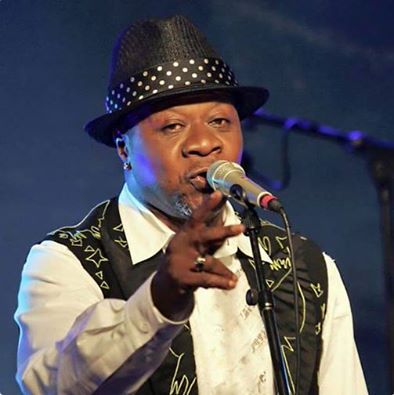
Music Legend, Papa Wemba Dies After Slumping on Stage During Concert

A legendary musician who has been credited for massively spreading a kind of music genre, has died after slumping right on stage. 
The Congolese Music legend, Papa Wemba, died around 9:10 GMT in Abidjan, the Ivory Coast capital, his manager, Marie Laure Yaone, has confirmed in a Facebook post.
The Soukous maestro, who was performing with his band at the FEMUA 9 musical concert, slumped on Stage at about 5:30 GMT on Sunday. His dancers and members of the Red Cross could not revive him on stage and subsequently rushed him to a hospital where he later died.
“I do not have the strength to put this information on Facebook,” Ms. Yaone wrote in French.”
She had published a post of how the musician slumped and was rushed to the hospital.
“Papa Wemba fell on stage at Anoumabo, Abidjan where he was performing at the Legislative Femua festival, organized by the Magic System. There’s more scared than hurt. As a manager, I assure you on his state of health and beg you to not put false information.
“He was quickly taken over by the Red Coss and is resting in a hospital in the square. Malongiskin Cornely Malongi who’s with him take care of everything. Thank you Lord for your grace.”

Medical personnel attend to musician Papa Wemba moments after he collapsed on stage.

However, two hours later she posted a message that heavy with grieve: “You can’t do this to us dad, no.” with a Facebook emoticon that read: “feeling shocked.”
Papa Wemba, whose real name was Jules Wembadio Kikumba, was born on June 14, 1949. He was one Africa’s most popular musicians and perhaps the most influential Soukous performer. He was instrumental in making the genre of music popular worldwide.
In February 2003, he was convicted for involvement in the smuggling of illegal immigrants from Democratic Republic of Congo into France. He spent 3 months in prison and was released after paying a fine of €30,000.


When News Breaks Out, We Break In. (The 2014 Bloggies Finalist)

NEC Validates Newly Elected Nkambe SDF Electoral District Officials, Adopts Winning Strategies Ahead 2018 Elections

The team led by Njong Donatus, mayor of Kumbo council has exhaled the Nkambe SDF Electoral District for maintaining the spirit of unison after the last reorganization of the basic organs of the Social Democratic Front. Njong Donatus made the remarks while addressing delegates at an Extraordinary District Conference that took place on Sunday April 24, 2016 at the Nkambe Community hall.  
The Njong led delegation from the National Executive Committee of the Social Democratic Front after validating the newly elected district officials charged them to work for the interest of the party. Njong used the opportunity to put SDF local officials to the task by recommending that they should make sure that they are animated by the winning spirit. Thus winning back the Nkambe council Njong in the upcoming elections Njong added should be the priority of priorities to the new exco headed by Mbeh Wilfred Shey. During the extraordinary District Conference, delegates also shared their views, experiences and knowledge with NEC members on election matters. 


When News Breaks Out, We Break In. (The 2014 Bloggies Finalist)

Climate Change Nightmare Hits North West as Strange Disease Attacks Cypress Trees, Goats, Extinction Feared

Cypress plants serving as Live decoration drying off
Statistics show that about 80,000 acres of rain forest are destroyed across the world each day, and the destruction takes with them over 130 species of plants, animals and insects. Much of that deforestation has been attributed to human activities and to the phenomenon of climate change. Nearly 90% of an estimated 35,000,000 cypress trees are facing extinction in the North West Region of Cameroon. Indicators are rife at that these trees may disappear before this year ends. This is so due to the presence of a strange disease that has attacked cypress trees. Environmentalists have attributed the present stalemate to climate change, while farmers (mostly villagers) on the other hand say it is an art of witchcraft. Abanda Marcel of Youth Assembly for Justice-YAFEJ describes the situation as pathetic and added that " there is an urgent need for scientists to look into the precarious situation. We have to rescue the cypress trees now or else, the future maybe very uncertain for other plant species". To Kari Jackson, Coordinator of Sustainable Run for Development-SURUDEV, it is the warming climate and the effect of climate change that has started showing its ugly face. "Either we stand up and protect these cypress trees, or see them eroded until we see large-scale extinctions." Jackson says. 
Cypresses used as live fence drying off
Yet scientists have been mute over the issue. It is not yet clear whether they are on the trail to identify fungus that is causing the dead of an estimated 35 million cypresses in the North West Region. The Ndu Tea Plantation alone may lost over 25.000 cypress trees while individual farmers and homes have also seen their plantations and flower gardens reducing to nothing. The most pathetic thing is that these are trees that have played a very crucial role in communities. They serve as win-breaks, live fences, fuel-wood, sheds, habitats for birds and animals etc. 
Though cypresses was lately considered as the most resistant tree specie, Vincent Bawe, Manager of Millennium Star Hotel in Nkambe said when he observed some black spots on the live-fence at the hotel, he embarked on watering but it did not produce any results as the trees continuously dried off. "The young plants became “weakened and within two days they leaves change from green to brown”.  
The situation is very pathetic in Donga Mantung Division, Bui, Ngoketunjia and Mezam as every cypress tree is drying off. In this part of the country, cypresses are mostly used as live-fences, wind breaks and fuel plantations. Every passing day, the green scenery is showing an ugly face as the population look helplessly at the drying trees. It is feared that if the disease attacks other tree species, it may lead to devastating effects.

Witchcraft or Climate Change
Cypress fuel-wood plantation
Villagers have started looking at the present stalemate as the beginning of the end of the world. In just the past few days, the precarious situation has had diversified interpretations. It is widely said in villages that the attack on cypresses is an act of witchcraft. The story goes that some witches on a mission to kill all young men in the villages brought an illness and later buried it under a cypress tree. A goat dug it and that is why goats and cypresses have been attacked by a strange disease. But scientifically, the argument has proven not to hold water yet it is widely believed by almost all the villagers in Donga Mantung Division. 
At the Ndu, Nkambe, Lassin and Misaje markets, the prices of goats have dropped to floor level. Buyers have been scared to the point that a 30-50 kg live weight  goat sells at FCFA 3000, approximately 6 US Dollars. Ndi Godlove, a young breeder at Mbabi-Wat says he lost 63 goats in one week. Godlove who is in his early 40s told us that he lost all his lifetime investments. There are stories of breeders in Nkambe and Ndu council areas that have lost over 200 goats each. Though there are no statistics available at the Divisional Delegation for Livestock in Donga Mantung Division, an authoritative voice said thousands of goats have died in the Division within the last one month. 
Nji Evaristus says animals especially goats are suffering from its worst unknown disease in a millennium. "I vaccinated all my goats and sheep, maybe that is why I did not lost everything". 
Goats killed by strange disease
In another related story, villagers have attributed the unknown diseases to witches and wizards. It is said in villagers that some witches and wizards in an attempt to destroy humans have brought jiggers, illnesses to kill cypresses and goats. The same group is also said to have made it in such a way that kola nuts produced the highest fruits this year. In Ndu and Nkambe, in Donga Mantung Division, no one buys kolanuts again. A 15 liters bucket sells as cheap as FCFA 250-500 and 100 kolanuts at FCFA 50-100. 
Talking about climate change and the heating temperature to them in relation to the unknown diseases is like a fairy tale.  Although atmospheric scientists increasingly believe that the exceptionally warm waters over the past months are the early indications of a phase shift in the Pacific Decadal Oscillation, a cyclical warming of the North Pacific that happens a few times each century, traditionalists on the other hand still think that the gods are angry.  And that the land has been curse by numerous sacrileges committed by man. Yet they haven't yet figured out precisely what's behind them the present stalemate. It is common occurrence to see a traditional ruler pouring libation to call on the gods to bring back the rain or bring back a drying stream. 


When News Breaks Out, We Break In. (The 2014 Bloggies Finalist)